

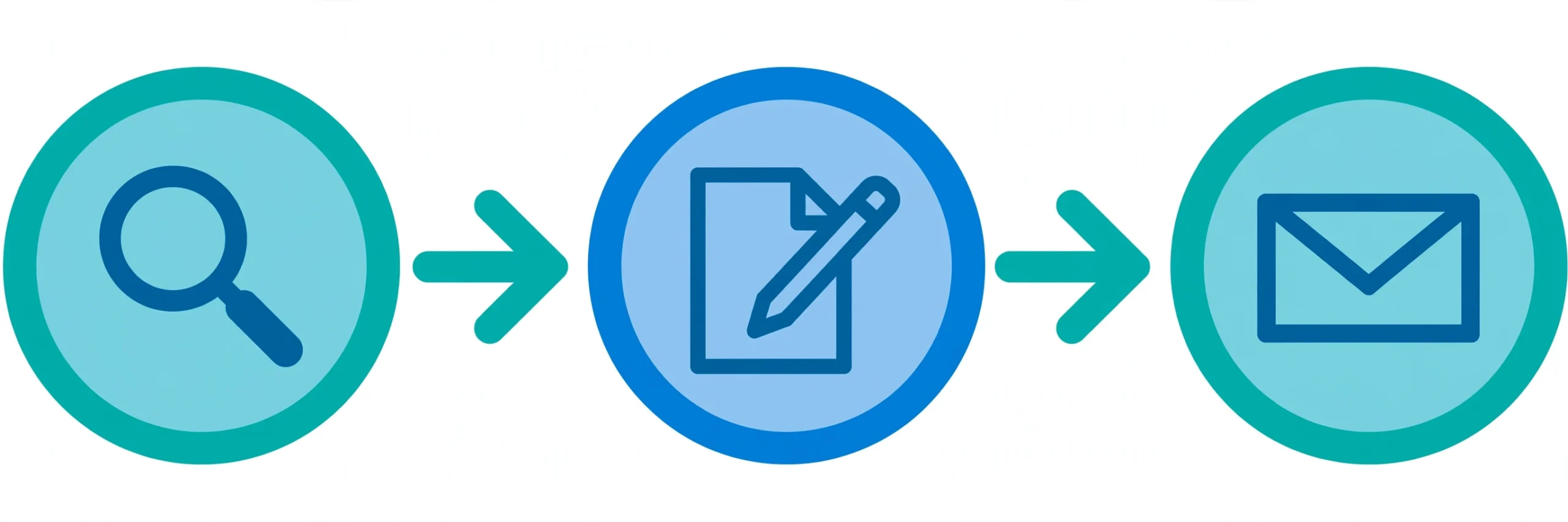
What is the skyscraper technique? It is a link building method created by Brian Dean of Backlinko. It has three steps: find content in your niche that already earned lots of backlinks, create a significantly better version of it, then reach out to every site linking to the original and show them your improved piece.
On this page
- Who Created the Skyscraper Technique?
- What Is the Skyscraper Technique and How It Works
- Finding Link-Worthy Content Worth Improving
- Creating Something Genuinely Better
- Reaching Out to the Right People
- Does the Skyscraper Technique Still Work?
- Common Skyscraper Technique Mistakes to Avoid
- Frequently Asked Questions
That short definition hides why this method became one of the most cited link building frameworks in SEO history. The logic is simple: instead of guessing what people want to link to, you start with proof. If fifty sites already linked to a guide about email subject lines, you know the topic has link demand. Your job is to build the obviously better version — then tell those fifty sites it exists.
Who Created the Skyscraper Technique?
Brian Dean, founder of the SEO blog Backlinko, introduced the skyscraper technique in a 2013 blog post describing the method. The name comes from a simple analogy: nobody pays attention to the eighth-tallest building in a city. People notice the tallest one. In content terms, that means linkers gravitate toward the single best resource on a topic — not the fifth-best.
Dean did not just name the idea. He documented it, measured it, and published the numbers. On his first run of the technique, he sent 160 outreach emails and secured 17 backlinks — an 11% conversion rate that became a benchmark for cold outreach in SEO. He also reported a 110% increase in organic traffic within 14 days of the campaign.
Those numbers matter because they turned a vague concept (“make great content”) into a repeatable process. Before the skyscraper technique had a name, plenty of marketers were informally doing something similar. Dean’s contribution was packaging it into three explicit steps with measurable results — which is why the framework is still taught in digital marketing courses more than a decade later.
It is worth noting that Dean’s results came from 2013, when the technique was novel and inboxes were less crowded. The framework still works, but the execution bar is higher now. We will cover that honestly later in this guide.
What Is the Skyscraper Technique and How It Works
The skyscraper technique runs on three steps. Each one depends on the previous step being done properly — skipping ahead is the most common reason campaigns fail.
Step one is research. You find a piece of content in your niche that has already attracted a significant number of backlinks. This is your “existing skyscraper.” Tools like Ahrefs, Semrush, or Moz show you which pages have the most referring domains for any topic. You are looking for proof of link demand, not just high rankings.
Step two is creation. You build something demonstrably better than the original. “Better” is not vague here — it means longer and more comprehensive, updated with current data, better designed with custom visuals, or deeper in a way the original was not. The improvement needs to be obvious to a busy editor in under thirty seconds.
Step three is outreach. You contact the websites linking to the original piece and present your improved version. The pitch logic is straightforward: these sites already demonstrated willingness to link to content on this topic. You are offering them a superior replacement, not a cold pitch about something unrelated.
For a broader understanding of how this fits into a full strategy, see our complete guide to link building in SEO, which covers where the skyscraper technique sits alongside other white-hat methods.
Finding Link-Worthy Content Worth Improving
This step determines everything. Pick the wrong target and even brilliant execution will underperform, because you will be pitching to sites that were never strong linkers in the first place.
Start with a seed keyword in your niche and run it through a backlink analysis tool. In Ahrefs, the “Best by links” report for a competing domain shows which of their pages attracted the most referring domains. In Semrush, the Backlink Analytics tool does something similar. You are looking for pages with at least 20-30 referring domains — fewer than that and the link pool may be too small to justify the effort.
Not every highly-linked page is a good target. Filter for these qualities:
- The content is improvable. A 400-word listicle from 2019 with no visuals is a gift. A 5,000-word definitive guide updated last month is a wall. Pick targets where the gap you can create is obvious.
- The linking sites are reachable. If most backlinks come from forums, Wikipedia, or massive directories, outreach will be painful. You want links from blogs and resource pages run by identifiable humans.
- The topic still has demand. Check that people still search for the topic and that the original still ranks. A page with many links but zero current traffic may cover a dead topic.
- You can genuinely beat it. Be honest about your resources. If the original has custom research from a team of ten, a solo rewrite will not impress anyone.
A concrete example: imagine you run a project management blog. You find a 2018 article titled “15 Project Management Tools” with 87 referring domains. The tools are outdated, half the links are dead, there are no screenshots, and the design is plain text. That is a strong target. You know 87 sites cared enough to link to a mediocre version — a current, visual, genuinely useful version has a real shot.
Creating Something Genuinely Better
“Better” is where most skyscraper attempts die. Adding 200 words to a competitor’s article and calling it improved does not work. Editors can tell the difference between genuinely superior and marginally different in seconds.
Here is what a meaningful upgrade looks like across the dimensions that matter:
| Dimension | Original (typical target) | Your skyscraper version |
|---|---|---|
| Depth | Lists items with one-line descriptions | Each item explained with how-to detail and use cases |
| Freshness | Published 3+ years ago, outdated stats | Current-year data, updated screenshots, new examples |
| Visuals | Stock photos or no images | Custom diagrams, annotated screenshots, comparison charts |
| Structure | Wall of text, weak headings | Scannable sections, tables, clear hierarchy |
| Proof | Claims without sources | Cited data, real examples, tested recommendations |
The table above is the standard you should hold yourself to. If you cannot check at least three of those five boxes with confidence, pick a different target.

One more principle: match the format to what is already winning. If the top-linked content on your topic is a detailed guide, do not respond with an infographic. Google and linkers have already told you which format earns links for this query. Beat the winner at its own game rather than changing the game.
Length alone is not the goal. An Ahrefs study found the correlation between word count and rankings is only about 0.04 — nearly zero. What matters is coverage: does your piece answer the follow-up questions the original leaves hanging? Does it include the examples, data, and visuals a linker would be proud to reference? That is the gap that earns the link.
Reaching Out to the Right People
Outreach is the step people fear most, but the skyscraper technique makes it easier than standard cold outreach. You are not pitching something random. You are contacting people who already linked to content on this exact topic and offering them a better version. That context changes the dynamic completely.
Build your prospect list from the original page’s backlink profile. Export the referring domains, then filter out the junk: nofollow-only blog comments, forum profiles, directories that auto-approve, and sites that clearly link to everyone. You want editorial links from real content — blog posts, resource pages, and guides where a human chose to reference the original.
For each prospect, find the actual person behind the linking page. Generic “info@” addresses convert poorly. Look for the author of the specific article, the site’s content manager, or the person who curates their resources page. A minute of research per prospect beats a hundred extra emails.
Your email needs three things and nothing more: proof you looked at their page, a one-line explanation of what is better about your version, and a low-pressure ask. Here is the structure that works:
- Subject: specific, not clickbait. “Quick suggestion for your [topic] page” outperforms “You’ll love this!!!” every time.
- Opening: reference their specific page and what you noticed. “I saw you linked to [original] in your guide to X” shows this is not a blast.
- The pitch: one or two sentences on what your version adds. “I noticed the original hasn’t been updated since 2019 — I just published a 2026 version with current data and [specific addition].”
- The ask: soft. “Thought it might be a useful addition if you ever update the page.” No begging, no follow-up spam.
Expect a conversion rate in the single digits to low teens. Dean’s 11% came from careful targeting in 2013. In 2026, with busier inboxes, a 5-8% conversion rate on well-targeted outreach is a realistic benchmark for a strong piece. Ahrefs’ own skyscraper technique case study walks through the same outreach math with fresh examples. If you are below 3%, the problem is usually the content gap (not obviously better) rather than the email copy.
For a deeper look at outreach mechanics beyond the skyscraper context, our link building outreach guide covers prospecting, personalization, and follow-up sequences in detail.
Does the Skyscraper Technique Still Work?
Honest answer: yes, but not the way it did in 2013. The technique itself is sound — the logic of starting with proven link demand has not changed. What changed is the competition and the inbox environment.
Three things are different now. First, everyone knows the technique. When Dean published it, few marketers were systematically building “better versions” of linked content. Now every competitive niche has multiple skyscraper attempts per topic, so the bar for “obviously better” is much higher. Second, outreach inboxes are saturated. Site owners who got two pitches a month in 2015 now get two a day, and pattern-matching means templated skyscraper emails get ignored fast. Third, Google’s understanding of content quality has improved — thin “improvements” that might have ranked in 2015 will not move the needle now.
None of that kills the technique. It raises the execution standard. The campaigns that still work share three traits: the content gap is genuinely large (not incremental), the outreach is truly personalized (not mail-merged), and the target was carefully chosen (reachable linkers, improvable original). When those three hold, the underlying psychology — linkers prefer the best available resource — still delivers.
Where the technique struggles is in niches where the existing “skyscrapers” are already excellent. If the top-linked content on your topic is a 2025 definitive guide from a major publication with custom research, trying to out-build it as a small site is a losing battle. In that case, pick a narrower subtopic where the existing content is weaker, or choose a different link building approach entirely.
Common Skyscraper Technique Mistakes to Avoid
Most failed skyscraper campaigns fail for predictable reasons. Here are the ones to watch for:
Mistake one: targeting content you cannot beat. Enthusiasm is not a strategy. If the original is a data study from a company with a research team and your “improvement” is a longer blog post, editors will not switch their links. Pick battles you can win.
Mistake two: confusing longer with better. Adding 1,000 words of filler to a 2,000-word guide does not create a skyscraper. Better means more useful — current data, real examples, clear visuals, answered follow-up questions. Length is a byproduct, not the goal.
Mistake three: blasting outreach. Sending the same template to 500 prospects burns your domain reputation and converts poorly. Fifty carefully researched, personalized emails will outperform five hundred generic ones. Quality of targeting beats quantity of sends.
Mistake four: pitching before the content is truly ready. If a prospect clicks through and finds something only marginally better than what they already link to, you have wasted your one shot with that site. Do not outreach until you would proudly show the piece to the toughest critic in your niche.
Mistake five: ignoring the follow-up. A single polite follow-up a week later meaningfully increases response rates. Most people do not reply to the first email because they are busy, not because they are uninterested. One follow-up is professional; four is spam.
Frequently Asked Questions
Who originally developed the skyscraper technique?
Brian Dean, founder of the SEO blog Backlinko, created and named the skyscraper technique in a 2013 blog post. He documented the three-step process — find link-worthy content, create something better, reach out to linkers — and published his own results: 17 backlinks from 160 outreach emails and a 110% traffic increase in 14 days.
How long does the skyscraper technique take from start to finish?
A realistic timeline is four to eight weeks. Research and target selection takes a few days, creating a genuinely superior piece takes two to four weeks depending on depth, and outreach plus follow-ups run another two to three weeks. Anyone promising results in days is either cutting corners on content quality or on targeting.
Is the skyscraper technique white hat SEO?
Yes. The skyscraper technique is white hat because every link is earned editorially — a site owner reviews your content and chooses to link to it. There is no payment, no link scheme, and no manipulation. Google’s guidelines penalize artificial link patterns, not the act of creating better content and telling people about it.
What is a realistic success rate for skyscraper outreach?
Brian Dean reported 11% in 2013. In current conditions, expect 5-8% on well-targeted campaigns with a genuinely superior piece. Below 3% usually signals a content problem (the gap is not obvious enough) rather than an outreach problem. Track your rate per campaign and diagnose accordingly.
Can beginners use the skyscraper technique?
Yes, with one caveat: pick targets you can realistically beat. Beginners should avoid competing head-on with major publications and instead target narrower topics where existing content is thin or outdated. The technique’s research-first approach actually helps beginners because it removes the guesswork about what topics deserve effort.
Done-for-you podcast backlinks
Get your brand on Apple Podcasts, Spotify, Amazon and 25 more trusted platforms — placed by hand, reported link by link.