

Natural link building means earning backlinks because other websites genuinely want to reference your content — not because you paid for the link, traded for it, or manufactured it through a network you control. Google treats these editorial links as votes of confidence, which is why they remain one of the strongest ranking signals in 2026.
On this page
The confusion starts because “natural” sounds passive, like you just publish and wait. In practice, natural link building is active work: you create something worth linking to, then make sure the right people see it. The link itself must be editorially given — the site owner chose to link because your page helped their readers. That single distinction separates everything Google rewards from everything it penalizes.
If you are new to the concept of links as ranking signals, start with our guide on what backlinks are before going deeper here.
What Natural Link Building Actually Means
Strip away the jargon and natural link building is simple: someone links to your page because it made their own content better. A blogger writing about email marketing links to your deliverability study because the data strengthens their argument. A journalist cites your survey because the numbers are original. Nobody paid anyone. Nobody was obligated. The link exists because the content earned it.
Google’s entire ranking model was built on this idea. When the company describes how search works, links are framed as recommendations — one site vouching for another. That framing only holds if the recommendation is genuine. The moment money, coercion, or automation enters the picture, the vote is rigged, and Google’s spam systems are designed to catch exactly that.
This is where most people get tripped up: outreach is not the opposite of natural. Emailing a journalist to say “I published original research your readers might find useful” is outreach. If she reads it, likes it, and links to it on her own editorial judgment, that link is natural. The method of discovery doesn’t determine naturalness — the reason for the link does. A link you pitched can be perfectly natural; a link you bought can never be.
The practical test I use: if you had to explain to a Google engineer exactly how you got a specific link, would you be comfortable? If the honest answer is “a blogger found my guide useful and referenced it,” you’re fine. If the answer involves invoices, private networks, or “my guy who places links,” you have a problem. That test has never failed me, and it maps directly onto Google’s published spam policies.
Natural vs Unnatural Links: The Full Comparison
The table below puts the two side by side. Use it as a quick reference whenever you’re evaluating a link opportunity — if a tactic lands in the right column, walk away.
| Signal | Natural links | Unnatural links |
|---|---|---|
| Motivation | Editorial choice — the linking site’s readers benefit | Manipulation — the link exists to move rankings |
| Payment | None involved, directly or indirectly | Money, free products, or reciprocal favors change hands |
| Anchor text | Varied and descriptive — brand names, URLs, natural phrases | Repeated exact-match commercial keywords at scale |
| Placement | Inside relevant content, where a reader would click | Footers, sidebars, author bios on unrelated sites, comment sections |
| Velocity | Grows unevenly over time, with spikes tied to real events | Sudden bursts of dozens of links with no news hook |
| Relevance | Linking page is topically related to your page | Random topics — a casino link on a recipe blog |
| Disclosure | Not needed — nothing to disclose | Missing rel="sponsored" or rel="nofollow" on paid placements |
Verdict: when in doubt, ask who the link serves. If the answer is “the reader of the linking page,” it’s natural. If the answer is “my rankings,” it isn’t.
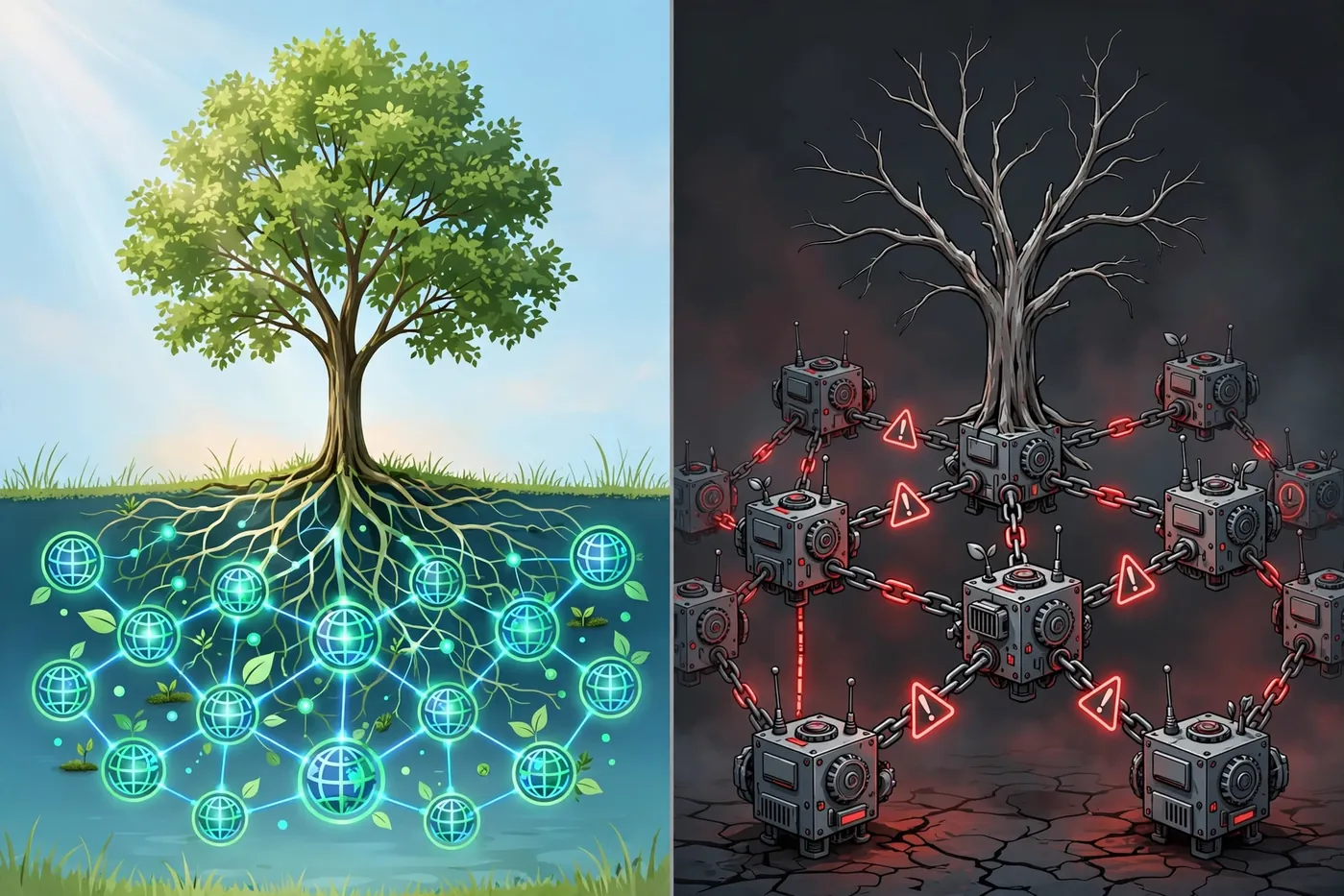
What Are Unnatural Links?
Unnatural links are backlinks created primarily to manipulate search rankings rather than to help readers. Google groups them under “link spam” in its spam policies, and the list of what counts is specific — not vague. Knowing the exact boundaries matters because the penalty for crossing them ranges from individual links being ignored to manual actions that suppress your entire site.
The clearest violations are the ones involving deception or scale. Buying or selling links that pass ranking credit without proper tagging is the classic case — and “proper tagging” means rel="sponsored" or rel="nofollow" on the link. A sponsored post with correct tags is compliant; the same post without them is a violation. The tag, not the payment, is the dividing line. Many site owners get this backwards.
Private blog networks (PBNs) — clusters of sites built solely to funnel links to a target domain — are the highest-risk tactic in 2026. Google’s SpamBrain system now detects these patterns automatically, identifying both the network sites and the buyers. Since Penguin 4.0 folded into the core algorithm, this evaluation happens continuously in real time. There is no longer a “safe window” between updates; your link profile is being judged right now.
Other patterns Google explicitly names: excessive link exchanges (“you link to me, I’ll link to you” at scale), large-scale article marketing with keyword-rich anchor text, automated link creation, and low-quality directory or bookmark spam. A December 2025 addition worth noting: AI-generated content published at scale specifically to embed paid backlinks now falls under link spam too.
Here’s a concrete example of how this plays out. Imagine a small e-commerce store buys a “50 DA30+ backlinks for $99” package. The seller places the store’s exact-match anchor (“buy cheap running shoes”) on 50 unrelated blogs — a plumbing site, a casino review page, a spun article directory. Within weeks, the store’s link profile shows 50 new links with identical commercial anchors from irrelevant pages. That pattern is trivially detectable, and the likely outcome isn’t a rankings boost — it’s those links being devalued to zero, plus elevated risk of a manual review. The $99 bought nothing but risk.
For a deeper look at staying on the right side of these lines, see our white hat link building guide.
How to Earn Backlinks Naturally: Five Proven Ways
Earning links is slower than buying them. That’s the entire point — the difficulty is what makes the signal trustworthy. These five approaches all share one trait: the link is a byproduct of creating genuine value, not the product being purchased.
Create original data or research
Original numbers are the most linkable asset on the internet. Journalists, bloggers, and analysts constantly need statistics to support their arguments, and they link to the source. You don’t need a massive budget — a survey of 200 people in your niche, an analysis of 50 competitor homepages, or aggregated data from your own product can all work.
Concrete example (illustrative): imagine a freelance invoicing tool surveys 300 freelancers about late payments and finds that most wait over 30 days for at least one invoice per quarter. It publishes the results with three simple charts. Within six months, dozens of finance blogs and freelancer communities link to the study. Total cost: a small survey incentive budget and one week of analysis. No outreach firm, no link packages — just data nobody else had.
Build a free tool or resource
Free tools earn links for years after the initial build. A mortgage calculator, a headline analyzer, a template library — anything that solves a recurring problem in your niche. The key is that it must be genuinely useful, not a thin lead magnet with a “tool” label slapped on.
Our own guide to getting backlinks covers this in more depth, but the principle is simple: every time someone writes “here’s a free tool that does X,” that’s a natural editorial link you never had to ask for twice.

Do targeted digital PR
Digital PR means pitching genuinely newsworthy angles to journalists — not blasting 500 bloggers with a generic guest post offer. The distinction matters: a journalist who covers your story and links to your data page is giving an editorial link. A blogger who publishes your pre-written article with your exact-match anchor in exchange for “exposure” is participating in a link scheme.
What works: a unique angle tied to current events, exclusive data, or a contrarian expert take. What doesn’t: “10 tips for better SEO” pitched to general news desks. One well-placed story in a real publication outweighs fifty low-quality placements, both for rankings and for the referral traffic that follows.
Fix broken links with better content
Broken link building is one of the cleanest outreach tactics because you’re doing the site owner a favor. Find dead pages in your niche that still have backlinks pointing to them, create something better on the same topic, then email the linking sites: “Just flagging that your link to X is broken — I published an updated resource here if useful.”
The link you earn is editorial — the site owner chose your replacement because it helped their readers, not because you paid them. Success rates are modest (expect single-digit reply rates), but every link earned this way is bulletproof.
Write guest posts that deserve to exist
Guest posting sits in a gray area that confuses people, so let’s be precise. Google’s guidance targets guest posts published primarily for links — especially at scale, with keyword-rich anchors, on sites that exist to host guest content. A single thoughtful guest article on a respected industry publication, with a natural contextual link back to your relevant resource, is a different animal entirely.
The test: would that publication have accepted your article if it contained zero links back to your site? If yes — because the content itself was strong — the link is a natural byproduct. If the only reason the post exists is the link, it’s a scheme. For outreach mechanics, our link building outreach guide walks through the process step by step.
How Google Detects Unnatural Link Patterns
Understanding detection helps you understand why shortcuts fail. Google doesn’t manually review every link on the web — it uses layered systems, and they’ve gotten dramatically better in the last few years.
SpamBrain, Google’s AI-based spam prevention system, identifies link spam patterns automatically — both the sites selling links and the sites buying them. It looks for footprints humans miss: hosting patterns across supposedly independent sites, unnatural anchor text distributions, link velocity spikes with no correlating news events, and content similarity across linking pages.
Penguin, now running in real time as part of the core algorithm, devalues manipulative links as they’re discovered rather than waiting for periodic updates. This changed the risk calculus completely. In the old days, a site might enjoy six months of inflated rankings before a Penguin refresh caught up. Today, the devaluation is near-instant — you pay for the links and get nothing, or worse.
Manual actions still exist for egregious cases. When a human reviewer at Google confirms systematic manipulation, they can apply a site-wide penalty that tanks visibility until you clean up the profile and submit a reconsideration request. Recovery takes months, not days, and requires documenting every removed or disavowed link.
The September 2026 spam update reinforced all of this. Sites leaning on AI-generated content at scale to embed paid links saw sharp drops, while content-first sites with clean profiles held steady or gained. The pattern across every recent update is identical: manipulation gets more expensive and less effective over time, while earned links compound. Google’s documentation on this is public — Moz’s beginner’s guide to SEO is also a solid primer if you want the fundamentals from an independent authority.
Natural Link Building Checklist for 2026
Before you pursue any link opportunity this year, run it through this checklist. Every “no” is a reason to pause.
- Editorial merit: Would this site link to my page even if search engines didn’t exist? If the link only makes sense for SEO, skip it.
- Relevance: Is the linking page topically related to mine? A link from an unrelated site is a red flag, not a win.
- Anchor sanity: Does my anchor text profile look like how real people link — mostly brand names, URLs, and natural phrases? If more than a small fraction are exact-match commercial keywords, rebalance.
- Proper tagging: Any paid, sponsored, or user-generated link carries
rel="sponsored",rel="nofollow", orrel="ugc"as appropriate. No exceptions. - Velocity realism: Am I earning links at a pace a real site would? Ten links in a week after a product launch is plausible; a hundred links in a week with no news is not.
- The engineer test: Could I comfortably explain how I earned each link to a Google reviewer? If any link needs a creative story, remove it.
Natural link building isn’t the fast path — it’s the path that still works in five years. Every algorithm update of the past decade has moved in the same direction: rewarding links that were genuinely earned and neutralizing the rest. Build assets worth citing, put them in front of the right people, and let the links follow. That’s the whole strategy, and it has never stopped working.
Frequently Asked Questions
What is the difference between natural and unnatural links?
Natural links are editorially given — a site owner links to your content because it helps their readers, with no payment or manipulation involved. Unnatural links are created to manipulate rankings: bought links, link schemes, private blog networks, and excessive reciprocal linking. Google rewards the first category and penalizes the second under its link spam policies.
Is outreach considered natural link building?
Outreach itself is neutral — what matters is why the link was given. If you email someone about your content and they link because they genuinely find it useful, that’s a natural editorial link. If the outreach involves payment, guaranteed placement, or exact-match anchor demands, it crosses into unnatural territory regardless of how polite the email was.
How long does natural link building take to show results?
Typically three to six months before earned links move the needle meaningfully, though this varies by niche competitiveness and content quality. Unlike paid links, which may spike quickly before being devalued, natural links compound — each one keeps working indefinitely and makes the next one easier to earn.
Can natural links still get you penalized?
Genuinely earned editorial links essentially never trigger penalties. Problems arise only when “natural-looking” links are actually manufactured — for example, paying for placement but asking the site to make it look editorial. Google’s systems evaluate patterns across your whole profile, so a handful of questionable links mixed into an otherwise clean profile is low risk, but systematic manipulation is not.
What are some examples of unnatural links?
Common examples include purchased links without sponsored tags, private blog network placements, sitewide footer links with keyword-rich anchors, bulk directory submissions, comment spam with optimized anchors, and large-scale guest posting campaigns run primarily for links. Google’s spam policies documentation lists these explicitly.
Done-for-you podcast backlinks
Get your brand on Apple Podcasts, Spotify, Amazon and 25 more trusted platforms — placed by hand, reported link by link.