

Knowing how to monitor backlink profile changes is the difference between catching problems early and discovering them after rankings drop. Use Google Search Console (free), Ahrefs, or Moz Link Explorer to track new and lost backlinks weekly. Watch for toxic links, sudden spikes, and lost high-authority links.
On this page
- Why Monitoring Your Backlink Profile Matters
- What to Track: The Metrics That Actually Matter
- Best Backlink Monitoring Tools Compared
- How to Monitor Backlink Profile: Step by Step
- How Often Should You Check Your Backlinks?
- Red Flags: What Bad News Looks Like
- What to Do When You Find Toxic Backlinks
- Frequently Asked Questions
- The Bottom Line
Most site owners build backlinks and then forget about them. That’s a mistake. Your backlink profile changes constantly — new sites link to you, old links disappear, and sometimes spammy sites link to you without your knowledge. This guide shows you exactly how to monitor your backlink profile: which metrics matter, which tools to use, how often to check, and what to do when something looks wrong. You’ll also get a concrete monitoring routine you can start this week.
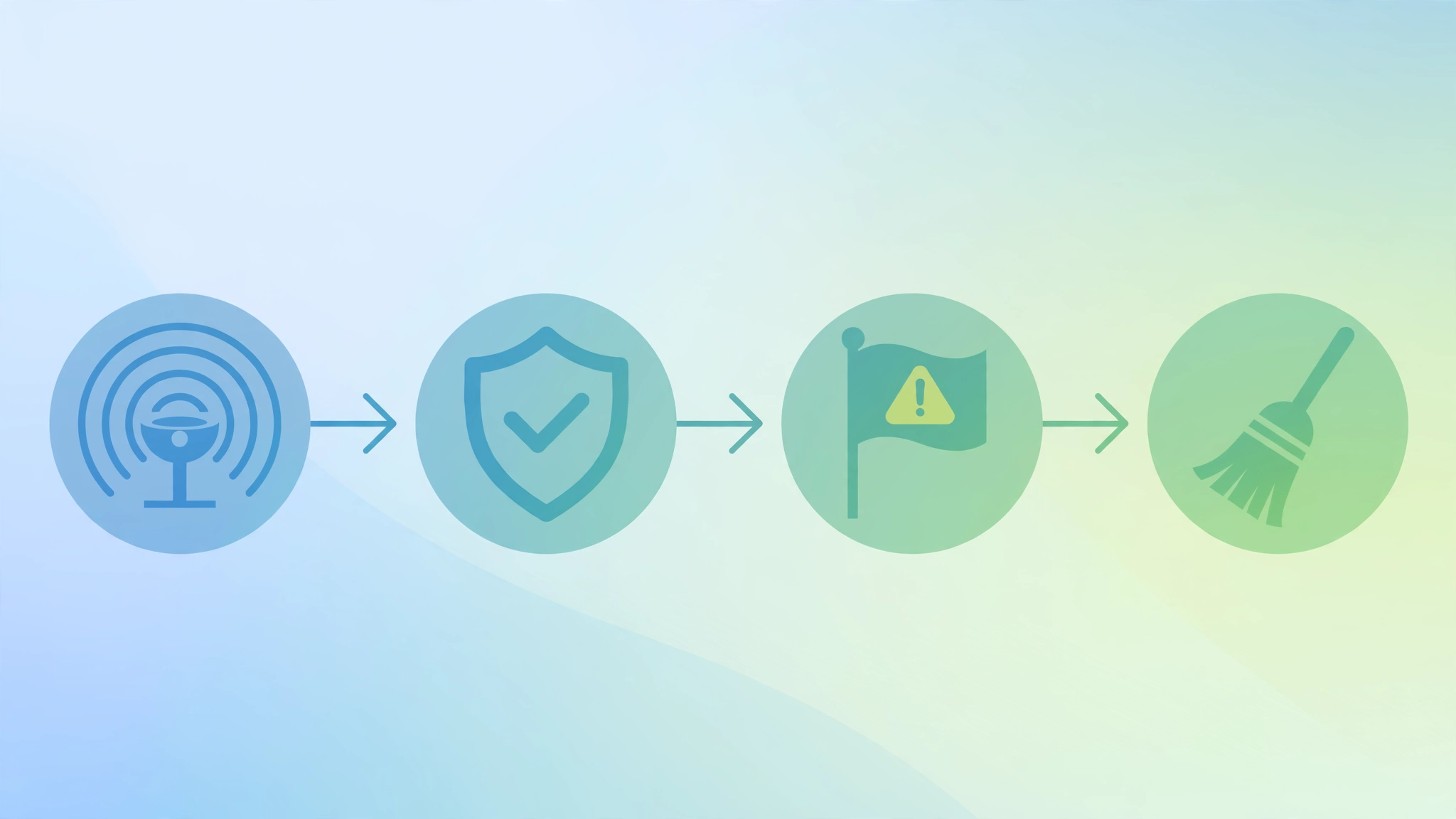
Why Monitoring Your Backlink Profile Matters
Your backlink profile is the complete set of links pointing to your website. Google treats it as one of the strongest ranking signals — but unlike your content, you don’t fully control it. Anyone can link to you, including sites you’d never want associated with your brand. Monitoring is how you stay in control of something you can’t directly control.
Here’s what happens when nobody watches. A client site lost a large share of its referring domains over six months without anyone noticing — partner sites had redesigned and dropped links during migration. Rankings for their main keyword slid from page one to page two. If they’d had a lost-link alert, one email could have recovered those links the same week.
Monitoring catches four things early: lost backlinks you can often recover with one email, new toxic backlinks from spam networks that can trigger algorithmic distrust, negative SEO attacks where competitors blast you with junk links, and growth trends that tell you whether your link building efforts are actually working. Each of these is cheap to fix early and expensive to fix late.
Google’s own guidance backs this up. Their spam policies make clear that manipulative link patterns can cause ranking problems, and their disavow tool exists precisely because webmasters need a way to distance themselves from bad links they didn’t create. You can’t disavow what you haven’t found — which is why monitoring comes first.
Information gain: Most “monitor your backlinks” guides just list tools. This guide gives you the actual decision framework — which metrics to watch, what thresholds trigger action, and a weekly routine that takes under 30 minutes once set up.
What to Track: The Metrics That Actually Matter
Backlink tools throw dozens of metrics at you. Most are noise. Here are the seven that drive decisions.
Referring domains (not total backlinks). One site linking to you 50 times counts as one referring domain. Google weighs domain diversity far more than raw link count. Track this week over week — a sudden drop means lost links, a sudden spike means a viral hit or a spam attack.
New vs. lost backlinks. The net number hides the real story. A site can gain 30 links and lose 25 in the same month and look “stable” at +5 — while its best editorial links quietly vanished. Always look at new and lost separately.
Authority of linking sites. A link from a DA 70 news site and a DA 8 blog are not the same vote. Track the authority distribution of your profile. If your new links are all low-authority while competitors earn high-authority ones, you’re falling behind even as your numbers grow.
Anchor text distribution. If a large share of your anchors are exact-match commercial keywords, that’s an unnatural pattern. A healthy profile is mostly branded, naked URL, and generic anchors.
Dofollow vs. nofollow ratio. A profile that’s nearly all dofollow looks manipulated — natural profiles always include nofollow links from social media, forums, and Wikipedia.
Spam score of linking domains. Moz’s spam score flags domains with characteristics common to penalized sites. A pattern of high-spam-score links appearing suddenly deserves review and possibly a disavow file entry.
Link velocity. A brand-new site gaining hundreds of referring domains in a week looks unnatural without a clear cause. Track your monthly new-domain rate and flag anything far above your normal pace.
Best Backlink Monitoring Tools Compared
You don’t need the most expensive tool — you need the right one for your situation. The table below compares the main options by what matters for monitoring specifically.
| Tool | Cost | Backlink Index Size | Alert Features | Best For |
|---|---|---|---|---|
| Google Search Console | Free | Google’s own data (sample) | None (manual checks) | Every site — baseline, always |
| Ahrefs | From $129/mo | Largest commercial index | New/lost backlink alerts, daily | Serious SEOs, agencies |
| Semrush | From $139.95/mo | Large, fast crawl | Backlink audit alerts, toxic score | All-in-one SEO suites |
| Moz Link Explorer | From $99/mo | Medium-large | Spam score flags, weekly | Spam-score-focused monitoring |
| Ubersuggest | From $29/mo | Smaller | Basic new/lost tracking | Tight budgets |
Verdict: Start with Google Search Console (free, and it’s Google’s own view of your links). Add one paid tool when you can afford it — Ahrefs if backlinks are your main focus, Semrush if you want the broader SEO suite. Ubersuggest is the honest budget pick.
A note on index differences: no tool sees every backlink. Ahrefs might show 400 referring domains while Search Console shows 280 — neither is “wrong.” Each crawler discovers different links on different schedules. Pick one paid tool as your source of truth for trends, and use Search Console as the free cross-check. Comparing absolute numbers across tools is meaningless; comparing each tool’s trend against itself is what matters.
Moz deserves a specific mention for spam scoring. Their domain authority metric is a useful companion signal when evaluating link quality correlated with penalized sites. It’s not a Google metric — Google doesn’t use it — but it’s the most practical triage tool for deciding which new links deserve manual review.

How to Monitor Backlink Profile: Step by Step
Do this setup once, and monitoring becomes a 30-minute weekly habit instead of a quarterly panic.
Step one: connect Google Search Console. Go to Links → External links to see your top linked pages, linking sites, and anchor text. Export this as your baseline. Do it today — Search Console data only accumulates after verification.
Step two: run a full audit in your paid tool. In Ahrefs, open Site Explorer’s Backlinks report and filter dofollow links from the last 90 days. In Semrush, the Backlink Audit tool auto-flags toxic links. In Moz, check Link Explorer’s spam score distribution.
Step three: set up automated alerts. In Ahrefs, go to Alerts → Backlinks and enable new-backlink and lost-backlink notifications (weekly, or daily during active link building). Without alerts, you’ll check “when you remember” — which means never.
Step four: keep a simple trend spreadsheet. Five columns: date, referring domains, new links, lost links, notes. Update it every Monday. After two months you’ll have a trend line — and trends turn raw data into decisions.
Step five: review new links monthly. Open the new-backlinks report and click through to 10–15 linking pages. Is the link real and editorial? Is the site topically relevant? Does anything look like a paid network? Twenty minutes of manual review catches what automated scores miss.
Concrete example: Monday morning, your alerts show 6 new backlinks and 1 lost — the lost link is from a DA 58 industry blog that redesigned their site. You email their editor with the updated URL. By Wednesday the link is back. Total time: 25 minutes. That’s monitoring paying for itself in a single week.
How Often Should You Check Your Backlinks?
The right cadence depends on your site’s size and risk level, but here’s a framework that works for most sites.
Weekly (15–30 minutes): Review your new/lost backlink alerts. Glance at the numbers — anything unusual? This is triage, not deep analysis. You’re looking for spikes, drops, and obvious spam, not writing reports. Set a recurring calendar block; “when I remember” doesn’t work.
Monthly (1–2 hours): Do the manual new-link review described above. Update your trend spreadsheet. Check anchor text distribution — has it shifted? Review your spam score distribution. This is also when you decide whether any links need disavowing (more on that below).
Quarterly (half day): Full profile audit. Compare against competitors — are they gaining links faster than you? Review your top 20 most valuable backlinks individually (still live? still dofollow? page still indexed?). Check for toxic backlink patterns across the whole profile, not just new links. This is also the right time to run a full backlink check with fresh eyes.
Immediately (any time): If you see a sudden traffic drop in Search Console, check your backlinks that same day. A manual action or algorithmic demotion sometimes correlates with a link event — a big lost link, or a flood of new spammy ones. Don’t wait for the weekly review when rankings are actively falling.
New sites (under a year old, under 100 referring domains) can stretch the weekly check to biweekly — there just isn’t enough activity to justify weekly reviews. But keep the alerts on regardless; they’re free and they catch the important events automatically. Large sites (1,000+ referring domains, active link building) should consider daily alerts, because at that scale a spam attack can add hundreds of bad links before a weekly check would catch it.
Red Flags: What Bad News Looks Like
Knowing what to look for beats knowing where to click. These patterns trigger immediate investigation.
Sudden link velocity spikes. You normally gain 10 referring domains a month; this week you gained 150. Unless you went viral, that’s a spam attack or scraper network. Sort new links by date — unrelated niches, thin auto-generated content, or shared hosting patterns mean junk.
Exact-match anchor floods. One new “best CRM software” anchor is fine. Twenty identical commercial anchors in one week is a pattern — either an aggressive agency campaign or negative SEO. Document everything if you don’t recognize the campaign.
Links from penalized neighborhoods. A cluster of new links from high-spam-score domains — unrelated languages, gambling, pharma — is the classic negative SEO signature. Google usually ignores these, but document them in case you need a disavow later.
High-authority links disappearing. Losing three DA 60+ editorial links in a month is a five-alarm fire. Find out why (redesign? page deleted?) and reach out with a helpful fix — recovery is often one email away.
Sitewide footer links appearing. Dozens of new homepage links from footers of unrelated sites often means hacked-site injection or a link network — among the spammiest signals there is.
The principle: single data points are noise, patterns are signal. One weird link means nothing; ten with the same characteristics in one week needs your attention within days.
What to Do When You Find Toxic Backlinks
Finding bad links is half the job. Here’s the decision tree.
Verify before you act. Toxicity scores produce false positives. Visit the linking page yourself: is it a real site? Is the link editorial or injected? Only act on links you’ve actually looked at.
For links you earned but lost: reach out and recover. A polite email with the correct URL recovers a surprising number of links dropped during redesigns — the site already chose to link to you once.
For spammy links you didn’t create: document, then disavow if the pattern is serious. Google’s algorithms ignore most junk automatically, but for clear negative SEO — hundreds of junk links appearing suddenly — a disavow is reasonable insurance. Our disavow guide covers the exact file format and submission process.
What not to do: don’t disavow in a panic. Disavow is a scalpel, not a shotgun — review each domain, disavow at the domain level for clear spam, and log everything with dates. Over-disavowing good links hurts more than the spam ever did.
Concrete example: a local business found 230 new backlinks from 40 domains in one week — auto-generated networks with spun content and exact-match anchors. They documented the domains, waited two weeks to rule out a reporting glitch, then disavowed at the domain level. Rankings stabilized within a month. The two-week verification pause was the key decision.
Frequently Asked Questions
How can I monitor backlinks for free?
Google Search Console is the best free option — top linking sites, linked pages, and anchor text from Google’s own data. Pair it with a free-tier tool like Ubersuggest for new/lost tracking. Free tools lack automated alerts, so set a calendar reminder to check manually every two weeks.
How often should I check my backlink profile?
Weekly 30-minute reviews with automated alerts, a deeper 1–2 hour review monthly, and a full audit quarterly. Check immediately if traffic drops suddenly — don’t wait for the next scheduled review when rankings are falling.
Can I monitor my competitors’ backlinks too?
Yes — and you should. Ahrefs, Semrush, and Moz run the same reports on any domain. When a site links to two competitors but not you, that’s a warm outreach prospect. Check competitor new links monthly.
Do I need to disavow every spammy link I find?
No. Google ignores most low-quality links automatically, and over-disavowing can remove links that were helping. Disavow only clear patterns — sudden junk floods or obvious networks. When in doubt, document and monitor rather than disavowing immediately.
What’s the difference between monitoring backlinks and auditing them?
Monitoring is ongoing surveillance — weekly alerts and trend tracking that catch changes early. Auditing is a periodic deep dive into your entire profile’s health and strategic gaps. You need both: monitoring without auditing misses slow decay; auditing without monitoring misses sudden attacks.
The Bottom Line
Monitoring your backlink profile isn’t complicated — it’s just consistent. Set up Google Search Console today, add one backlink tool with alerts, and block 30 minutes every Monday to review what changed. That simple routine catches lost links worth recovering, toxic links worth disavowing, and trends worth acting on, all before they become expensive problems.
The real payoff compounds over time. After three months of weekly reviews, you’ll know your profile’s normal rhythm — which makes anomalies obvious the moment they appear. You’ll spot a spam attack in days instead of discovering it during a traffic post-mortem. You’ll recover lost editorial links while the linking site still remembers you. And when someone asks how your link building is performing, you’ll answer with data instead of guesses.
The sites that get hurt by backlink problems aren’t the ones with the worst profiles — they’re the ones that weren’t watching. Start monitoring this week, and you’ll never be blindsided by your own link profile again.
Done-for-you podcast backlinks
Get your brand on Apple Podcasts, Spotify, Amazon and 25 more trusted platforms — placed by hand, reported link by link.