

Most blogs don’t fail because the writing is bad. They fail because nobody ever finds them. You can publish the most helpful post in your niche, but if search engines can’t understand it — or if it never matches what people actually search for — it sits on page five collecting dust.
On this page
Blog SEO is the discipline that fixes this. It’s the set of practices that helps every post on your blog rank higher, get clicked more often, and keep earning traffic months or even years after you hit publish. In this guide, you’ll learn the complete blog SEO workflow for 2026: keyword research, on-page optimization, internal linking, technical basics, and measurement — plus a ready-to-use blog post SEO checklist you can run before every publish.
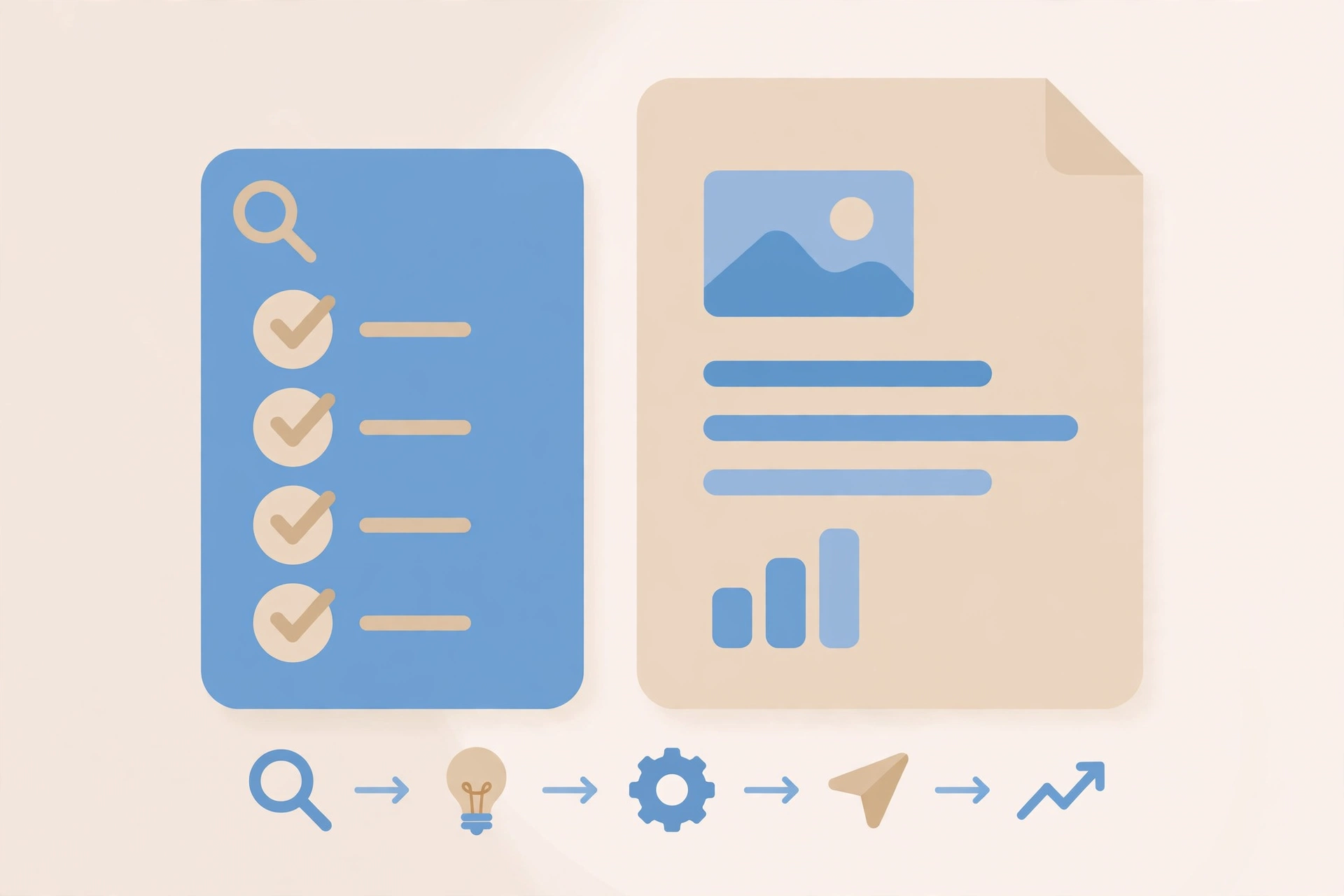
Keyword Research for Blog Posts
Every optimized post starts before you write a single word — with the keyword and, more importantly, the search intent behind it.
Start with intent, then the keyword. Look at what’s already ranking for your target term. If the top results are step-by-step tutorials, your listicle won’t match what searchers want no matter how well written it is. Intent comes in flavors — informational (“how to,” “what is”), commercial (“best,” “vs,” “review”) — and your post format must match the dominant intent on page one.
Go long-tail and question-based. Newer blogs rarely win short head terms. Long-tail keywords (“how to do keyword research for a new blog”) and full questions (“how long should a blog post be for SEO”) have lower competition and clearer intent. They also align perfectly with how people phrase voice searches and AI-assistant queries in 2026.
One primary keyword per post. Give each article a single main target. You can naturally cover related variations in the body, but the title, URL, and H1 should all point at one clear topic. This keeps posts focused and avoids having two of your own pages compete for the same term.
Validate before you write. Never build a post around a keyword without checking that real people search for it. Run your candidates through a free keyword search volume checker first — ten minutes of validation saves you from spending hours on a post nobody is looking for.
Read the SERP like a brief from Google. Before outlining, study the top five results for your keyword and note the pattern: how long are they, what subtopics do they all cover, what questions do they leave unanswered? The gaps you spot — the subtopic everyone skips, the outdated screenshot, the missing example — are your opportunity to publish something genuinely better rather than a rephrased version of what’s already there. Google’s recent updates explicitly reward pages that add new information versus pages that just restate the current top results.
Respect keyword difficulty as a new blog. A keyword with 5,000 monthly searches means nothing if the top ten is dominated by decade-old domains — which is why so many SEOs ask whether domain age actually matters for SEO
Blog Post SEO Checklist
Run through this blog post SEO checklist before you publish anything. It takes five minutes and catches the mistakes that silently cost rankings — the missing alt text, the orphaned post with no internal links, the meta description you meant to write but never did. Print it, bookmark it, make it part of your publishing ritual.
- ☐ Primary keyword appears in the title, URL slug, and H1
- ☐ The post format matches the search intent of page-one results
- ☐ Content depth fits the topic (1,500+ words where the subject warrants it — depth, not padding)
- ☐ One H1 only, with a logical H2/H3 hierarchy below it
- ☐ Unique, CTR-focused meta description (~150–160 characters)
- ☐ Descriptive image filenames and content-describing alt text on every image
- ☐ Images compressed (WebP preferred) so the page loads fast
- ☐ At least 2 internal links to relevant older posts, with descriptive anchor text
- ☐ At least 2 external links to authoritative sources
- ☐ Article schema markup present (verify via your SEO plugin)
- ☐ Clean, short URL slug containing the primary keyword
- ☐ Table of contents added for posts over ~1,500 words
- ☐ FAQ-style Q&A block where the topic has common questions
- ☐ Page checked on mobile — text readable, no horizontal scroll, tap targets usable
- ☐ Post submitted to Google Search Console after publishing
Keep this list somewhere you’ll actually use it — pinned in your editor, in your content workflow, or taped to your monitor. The best checklist is the one you never skip.
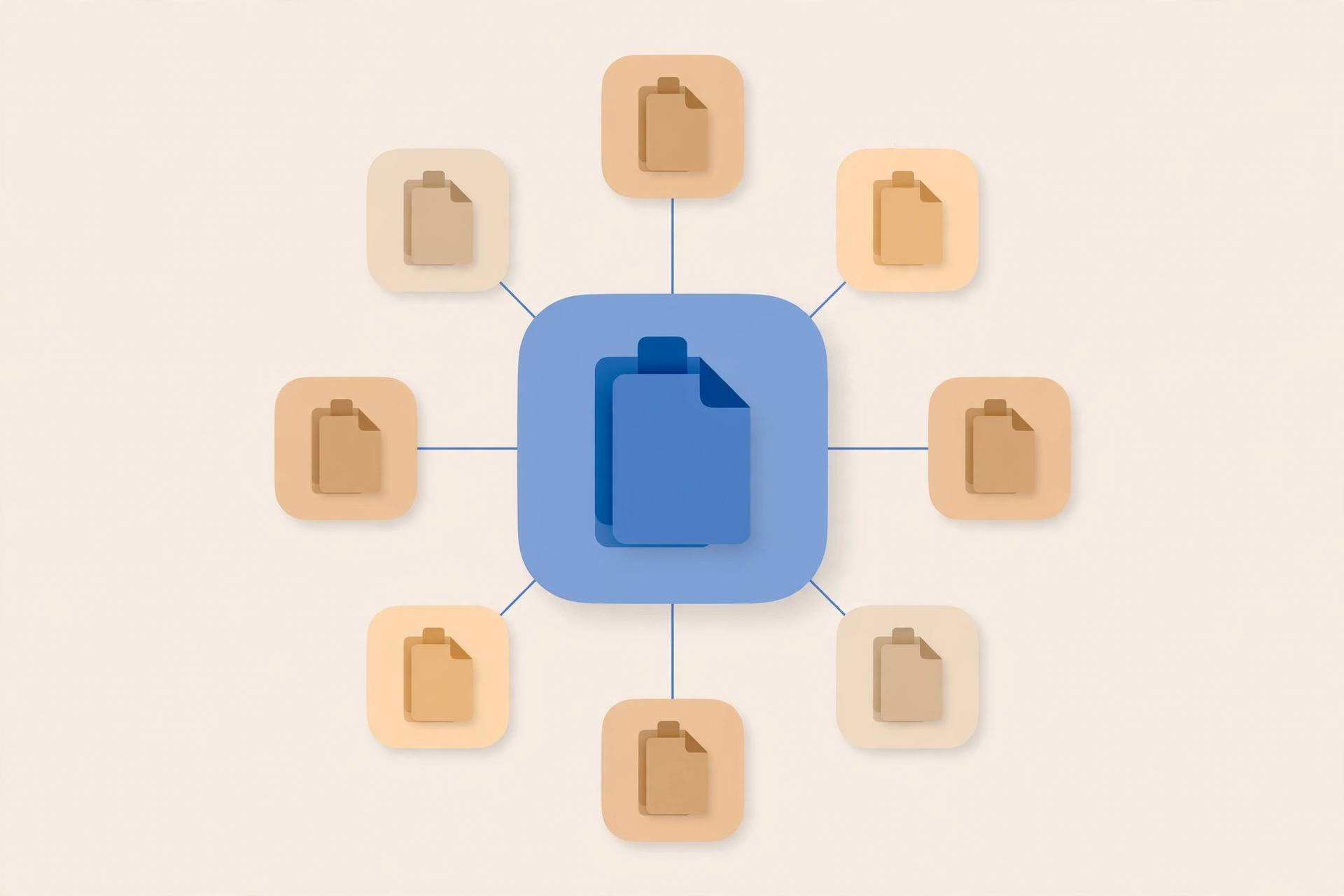
Internal Linking Strategy for Blogs
Internal links are how you tell search engines which
Technical SEO Basics for Blogs
You don’t need to be a developer, but your blog’s technical foundation has to be sound or even great content will underperform. The essentials:
- Site speed: Core Web Vitals (loading, interactivity, visual stability) are confirmed ranking signals. Compress images, limit heavy plugins, and choose a lightweight theme.
- Mobile-friendliness: most blog traffic is mobile. Test every template change on a phone, not just your desktop.
- XML sitemap: make sure your sitemap is generated and submitted in Google Search Console so new posts get discovered quickly.
- Clean URL structure: short, descriptive slugs (
/blog-seo/, not/p=4829). Avoid dates in URLs unless your niche demands freshness signals.
Not sure where your blog stands? Run a free SEO audit to surface the technical issues hurting you most, then fix them in priority order. And if you’re on a brand-new blog wondering why nothing ranks yet — that’s normal. New sites need time to build authority; Google’s SEO starter guide sets realistic expectations, and understanding what domain authority is helps explain why patience plus consistent publishing is the actual strategy.
Measuring Blog SEO Performance
Publishing without measuring is guessing. Google Search Console is the one free tool every blogger should check monthly. Track these per post:

- Impressions: how often your post appears in results — rising impressions mean Google is testing you for more queries.
- Average CTR: clicks divided by impressions. Low CTR with high impressions usually means your title/meta needs work, not your content.
- Average position: watch the trend, not the absolute number. A post climbing from position 28 to 12 is working.
Review monthly and sort posts into three buckets: winners (keep promoting and internally linking), steady (leave alone), and decaying (traffic down 15–20%+ over a few months). Decaying posts usually need a refresh — updated facts, new examples, fresh screenshots, new internal links — rather than a rewrite. Refreshing proven posts is one of the highest-ROI activities in blogging: the URL already has history and links, so updated content often rebounds faster than a brand-new post would rank.
When you refresh, treat it like a mini-republish: update the publish date, tighten the intro, add any subtopics the current top results cover that you missed, replace stale statistics, and add internal links to newer posts you’ve published since. Then resubmit the URL in Search Console. A simple operating cadence works well for most blogs: one measurement review per month (30 minutes in Search Console), and one refresh slot per month dedicated to your highest-potential decaying post. Over a year, that’s twelve posts rescued — often worth more traffic than twelve new posts would have earned.
Finally, decide refresh versus rewrite with a clear rule. Refresh when the post still ranks on page two or three, earns some impressions, or has backlinks worth preserving. Rewrite (on the same URL) only when the content is fundamentally misaligned with current intent — for example, a 2021 “best tools” list where every product mentioned is discontinued. And if a post has near-zero impressions after six months despite solid on-page work, the problem is usually the keyword choice, not the writing — redirect your effort toward better-validated topics rather than polishing a post nobody searches for.
Continue Learning
Blog SEO is a system, not a trick — and it compounds. If you found this guide useful, keep going with SEO content writing to sharpen the writing side of the equation, and the complete guide to anchor text in SEO to make every internal link count.
of your posts matter and how your topics relate. They’re also one of the most underused levers in blog SEO — most bloggers publish and forget, leaving new posts orphaned.
The working rule: every new post should link to at least two relevant older posts, and link older posts to the new one where it fits. Use descriptive anchor text — but keep exact-match anchors under about 30% of your site’s total; over-optimization looks manipulative. Organize around a pillar and cluster model: one comprehensive pillar guide per topic, with narrower cluster posts linking up to it and to each other. Over time this builds topical authority — Google starts treating your blog as the reference.
For the full methodology — anchor text ratios, hub-and-spoke layouts, and how to audit your existing link graph — see the detailed internal linking playbook.
ns with thousands of backlinks. As a newer site, your fastest wins come from specific, lower-competition terms where at least one or two modest-authority sites already rank — proof the door is open. As your blog’s authority compounds, you can climb toward harder terms. Trying to punch above your weight from day one is the most common reason good posts never rank.

On-Page SEO for Blog Posts
On-page SEO is everything you control within the post itself. Get these fundamentals right and you’ve handled the majority of what separates ranking posts from invisible ones. Moz’s guide to on-page ranking factors is a solid deeper reference if you want the full technical picture.
Titles and Meta Descriptions
Your title tag is the single highest-leverage on-page element. Put your primary keyword near the front, keep it under roughly 60 characters so it doesn’t truncate, and write for the click — a title that promises a clear benefit (“The Complete 2026 Guide (Checklist Included)”) beats a keyword-stuffed one every time. The meta description doesn’t directly rank you, but it sells the click: ~150–160 characters, include the keyword naturally, and end with a reason to click. Write a unique title and description for every post — duplicates across posts dilute both.
Heading Structure
Use exactly one H1 per post (usually your title), then a logical H2/H3 hierarchy below it. Think of headings as a table of contents a skimmer can follow: each H2 should work as a mini-answer to a sub-question of the main topic, with H3s breaking down the details. This structure helps readers scan — and, as noted above, it helps AI systems extract and cite your content. Never skip heading levels for styling reasons; if you need visual variety, that’s what CSS is for. Ahrefs’ on-page SEO walkthrough has good visual examples of heading hierarchies done well.
Images
Images help readers and rankings when handled properly — and hurt when they’re not. Three rules:
- Descriptive filenames: name the file what it shows (
blog-seo-checklist-example.jpg), notIMG_4829.jpg. - Alt text that describes the image content: write what a blind reader needs to know about the picture itself — never the image’s role (“header image”) or your name.
- Compress before upload: large images are the most common reason blog posts load slowly. Compress to WebP where possible and keep featured images lean.
Schema Markup
Schema markup is structured data that tells search engines what your content is — and for blogs, Article schema is the one that matters most. It can qualify your post for rich results (enhanced listings with images, dates, and author info). If you use WordPress with an SEO plugin like Rank Math or Yoast, Article schema is usually added automatically — just verify it’s present and that your author name and publish date are correct. It’s a small technical step with outsized visibility payoff.
What Is Blog SEO?
Blog SEO is the practice of optimizing a blog’s content, structure, and technical foundation so that individual posts rank in search engines and attract consistent organic traffic. It covers everything from choosing the right keyword for a post to how you link your articles together and how fast your pages load.
One important distinction: blog SEO is not homepage SEO. Your homepage targets branded and navigational searches — people who already know you. Your blog wins on informational intent: people asking questions, comparing options, seeking how-to guidance. Blogs also win through topical depth — covering a subject across many interlinked posts rather than ranking one page for everything. Think of every post as its own landing page. A homepage converts visitors you have; a blog earns visitors you haven’t met.
Why Blog SEO Matters in 2026
Search has changed more in the last two years than in the previous ten. Google’s AI Overviews now answer many questions directly on the results page, and industry studies estimate that well over half of searches end without a click. Does that make blog SEO pointless? Quite the opposite — it changes what winning looks like.
Here’s the shift: rankings still drive visibility, even when they don’t drive the click. When your post is cited as a source in an AI-generated answer, your brand gets seen by exactly the right audience. And the traffic that does come through tends to be highly qualified — visitors who click past an AI summary are usually deeper in their research and closer to a decision. Google’s own guidance on creating helpful, people-first content remains the north star: content written for real readers, demonstrating genuine experience, is what both traditional rankings and AI citations reward.
The practical takeaway for bloggers: structure your content for extraction. Clear H2/H3 headings, concise definitions near the top of sections, and FAQ-style question-and-answer blocks make it easy for both readers and AI systems to pull the key points from your post. A well-structured 2026 blog post serves two audiences at once — the human skimming for answers and the machine deciding what to cite.
There’s a second reason blog SEO matters more than ever: compounding returns. A strong evergreen post keeps earning traffic, backlinks, and citations for years. One thorough, well-optimized guide can outperform twenty thin news-style posts over a two-year window. Blog SEO is how you build that compounding asset instead of running on the publishing treadmill.
A third reason is trust — specifically E-E-A-T. Google’s quality guidelines emphasize Experience, Expertise, Authoritativeness, and Trust, and blogs are judged on these signals more strictly than ever. Practical steps that move the needle: put a real author bio with credentials on every post, cite primary sources instead of rephrasing competitors, show first-hand experience (screenshots of your own process, original data, honest test results), and keep an accurate, transparent about page. In 2026, the blogs that rank are the ones that read like they were written by someone who has actually done the thing — because they were.
Done-for-you podcast backlinks
Get your brand on Apple Podcasts, Spotify, Amazon and 25 more trusted platforms — placed by hand, reported link by link.