

URL Rating (UR) is Ahrefs’ metric that scores the backlink strength of a single page on a 0-to-100 logarithmic scale. Unlike Domain Rating, which measures a whole website, UR answers one specific question: how powerful is the link profile of this exact URL?
On this page
- What Is URL Rating in Ahrefs?
- How Ahrefs Calculates URL Rating
- The Logarithmic Scale: Why Early Gains Come Fast
- URL Rating vs Domain Rating vs Domain Authority vs Page Authority
- What Is a Good URL Rating?
- How to Increase Your URL Rating
- Common Mistakes People Make With URL Rating
- Frequently Asked Questions
If you run link-building campaigns and only watch Domain Rating, you are looking at the wrong number for page-level work. A single page can carry a UR of 70 on a domain whose DR barely reaches 30 — and that page will outrank stronger-looking competitors for its target keyword. Understanding what is URL rating in Ahrefs terms, how it is calculated, and when it actually matters will change how you prioritize link targets. This guide breaks down the formula inputs, how UR compares to Domain Authority and Page Authority, what counts as a good score, and the practical steps that move it.
What Is URL Rating in Ahrefs?
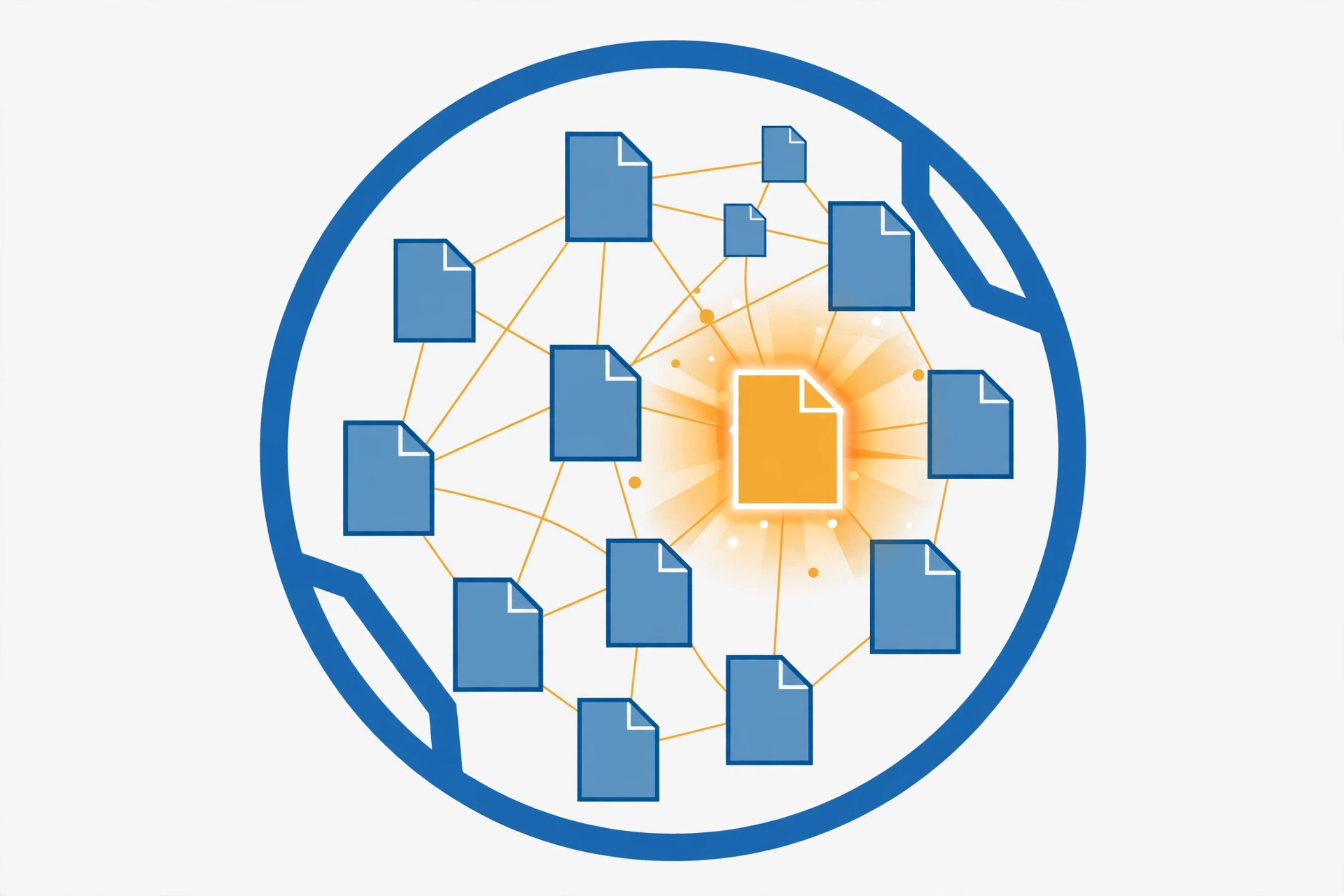
URL Rating is a proprietary Ahrefs metric that measures the strength of an individual page’s backlink profile. It is scored from 0 to 100 and is displayed in Ahrefs Site Explorer, the free Ahrefs Website Authority Checker, and across their reports wherever a single URL is analyzed.
The key word is page, not domain. Most SEOs are comfortable with domain-level metrics — Domain Authority (Moz), Domain Rating (Ahrefs) — because they summarize a site in one number. UR works one level deeper. Two pages on the same website can have completely different scores: a viral research post might sit at UR 65 while a brand-new product page on the same domain shows UR 2.
That granularity is exactly why the metric exists. Link equity flows to pages, not to domains in the abstract. When Google evaluates whether your guide deserves to rank, the links pointing directly at that guide matter far more than the links pointing at your homepage. UR is Ahrefs’ attempt to quantify that page-level power.
One critical clarification: URL Rating is not a Google ranking factor. Google does not use Ahrefs metrics. UR is a third-party estimate built on Ahrefs’ own crawl data, designed to approximate the kind of page-level authority that search engines reward. Treat it as a diagnostic instrument, not a target to game.
How Ahrefs Calculates URL Rating
Ahrefs does not publish the full formula, but it has confirmed the inputs that feed the score (see Ahrefs’ official URL Rating glossary for their definition). Think of UR as a weighted sum of link power flowing into one URL:
Direct external backlinks. Links from other websites pointing specifically at the URL. A link to your homepage does not raise the UR of your blog post — only links aimed at that exact page count here. This is the single biggest input for most pages.
Internal links. Links from other pages on your own site also pass UR. A new page linked from your high-authority homepage inherits a share of that homepage’s strength. This is the most underused lever in SEO: most sites build external links to a page and ignore the internal links that could multiply their effect for free.
Dofollow status. Only dofollow links contribute to UR. Nofollow links are excluded from the calculation entirely. That said, a nofollow link can still drive referral traffic and earn secondary dofollow links when people discover your content through it — so do not treat nofollow as worthless, just as invisible to this particular metric. For a deeper breakdown of how link attributes work, see our guide on dofollow vs nofollow backlinks.
Quality of linking pages. Not all links are equal. A link from a page with UR 60 passes far more power than a link from a page with UR 10. Ahrefs describes this as a cascade: the UR of the pages linking to you partly determines your UR.
Outgoing link dilution. A page that links out to 200 other sites splits its power across all of them. A contextual link from a focused article with few outbound links passes more UR than a link buried in a bloated blogroll or sitewide footer. This is why one editorial link from a strong post can move your score more than ten directory links combined.
Verdict: UR rewards focused, high-quality, page-specific links — the exact kind of links that also tend to drive real rankings.
The Logarithmic Scale: Why Early Gains Come Fast
UR is scored on a logarithmic scale from 0 to 100. In practice, that means the effort required to move the needle grows exponentially as the score rises. Going from UR 10 to UR 20 takes a handful of decent links. Going from UR 60 to UR 70 can take months of sustained link building.
Here is a concrete way to think about it. Imagine two pages:
- Page A (UR 12): a new guide with 4 referring domains, mostly small blogs. Three solid guest-post links from mid-authority sites could push it to UR 25.
- Page B (UR 68): an industry benchmark report with 400+ referring domains including major publications. Moving it to UR 75 might require links from sites like national newspapers or .edu domains — each one hard-won.
This has a direct strategic implication: low-UR pages are where link building has the highest ROI. If your money page sits at UR 8 while competitors’ pages sit at UR 30, a focused campaign of 10-15 quality links can close that gap fast. Chasing marginal gains on an already-strong page is usually a worse use of budget than lifting a weak page into competitive range.
Verdict: audit UR at the page level before every campaign — the biggest gaps are the cheapest wins.

URL Rating vs Domain Rating vs Domain Authority vs Page Authority
These four metrics get mixed up constantly. Here is how they actually differ:
| Metric | Provider | Level | Scale | What it measures |
|---|---|---|---|---|
| URL Rating (UR) | Ahrefs | Page | 0–100 | Backlink strength of one specific URL |
| Domain Rating (DR) | Ahrefs | Domain | 0–100 | Backlink strength of the entire domain |
| Domain Authority (DA) | Moz | Domain | 1–100 | Predicted ranking strength of a domain (ML-based) |
| Page Authority (PA) | Moz | Page | 1–100 | Predicted ranking strength of a page (ML-based) |
The most useful pairings:
UR vs DR: both from Ahrefs, different zoom levels. A high-DR site can host low-UR pages (a new blog post nobody linked to), and a low-DR site can host a high-UR page (one viral asset). When you are doing link building for a specific page, watch UR. When you are evaluating a site’s overall link profile, watch DR. Our full breakdown of DA vs DR covers the domain-level side in detail.
UR vs PA: both page-level, different philosophies. UR is purely link-based — it counts link power and nothing else. Moz’s Page Authority uses machine learning trained against actual search results, so it folds in more signals — while Domain Authority applies the same ML approach at domain level. Neither is “correct”; they answer slightly different questions. If you want to know “how strong is this page’s link profile,” use UR. If you want “how likely is this page to rank,” PA’s ML model may be closer.
UR vs DA: different levels entirely (page vs domain). Comparing them directly is a category error — like comparing a player’s score to a team’s season record.
Verdict: use UR for page-level link audits, DR/DA for domain-level evaluation, and never treat any of them as Google’s actual opinion.
What Is a Good URL Rating?
There is no universal “good” UR — it depends entirely on your competitive context. A UR of 25 might dominate a local niche and be invisible in a national one.
That said, rough benchmarks help. Across Ahrefs’ index, most pages cluster in the lower ranges, and average UR values often land somewhere in the 40s for pages that have any meaningful link profile at all. In practice:
- UR 0–10: new or unlinked pages. Normal for fresh content; not a problem unless the page needs to rank competitively.
- UR 10–30: the working range for most small-business and niche content. Achievable with consistent, honest link building.
- UR 30–50: strong for competitive keywords in most industries. Pages here usually have dozens of quality referring domains.
- UR 50+: exceptional. Typically reserved for link magnets — original research, definitive guides, free tools — or pages on major publications.
The right question is never “is my UR good?” but “is my UR competitive for this keyword?” Open Ahrefs, check the UR of the top 5 pages ranking for your target term, and compare. If they average UR 35 and you sit at UR 12, you have a link gap to close. If you sit at UR 40 and still do not rank, your problem is probably content, intent match, or on-page factors — not links.
Verdict: benchmark against the SERP you want to win, not against an absolute scale.
How to Increase Your URL Rating
Raising UR is straightforward in concept: earn more high-quality dofollow links to the specific page, and route internal link power toward it. Here is the practical sequence:
Build links directly to the page. This sounds obvious, but most campaigns default to homepage link building. If your target page is a guide, pitch that guide — not your homepage — to resource pages, journalists, and bloggers. Every direct link raises that page’s UR specifically.
Strengthen internal links. Find your site’s highest-UR pages (check them in Ahrefs Site Explorer) and add contextual internal links from them to your target page. One internal link from a UR 55 page can move a new page from UR 2 to UR 12 overnight, with zero outreach. Most sites leave this value on the table.
Fix link dilution. Audit the pages linking to you: if a strong referring page links out to 150 other sites, its contribution is thin. You cannot control others’ pages, but you can control yours — keep your own outbound links focused so the pages you link internally pass maximum power.
Reclaim lost links. Pages lose backlinks constantly as linking sites redesign, delete content, or break URLs. Run a lost-backlinks report in Ahrefs for your key pages, reach out where the link disappeared, and ask for reinstatement. Recovered links are the cheapest UR gains available. For a full process, see our guide on what domain authority means and how page-level metrics feed into it.
Prioritize dofollow, but do not obsess. Only dofollow links move UR, so weight your outreach toward placements that pass link equity. But a natural profile includes nofollow links, and nofollow placements on the right sites drive discovery that earns dofollow links later.
Verdict: direct links first, internal links second, reclamation always — in that order of effort.
Common Mistakes People Make With URL Rating
Chasing UR instead of rankings. UR is a diagnostic, not a goal. I have seen pages with UR 60 that rank for nothing because the content missed search intent, and pages with UR 18 dominating their niche because the content was exactly what searchers wanted. If your UR rises but rankings do not, stop building links and fix the page.
Comparing UR across unrelated niches. A UR 30 page can be a giant in local plumbing SEO and invisible in personal finance. The number only means something relative to the specific SERP you are competing in.
Ignoring internal links. The most common UR mistake is treating it as an external-links-only metric. Ahrefs explicitly counts internal links. A deliberate internal linking structure — pillar pages supported by cluster content, key pages linked from high-UR site sections — raises UR across your whole site without a single outreach email.
Assuming high DR means high UR. Publishing on a DR 80 site does not give your page UR 80. UR starts near zero for every new page and must be earned per-URL. This is why guest posts on huge sites sometimes underperform: the domain is strong, but your specific page has no links of its own yet.
Gaming it with link schemes. Because UR is purely link-based, it can be inflated with schemes — private blog networks, paid links, link farms. Google’s systems detect these patterns independently of what any third-party metric says. An inflated UR with a manual penalty is worth less than a modest UR on a clean profile.
Frequently Asked Questions
Is URL Rating a Google ranking factor?
No. URL Rating is an Ahrefs metric built on Ahrefs’ crawl data. Google does not use it, see it, or care about it. It correlates with rankings because strong backlink profiles genuinely help pages rank — but the correlation is not causation, and Google’s actual systems are far more complex.
What is the difference between UR and DR in Ahrefs?
URL Rating measures the backlink strength of one specific page; Domain Rating measures the backlink strength of the entire domain. A page’s UR and its domain’s DR are independent numbers — a viral post on a small site can have high UR on a low-DR domain.
Do internal links count toward URL Rating?
Yes. Ahrefs confirmed that UR factors in both external backlinks and internal links. Linking to a target page from your site’s strongest pages is one of the fastest legitimate ways to raise its UR.
Do nofollow links affect URL Rating?
No — only dofollow links contribute to UR. Nofollow links are excluded from the calculation, though they can still drive traffic and lead to dofollow links indirectly.
How long does it take to increase URL Rating?
It depends on your starting point and link velocity. Moving from UR 5 to UR 20 can take weeks with a focused campaign; moving from UR 60 to UR 70 can take months. Ahrefs updates its index regularly, so new links typically reflect in UR within days to weeks of being crawled.
Can I check URL Rating for free?
Yes. Ahrefs offers a free Website Authority Checker that shows UR (labeled as part of their authority metrics) for any URL, along with Domain Rating and backlink counts. No account is required for basic checks.
Done-for-you podcast backlinks
Get your brand on Apple Podcasts, Spotify, Amazon and 25 more trusted platforms — placed by hand, reported link by link.