

So what is PBN in SEO? A PBN (private blog network) is a group of websites created or acquired for one purpose: building backlinks to a main “money” site to manipulate rankings. Google classifies PBNs as link schemes — a direct spam policy violation — and penalized sites risk deindexing.
On this page
This guide explains exactly how private blog networks work, why some SEOs still take the risk, how Google catches them, and what to build instead. If you want links that last, start with our white hat link building guide — everything below explains why shortcuts like PBNs eventually cost more than they deliver.
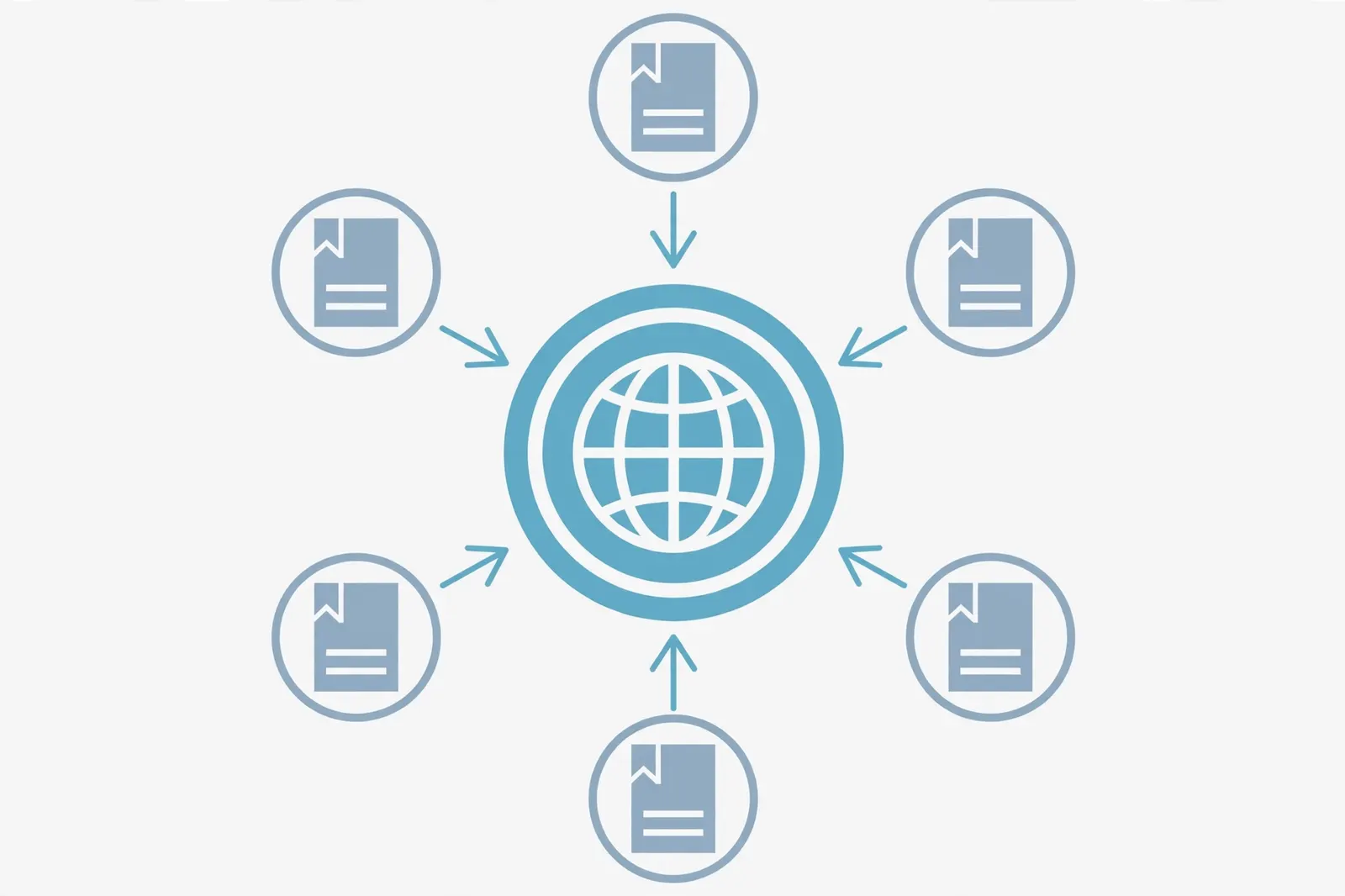
How Private Blog Networks Are Built
A private blog network starts with expired domains. When a website owner lets a domain lapse, its backlink profile — sometimes built over a decade — stays attached to the domain. PBN builders buy these expired domains at auction, often paying anywhere from $50 for a weak one to several thousand dollars for a domain with strong, clean history. The entire strategy depends on this inherited authority: a brand-new domain has no backlinks and passes no value, but an expired domain with existing links can pass link equity from day one.
After acquisition, the builder sets up each domain as a seemingly independent blog. This is where the operational effort — and the footprints — begin. Each site needs separate hosting (ideally different hosts and IP ranges), different themes, unique content, and distinct registration details. Builders who cut corners here — hosting everything on one server, using the same WHOIS data, or reusing themes — create patterns Google’s systems are designed to spot.
Content on PBN sites is usually just good enough to look legitimate: a few dozen articles per site, often rewritten or AI-generated, covering loosely related topics. The real purpose is the outbound links. Each PBN site links out to the owner’s money sites with carefully chosen anchor text, and sometimes the network sites link to each other to look like a natural web of citations. A typical small PBN runs 10 to 50 sites; larger operations run hundreds.
Here is what the real cost looks like for a modest 20-site network over one year:
| Expense | Estimated cost | Notes |
|---|---|---|
| 20 expired domains | $2,000–$10,000 | Depends on domain authority and auction competition |
| Hosting (spread across providers) | $1,200–$2,400/yr | Separate IPs cost more than shared hosting |
| Content (20 sites × 30 articles) | $3,000–$9,000 | Cheap content leaves footprints; good content is expensive |
| Maintenance and renewals | $1,000–$2,000/yr | Domain renewals, SSL, updates, monitoring |
| Total first year | $7,200–$23,400 | Before a single ranking is earned |
Verdict: A PBN is not the cheap shortcut it appears to be. The upfront investment rivals a serious white hat campaign — except the asset can be wiped out overnight by a single manual action.
Why Some SEOs Still Take the Risk
Given the costs and dangers, it is worth understanding honestly why PBNs have not disappeared. The first reason is speed. Legitimate link building — outreach, digital PR, content marketing — typically takes three to six months to move rankings in a competitive niche. A PBN can move a page in weeks, because the builder controls every link: the source page, the anchor text, the placement, and the timing. For someone under pressure to show results fast, that control is seductive.
The second reason is difficult niches. In industries like gambling, payday loans, or adult content, legitimate publishers rarely accept guest posts or link partnerships. When real outreach options are thin, some operators decide a PBN is the only lever available. This does not make it safe — Google applies the same rules to every niche — but it explains the demand.
The third reason is misaligned incentives inside agencies. Many clients judge an SEO provider on how fast rankings move, not on how safely they are built. An agency that says “give us six months of outreach” can lose the account to one promising faster results. And since many client relationships churn within a year or two anyway, some agencies gamble that a penalty — which often takes 12 to 18 months to arrive — will land after they have moved on. The client inherits the risk; the agency keeps the fees.
None of this is a recommendation. It is the incentive structure that keeps the PBN market alive despite more than a decade of Google warnings. Understanding it helps you recognize when a cheap link-building offer is too good to be true: if someone promises fast rankings at a fraction of the market rate, PBN links are usually what you are buying.
Why Google Treats PBNs as Link Schemes
Google’s spam policies are explicit: any links intended to manipulate rankings — including links from private blog networks — are link spam. This is not a gray area in Google’s documentation. The Google Search Essentials spam policies list “link schemes” as a violation, and PBNs are the textbook example: a coordinated set of sites whose links exist to game PageRank rather than to serve readers.
When Google confirms a PBN, the consequences come in two forms. The first is algorithmic: Google’s systems learn to simply ignore the network’s links, so the money site’s rankings quietly collapse as the artificial support evaporates. The second is a manual action — a human reviewer at Google flags the site, and Search Console shows a “manual action” notice. Manual actions can demote specific pages or remove the entire site from Google’s index. Recovery requires removing the manipulative links and filing a reconsideration request, a process that takes weeks to months with no guarantee of full recovery.
The most famous public case remains J.C. Penney, exposed by The New York Times in 2011: thousands of paid links pointed at the retailer’s pages, and Google responded by burying the site for key shopping terms during the holiday season. More recently, Search Engine Land has documented how PBNs remain one of the fastest routes to a penalty as Google’s detection improves. Each wave of link-spam updates — including the 2022 link spam update powered by SpamBrain — has specifically targeted artificial link patterns.
The uncomfortable truth for PBN users: Google does not need to catch every network. It only needs to catch yours. And every month a PBN operates, it generates more data — hosting records, link patterns, content fingerprints — that make detection more likely, not less.

How Google Detects Private Blog Networks
Google rarely announces exactly how it identifies a PBN, but SEO researchers and penalty case studies have mapped the common footprints. No single signal proves a network — it is the combination that gives it away. Use this checklist to understand what investigators (and Google’s systems) look for:
| Footprint | What it looks like | Why it matters |
|---|---|---|
| Shared hosting / IP ranges | Multiple “independent” sites on the same server or IP block | Real independent sites rarely share infrastructure |
| WHOIS patterns | Same registrant, same registration dates, privacy on all domains | Suggests single ownership behind the network |
| Thin or templated content | Sites with shallow articles, no author, no real audience | Legitimate sites earn links; PBN sites only give them |
| Outbound link patterns | Many sites linking to the same money pages with similar anchors | Natural link profiles are diverse and messy |
| No organic traffic | Sites with backlinks but zero real visitors | A site nobody visits but everybody links from is suspicious |
| Design reuse | Same themes, plugins, or layouts across the network | Operational laziness leaves fingerprints |
Verdict: Hiding a PBN completely requires the operational discipline of running dozens of genuinely independent businesses — at which point you have spent the budget of a real media company to build fake ones.
This checklist is also practical if you are auditing links someone built for you. If a “guest post” or “niche edit” you paid for sits on a site matching three or more of these patterns, treat it as a PBN link and assess the risk to your own site. Our toxic backlinks guide walks through how to evaluate questionable links in your profile.
PBN Links vs White Hat Links
The honest comparison is not “fast vs slow” — it is “rented vs owned.” Here is how the two approaches stack up across the dimensions that actually determine long-term results:
| Factor | PBN links | White hat links |
|---|---|---|
| Time to impact | Weeks | Months (typically 3–6) |
| Control over anchors | Total | Partial — editors decide |
| Penalty risk | High — manual action or deindexing | Minimal when done properly |
| Cost over 2 years | $15,000–$45,000+ (plus rebuild cost after penalty) | $10,000–$30,000 (compounding asset) |
| Link longevity | Dies with the network | Permanent editorial links |
| Brand value | Zero — nobody sees PBN sites | Referral traffic, mentions, authority |
| Survives algorithm updates | No — updates specifically target them | Yes — updates reward them |
Verdict: PBNs win on exactly one dimension — speed. On cost, longevity, brand value, and survival, white hat links win everywhere else. Speed alone is a bad trade when the downside is losing your entire organic presence.
What to Do If Your Site Already Has PBN Links
Many site owners discover PBN links in their profile without ever buying them — a previous SEO provider may have built them quietly. The first step is an honest audit. Pull your backlink profile in Google Search Console, Ahrefs, or Semrush and flag links from sites matching the footprint checklist above: no traffic, thin content, shared hosting, and outbound links clustered around commercial anchors.
For links you can influence, contact the site owners and request removal. Document every outreach attempt — Google’s reconsideration process wants to see genuine effort. For links you cannot remove, use Google’s Disavow Tool in Search Console to tell Google to ignore them. A disavow file is simply a text list of domains or URLs, uploaded through Search Console; our disavow backlinks guide walks through the exact format and when disavowing is (and is not) appropriate.
One caution: do not disavow aggressively without evidence. Disavowing legitimate links hurts you. Focus on clear PBN patterns — multiple links from the same suspicious network — rather than nuking your whole profile out of fear. When in doubt, the links Google already ignores algorithmically do not need your help; save the disavow file for the ones tied to a manual action or an obvious paid network.
Frequently Asked Questions
What is a PBN in SEO in simple terms?
A PBN (private blog network) is a set of websites owned or controlled by one party, built for the sole purpose of linking to a main site to manipulate search rankings. Unlike natural links that editors give voluntarily, PBN links are placed by the network owner, which is why Google treats them as a link scheme violation.
Are PBN backlinks illegal?
PBNs are not illegal in the sense of breaking the law, but they directly violate Google’s spam policies. The consequence is not a fine — it is a search penalty. Google can demote your pages, issue a manual action, or remove your site from its index entirely, which for most businesses is far more costly than any fine.
Can Google detect all PBNs?
Google does not need to detect all of them — it needs to detect yours. Its systems look for combined footprints: shared hosting, WHOIS patterns, thin content, unnatural outbound link clusters, and sites with backlinks but no real traffic. Each additional site in a network multiplies the evidence. Detection gets more likely over time, not less.
Do PBN links still work in 2026?
They can still move rankings in the short term, which is why the market persists. But Google’s SpamBrain system and link spam updates have made the lifespan of that boost shorter and the penalties more severe. Short-term movement with a growing risk of deindexing is not a strategy — it is a gamble with your domain as the stake.
What is the difference between a PBN and a link farm?
A link farm is a crude page (or set of pages) stuffed with unrelated outbound links, often automated and obvious. A PBN is more sophisticated: real-looking blogs on expired domains with actual content, designed to pass as legitimate sites. Both violate Google’s policies, but PBNs cost far more to build and are harder — not impossible — to detect.
What should I do instead of using a PBN?
Invest in tactics that earn editorial links: original data and studies, free tools, digital PR, broken link building, and genuine outreach to relevant publishers. These take longer — typically three to six months to show movement — but the links compound instead of expiring, and algorithm updates reward rather than punish them.
Done-for-you podcast backlinks
Get your brand on Apple Podcasts, Spotify, Amazon and 25 more trusted platforms — placed by hand, reported link by link.