
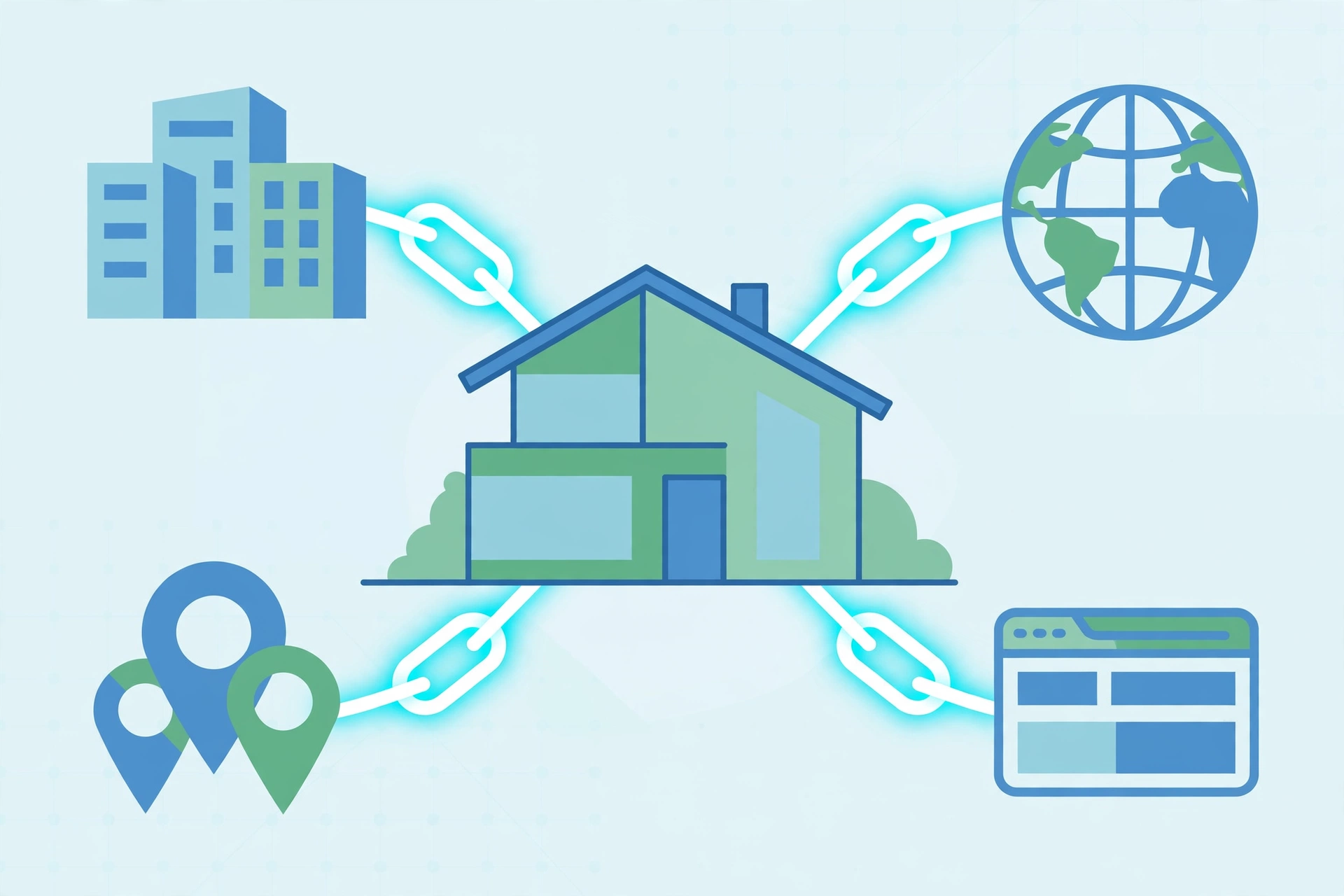
Real estate SEO is brutally competitive. Every agent, brokerage, and listing portal fights for the same local keywords — and the sites that win almost always have stronger backlink profiles. Here’s how to build one.
On this page
This is Part 1 of our Industry Verticals series — practical link building playbooks for specific industries. Law firms and affiliate sites are coming next.
Why Link Building Is Different for Real Estate
Real estate link building sits at the intersection of local SEO and national authority — and that makes it trickier than either one alone.
A local plumber needs links from the neighborhood. A SaaS company needs links from anywhere with authority. A real estate website needs both: local relevance signals (city blogs, chambers of commerce, neighborhood associations) and national authority (housing publications, data journalism, finance sites).
The competition is also fiercer than most niches. You’re not just competing with other agents — you’re competing with Zillow, Realtor.com, and Redfin, sites with millions of backlinks. You can’t out-muscle them on raw authority, so you have to out-flank them on topical relevance and local specificity.
The good news: real estate has natural link advantages most industries don’t. You have hyperlocal expertise, community connections, original market data, and visual assets (photos, virtual tours, neighborhood maps). All of these are link bait waiting to happen.
Link Building Strategies for Real Estate Websites
Publish Neighborhood Guides (Your Best Linkable Asset)
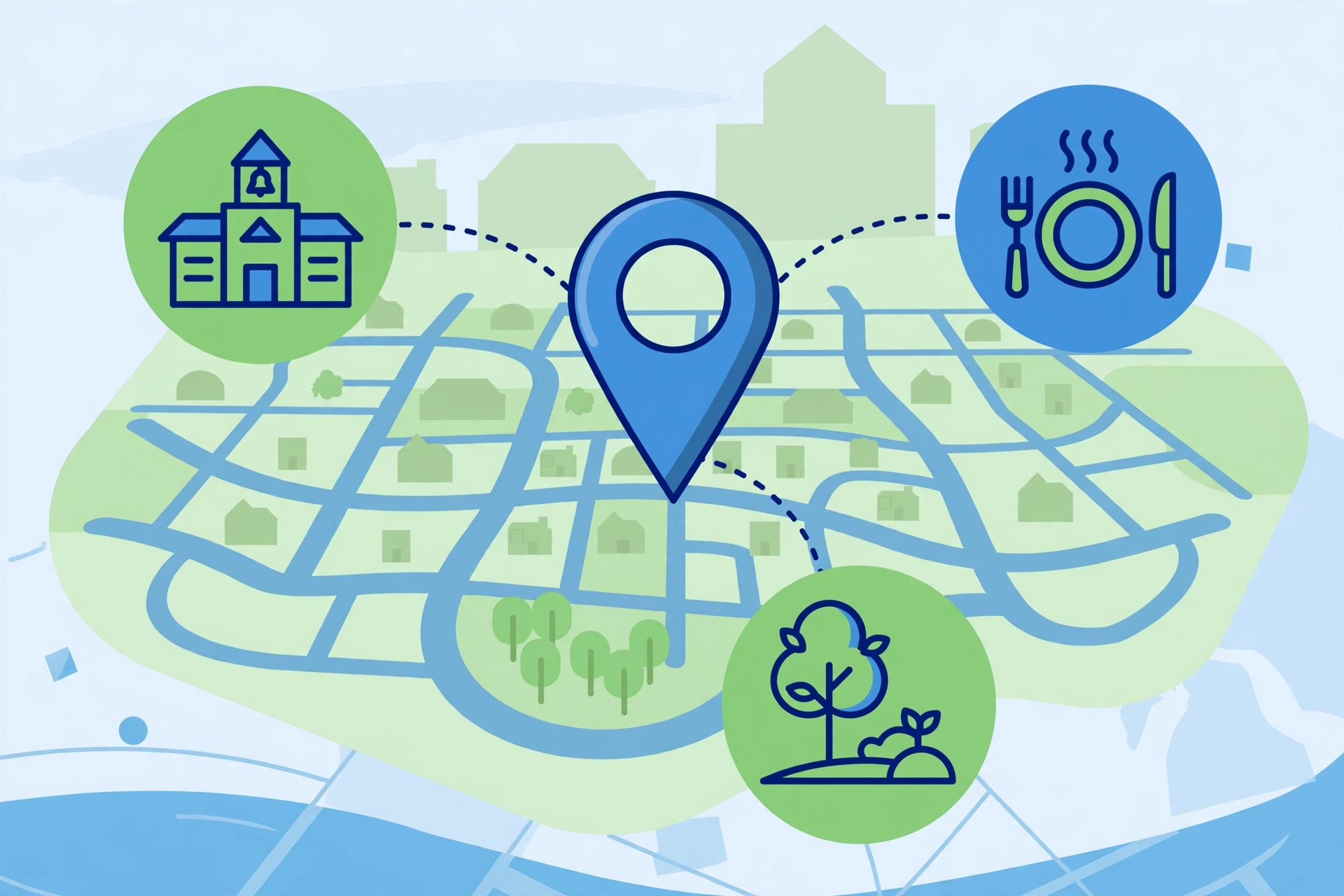
The single highest-ROI link building tactic for real estate is the in-depth neighborhood guide. Not a thin “About Downtown” page — a genuinely useful resource covering schools, commute times, walkability scores, parks, restaurants, crime stats, and price trends.
Why it works: local bloggers, relocation sites, HR departments (for employee moves), and even local news link to comprehensive neighborhood resources. A linkable asset like this earns links passively for years.
Make each guide the definitive resource for that neighborhood. Include original photography, an embedded map, and data no one else has compiled in one place. Then do targeted outreach to local sites that list “moving to [city]” resources.
Build Local Citations and Directory Links
Citations aren’t glamorous, but for real estate they’re foundational. Claim and optimize profiles on Google Business Profile, Yelp, Bing Places, Apple Maps, and real-estate-specific directories like Realtor.com agent profiles, Zillow Premier Agent, and Homes.com.
Go beyond the obvious: local chamber of commerce directories, neighborhood business associations, and “best real estate agents in [city]” roundups. Each one is a relevant, geographically-targeted link that reinforces your local entity.
Keep NAP (name, address, phone) perfectly consistent everywhere. Inconsistent citations don’t just waste the link — they actively confuse Google about your location.
Run Local Digital PR Campaigns
Real estate data is catnip for local journalists. Every month, pull something interesting from your market: biggest price drops, fastest-selling neighborhoods, most-searched zip codes, year-over-year trends.
Package it as a short press release or data email and pitch local news outlets, TV stations, and real estate reporters. A single “Housing Market Report: [City] Prices Drop 8%” story can earn links from 5-10 local publications.
According to Ahrefs’ digital PR research, data-driven campaigns consistently outperform opinion pieces for link acquisition — and real estate agents sit on more proprietary data than almost anyone.
Optimize Agent Profile Pages for Links
Every agent bio page is a link opportunity most brokerages waste. Instead of a headshot and two sentences, build real profile pages: transaction history, specialties, neighborhoods served, client testimonials, community involvement, and original content (market commentary, video walkthroughs).
Then get those profiles linked from: brokerage “meet the team” pages, local “top agents” listicles, podcast guest appearances, webinar speaker bios, and community organization boards the agent sits on.
When an agent is quoted in local press or appears on a podcast, make sure the bio link points to their profile page — not the brokerage homepage. Deep links to agent pages build the topical depth Google rewards.
Build Free Tools (Mortgage Calculators, Affordability Widgets)
Interactive tools are among the most-linked content formats on the internet. For real estate, the classics work: mortgage calculators, affordability calculators, rent-vs-buy comparisons, closing cost estimators.
A well-built mortgage calculator earns links from personal finance blogs, first-time buyer guides, Reddit threads, and “moving to [city]” resources — audiences you’d never reach through outreach alone.
You don’t need to build from scratch. Embed a quality calculator and wrap it in original supporting content (a guide to understanding the results). The combination of tool + explanation is what earns the link.
Sponsor Community Events and Organizations
Little League teams, charity galas, school fundraisers, neighborhood cleanups — local sponsorships come with links from organization websites, event pages, and local news coverage.
This isn’t about buying links (which violates Google’s guidelines). It’s about genuine community involvement that happens to generate the kind of local citations and links Google expects from a real local business.
Prioritize sponsorships that get you: a logo link on the organization’s website, a mention in event press coverage, and photos you can feature on your own site (which sometimes earns secondary links).
Do Targeted Local Blogger Outreach
Every city has bloggers writing about neighborhoods, restaurants, schools, and local lifestyle. These are warm outreach targets — they need fresh local content, and you have local expertise.
Pitch them data or angles, not listings. “I pulled the 10 fastest-appreciating streets in [neighborhood] — want the data for a post?” beats “please link to my listings page” every time.
Also watch for unlinked brand mentions — when local sites mention your brokerage or agents without linking, a polite email converts most of them into links.
Turn Client Testimonials Into Links
Every vendor you work with — photographers, stagers, mortgage brokers, title companies, contractors — has a testimonials or partners page. Give them a glowing testimonial with your photo and ask for a link back to your site.
This works in reverse too: when you feature vendor partners on your site, let them know. Many will reciprocate with a link, and even when they don’t, the relationship pays off in referrals.
Client reviews on Google and Zillow don’t pass link equity, but detailed case-study-style testimonials on your own site (with permission) become linkable content that other agents and marketers reference.
Run Broken Link Building on Local Resource Pages
Cities are full of “moving to [city]” and “relocation resources” pages — many linking to dead real estate sites, retired agents, or shuttered brokerages. That’s your opening.
Use a broken link checker on local resource pages, chamber of commerce link lists, and university relocation guides. When you find dead links pointing to real estate resources, email the webmaster: “I noticed your link to [dead site] is broken — my neighborhood guide covers the same topic if you need a replacement.”
Local webmasters are far more responsive than national ones. Response rates of 15-20% are realistic because you’re solving a real problem on a page they care about. Moz’s broken link building guide covers the general framework if you want to go deeper.
What NOT to Do: Real Estate Link Building Pitfalls
Don’t buy “real estate guest post” packages. The SEO forums are full of sellers offering 50 DR30+ guest posts for $500. These are link schemes — Google’s spam policies specifically target them, and a manual penalty can wipe out years of work.
Don’t spam IDX listing pages for links. Nobody links to a search results page. If your linkable content is just listing inventory, you have nothing worth linking to. Build the guides, tools, and data first.
Don’t ignore your Google Business Profile. It’s not a “link,” but for real estate it’s often worth more than one. Reviews, photos, posts, and Q&A directly influence the local pack — where most buyer/seller clicks happen.
Don’t use exact-match anchor text aggressively. Fifty links saying “best realtor in Austin” is a Penguin waiting to happen. Natural anchor distribution (branded, URL, generic, partial-match) is non-negotiable in a competitive niche.
How to Measure Your Real Estate Link Building
Track these three metrics monthly and you’ll know exactly whether your efforts are working.
Referring domains (not total backlinks). One site linking 50 times counts less than 50 sites linking once. Watch the referring domain count in Ahrefs or Semrush trend upward — 5-10 new referring domains per month is a healthy pace for a local real estate site.
Local pack vs organic movement. These move independently. Your citation and GBP work shows up in the map pack first; your content links (guides, tools, PR) move organic rankings. Track both separately or you’ll misread what’s working.
Referral traffic from earned links. The best real estate links send actual buyers and sellers, not just equity. Check Google Analytics for referral traffic from your newest links — a neighborhood guide link that sends 20 visitors a month is worth more than a directory link that sends zero.
Frequently Asked Questions
How many backlinks does a real estate website need?
There’s no magic number — it depends on your market. A suburban agent competing locally might rank with 50-100 quality referring domains. Competing in a major metro against big portals takes hundreds. Focus on the backlink gap between you and the agents currently outranking you, not an absolute number.
Are Zillow and Realtor.com links worth pursuing?
Agent profile links from these portals are typically nofollow and pass no equity — but they’re still worth having for referral traffic and entity signals. Don’t confuse them with real link building; treat them as citations.
How long does real estate link building take to show results?
Expect 3-6 months before new links move rankings meaningfully. Local links tend to impact the map pack faster (6-10 weeks), while competitive organic keywords take longer. Consistency beats intensity — 5 quality links a month for a year beats 60 in a month.
Should I hire a link building agency for my real estate site?
Maybe — but vet them ruthlessly. Ask for sample links (real URLs, not screenshots), anchor text distribution reports, and confirmation they don’t use PBNs or paid guest post networks. Most real estate link building is relationship-driven, which is hard to outsource well.
Do social media links help real estate SEO?
Not directly (they’re nofollow), but social amplification gets your content in front of people who do link — journalists, bloggers, relocation writers. Treat social as distribution for your linkable assets, not as link building itself.
The Bottom Line
Real estate link building rewards the agents who act like local publishers: neighborhood guides, market data, free tools, and genuine community presence. None of these are shortcuts — but they’re also things Zillow can’t replicate at the neighborhood level, which is exactly your edge.
Start with one neighborhood guide and one data-driven PR pitch this month. Those two assets alone can seed dozens of links over the next year. Then systematize: one guide per quarter, one market report per month, ongoing citation maintenance.
Links compound. The agents ranking today started building years ago — the best time to start was then, the second-best time is now.
Done-for-you podcast backlinks
Get your brand on Apple Podcasts, Spotify, Amazon and 25 more trusted platforms — placed by hand, reported link by link.