

To find unlinked mentions, search Google for your brand name in quotes while excluding your domain — "Your Brand" -site:yourdomain.com — then set up Google Alerts for monitoring, and use Ahrefs or Semrush when you need scale. Every mention without a hyperlink is a backlink waiting to be claimed.
On this page
- What Counts as an Unlinked Mention (and What Doesn’t)
- Why Unlinked Mentions Are Worth Reclaiming
- How to Find Unlinked Mentions for Free
- How to Find Unlinked Mentions at Scale With Paid Tools
- How to Triage Your Mention List Before Outreach
- The Outreach Email That Turns Mentions Into Links
- Mistakes That Kill Your Reclamation Rate
- Frequently Asked Questions
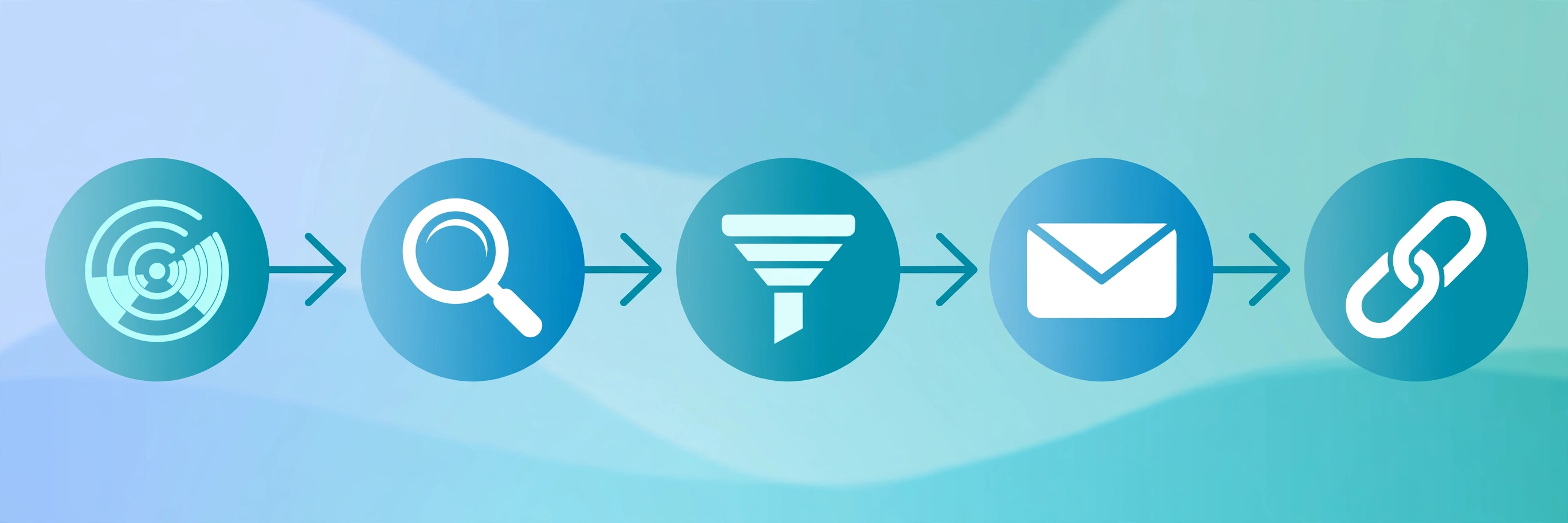
Unlinked mention reclamation is the highest-ROI link building tactic most sites ignore. The author already decided your brand was worth naming — you’re not convincing a stranger, you’re asking someone to finish a job they started. Practitioners report 15–40% conversion for this outreach versus 1–5% for cold link building. This guide covers the full process: finding mentions free and paid, triaging by value, and writing the email that converts. It’s a core part of any serious link reclamation process.
What Counts as an Unlinked Mention (and What Doesn’t)
An unlinked mention is any online reference to your brand, product, founder, or original content that names you without including a clickable hyperlink. The classic case: a blogger writes “we used Mubashir Safeer’s backlink checker to audit the site” — your name is there, but there’s no link for readers (or Google) to follow.
But not every text reference qualifies as an opportunity. It helps to sort mentions into three buckets before you spend any outreach effort:
True unlinked mentions are editorial references on real pages — blog posts, news articles, listicles, podcast show notes, event recaps — where a link would genuinely help the reader. A journalist naming your tool in a roundup of SEO software is a true mention. The author chose to reference you; adding the link is a small, natural edit.
Borderline mentions name you in contexts where a link is plausible but not obviously useful: forum threads, Reddit comments, Quora answers, social media posts. You usually can’t get a followed link from these platforms anyway, and chasing every casual name-drop burns time you’d spend better on editorial mentions.
False positives look like mentions but aren’t worth pursuing: auto-generated scraper sites republishing your content, your own social profiles, directory listings that already link to you, and pages that mention a different company with a similar name. Filter these out early — they inflate your list and deflate your morale.
The distinction matters because outreach has a cost: your time and your reputation. Every email you send trains you (and the recipient) on what your outreach feels like. Spend it where a link is both earnable and valuable.
Why Unlinked Mentions Are Worth Reclaiming
Three reasons make this tactic stand out from every other link building method.
First, the conversion math is unmatched. Cold outreach typically converts at 1–5%. Unlinked mention outreach converts far higher because the hardest part — getting someone to care about your brand — already happened. Practitioners report 15–40% conversion on well-targeted reclamation outreach, with some seeing 40–60% on warm, recent mentions from smaller sites. Even at the conservative end, that’s roughly 10x the hit rate of cold pitching.
Second, the links are editorial and safe. Google’s link spam policies target manipulative patterns: bought links, excessive exchanges, automated creation. A journalist adding a link to a brand they already mentioned is the opposite of manipulation — it’s a correction that improves the page. No footprint, no payment, no scheme.
Third, mentions feed AI search visibility even before they become links. Google’s AI Overviews and tools like ChatGPT search increasingly cite brands based on entity recognition across the web — clear, consistent brand references help answer engines attribute claims to the right source. When a page that mentions you also links to you, you strengthen that attribution trail for both readers and machines. Reclamation is one of the few link tactics that pays off in classic search and AI search simultaneously.
Verdict: If you do one link building activity this month, make it mention reclamation. Lowest effort, highest conversion, zero risk.
How to Find Unlinked Mentions for Free
You don’t need paid tools to start. These three free methods find most of what a small or mid-size brand needs.
Method 1: Google Search Operators
The baseline technique costs nothing and takes thirty seconds. Search your exact brand name in quotes, then exclude your own domain:
"Your Brand Name" -site:yourdomain.comThe quotes force an exact-phrase match; the minus operator strips out your own site so you only see what others wrote. Then refine:
| Refinement | Example | What it does |
|---|---|---|
| Exclude social platforms | -site:linkedin.com -site:x.com | Removes profiles that can’t give real backlinks |
| News coverage only | site:news.google.com "Your Brand" | Surfaces press mentions — highest reclamation value |
| Brand in the headline | intitle:"Your Brand Name" | Finds the most prominent mentions |
| Recent coverage | after:2026-01-01 | Limits to mentions since your last sweep |
| Product or founder names | "Product Name" -site:yourdomain.com | Catches mentions that don’t use your brand name |
Run this for your brand name, product names, founder names, and common misspellings. Read past page one — the best opportunities often sit on page two or three, buried behind your own social profiles and directory listings. For a concrete routine: block 30 minutes on the first Monday of each month, run all five searches, and log new mentions in a spreadsheet before you forget them.
Method 2: Google Alerts
Search operators find the past; Google Alerts watches the future. Set up alerts for:
- Your exact brand name in quotes:
"Your Brand Name" - Your main product names, also quoted
- Your founder’s full name
- Common misspellings of your brand (you’d be surprised how often these appear)
Set delivery to “as-it-happens” for your brand name and “once a day” for the rest. The timing advantage is real: reaching out within days of publication, while the article is fresh in the author’s mind, pushes conversion toward the higher end of the range. A mention from six months ago still converts, but a mention from six days ago converts better.
The limitation: Google Alerts misses a lot — thin coverage of social, forums, and some news. Treat it as a tripwire, not a complete system.
Method 3: Reverse Image Search for Visual Assets
If you publish original charts or infographics, people republish them without credit more often than you’d think. Upload key visuals to Google Lens periodically and look for copies on other domains — many credit your brand name but skip the link. Best for: content brands with original visuals. Skip if: you don’t publish original images.
How to Find Unlinked Mentions at Scale With Paid Tools
Free methods work until your brand gets mentioned more than a few times a month. Then you need automation. Here’s how the paid options compare:

| Method | Cost | Coverage | Speed | Best for |
|---|---|---|---|---|
| Google operators | Free | Indexed web only | Slow, manual | One-off deep audits |
| Google Alerts | Free | Web + news, thin social | Passive, ongoing | Low-volume brands |
| Reverse image search | Free | Republished visuals | Manual, per asset | Brands with original charts |
| Ahrefs Content Explorer | Paid | Web, huge index | Minutes | Teams already on Ahrefs |
| Semrush Brand Monitoring | Paid | Web, news, social | Minutes | Teams already on Semrush |
| BrandMentions / Mention | Paid | Web, news, social, video | Real-time | Scale + social coverage |
How the paid workflow differs: instead of running searches, you set your brand terms once and the tool maintains a live feed. Ahrefs Content Explorer lets you search your brand name and filter for pages that mention it without linking to your domain — the closest thing to a one-click unlinked-mention report. Semrush’s Brand Monitoring adds sentiment analysis, which helps you skip negative mentions you’d rather not amplify with outreach. Dedicated monitoring platforms like BrandMentions go further with real-time tracking across web, news, social, and video — their guide to finding unlinked brand mentions breaks down the four proven discovery methods and when each one makes sense.
Verdict: Start free. Upgrade when you’re finding more than ~10 new mentions a month or when manual checking eats more than an hour a month — that’s the break-even point where a tool pays for itself in saved time.
For context on how these tools fit into broader analysis, see our guide on how to check competitor backlinks — the same toolset, applied to someone else’s link profile.
How to Triage Your Mention List Before Outreach
Not every mention deserves an email. Triage ruthlessly — a short, prioritized list beats a long, random one. Score each mention on four factors:
| Priority | Domain strength | Relevance | Recency | Sentiment |
|---|---|---|---|---|
| High — outreach this week | DR 50+, or a site your buyers read | Directly topical to what you do | Published in the last 18 months | Positive |
| Medium — outreach this month | DR 20–50 | Adjacent topic | Any age, page still live | Positive or neutral |
| Low — batch later | DR under 20 | Loosely related | Older than 2 years | Neutral |
| Skip entirely | Any | Off-topic or spammy | Dead page | Negative — don’t amplify |
A few judgment calls worth making explicit. Skip negative mentions — emailing a critic to ask for a link draws attention to criticism and rarely succeeds. Skip syndicated copies — if the same article appears on ten scraper domains, outreach to the original only. Don’t ignore small niche sites — a DR 25 blog read by exactly your buyers can drive more revenue than a DR 70 general news mention. Relevance beats raw authority when the goal includes referral traffic, not just backlinks for rankings.
Log everything in a simple tracker: URL, site, DR, contact found, date emailed, follow-up date, outcome. After 20–30 outreach attempts you’ll see your own conversion rate emerge — that’s the number that tells you whether to scale this up or fix your email. SmartReach’s 20-minute link reclamation workflow is a good template for turning this into a repeatable monthly habit rather than a one-off project.
The Outreach Email That Turns Mentions Into Links
The email is simple because the situation is simple. They mentioned you; you’re asking them to link the mention. Keep it under 100 words, reference something specific from their article, and make the requested edit trivially easy.
Here’s a template that follows the pattern practitioners report converting best — short, grateful, specific:
Subject: Thanks for mentioning [Brand] in [Article Title]

Hi [Name],

Thanks for including [Brand] in "[Article Title]" — I particularly
liked how you framed [specific detail from the article].

I noticed the mention doesn't link anywhere. Would you be open to
linking it to [exact URL]? It covers exactly what you described,
so your readers can dig deeper if they want.

Thanks either way,
[Your Name]
Three things make this work. Specificity — naming a real detail from their article proves you read it, which separates you from automated spam. The exact URL — don’t make them hunt for the right page; link rot happens when authors guess. Low pressure — “thanks either way” removes the awkwardness of saying no, which paradoxically makes yes easier.
For larger outlets where a plain ask might stall, use the value-add variant: offer something small in return — sharing their article with your audience, a custom graphic for the piece, or early access to data you’re publishing. Frame it as a thank-you, not a trade; editors smell transactions.
Finding the right contact: take the author name from the byline to LinkedIn or the outlet’s staff page. No byline? Use the outlet’s corrections or editorial email — link additions are literally corrections. One follow-up after 7–10 days is fine; more than that becomes pestering. For more on outreach mechanics, our link building outreach guide covers prospecting and follow-ups in depth.
What to suggest as anchor text: don’t overthink it — your brand name is the natural anchor and the safest one. If the mention is of a specific product or study, suggest that phrase. Never push keyword-rich anchors here; the editorial naturalness is the whole point.
Mistakes That Kill Your Reclamation Rate
Asking for links on every mention. The forum user who casually named your brand in a thread doesn’t want your email. Neither does the scraper site. Selectivity is what keeps your outreach welcome.
Sending generic templates. Practitioners report generic template outreach converting under 5%, versus up to 30% for personalized versions. The 60 seconds you spend noting one specific detail from their article is the highest-leverage minute in link building.
Waiting months to reach out. Authors remember articles they published last week; they barely remember ones from last year. Set up alerts so outreach happens within days, not quarters.
Suggesting the wrong URL. If they mentioned your pricing study, link the study — not your homepage. A mismatched suggestion signals you didn’t read the piece, and it creates extra work for the editor. Match the URL to the mention context exactly.
Tracking nothing. Without a log of who you emailed and what happened, you’ll re-email the same people, miss follow-ups, and never learn your real conversion rate. A spreadsheet is enough; a CRM is better.
Verdict: most failed reclamation isn’t a tactics problem — it’s a targeting and timing problem. Fix those two and the template almost doesn’t matter.
Frequently Asked Questions
What is the difference between a linked and an unlinked mention?
A linked mention includes your brand name plus a clickable hyperlink to your site; an unlinked mention names you in text with no link. Both build awareness, but only linked mentions pass SEO value through link equity and send referral traffic. Reclamation converts the second type into the first.
How long does it take to see results from unlinked mention outreach?
The outreach cycle itself is fast — most replies arrive within a week, and link additions often happen within days of a “yes.” Unlike tactics that need new content or relationships, you’re working with existing mentions, so the timeline from first email to live link is typically one to three weeks.
Should I bother with mentions on sites that only give nofollow links?
Generally yes, if the site is authoritative and relevant. A nofollow link doesn’t pass classic ranking signals, but it still drives qualified referral traffic and strengthens the entity-association signals that AI search tools use when deciding which brands to cite. Don’t chase nofollow links exclusively, but don’t reject them either.
Can I automate unlinked mention outreach?
Automate the finding, not the asking. Tools can monitor mentions and even draft candidate emails, but the outreach itself should stay personal — editors respond to emails that prove a human read their article. Fully automated reclamation outreach performs barely better than spam and risks your domain’s email reputation.
What if a site mentions my brand negatively?
Leave it alone. Outreach to a critic draws more attention to the criticism, rarely earns a link, and can escalate the situation. Focus reclamation exclusively on positive and neutral mentions — there’s usually more than enough of those to keep you busy.
Unlinked mentions are the closest thing link building has to free money: someone already decided you’re worth naming. Set up monitoring once, make outreach a monthly habit, and watch warm mentions turn into some of the easiest editorial links you’ll ever earn.
Done-for-you podcast backlinks
Get your brand on Apple Podcasts, Spotify, Amazon and 25 more trusted platforms — placed by hand, reported link by link.