

On most ecommerce sites, the pages with the highest revenue potential are not product pages — they are category pages. One category page can rank for a head term like “running shoes,” capture shoppers mid-comparison and distribute authority to every product beneath it. Yet category pages are the most neglected on any store: auto-generated titles, empty descriptions, faceted-navigation chaos. That neglect is exactly why category page SEO is such a high-leverage investment — the bar is low, and the revenue per ranking is high.
On this page
- Why Category Pages Are SEO Powerhouses
- Category URL Structure and Site Architecture
- On-Page Optimization for Category Pages
- Internal Linking Architecture
- Handling Pagination, Filters, and Facets
- Product Listings on Category Pages
- Category Page Audit Checklist
- Measuring Category Page Performance
- Frequently Asked Questions
This guide to category page SEO covers the full playbook: why categories are SEO powerhouses, URL structure and site architecture, on-page optimization including the intro copy most stores skip, internal linking architecture, handling pagination and faceted navigation without creating indexation disasters, product-listing best practices, and how to measure whether your category pages are pulling their weight.
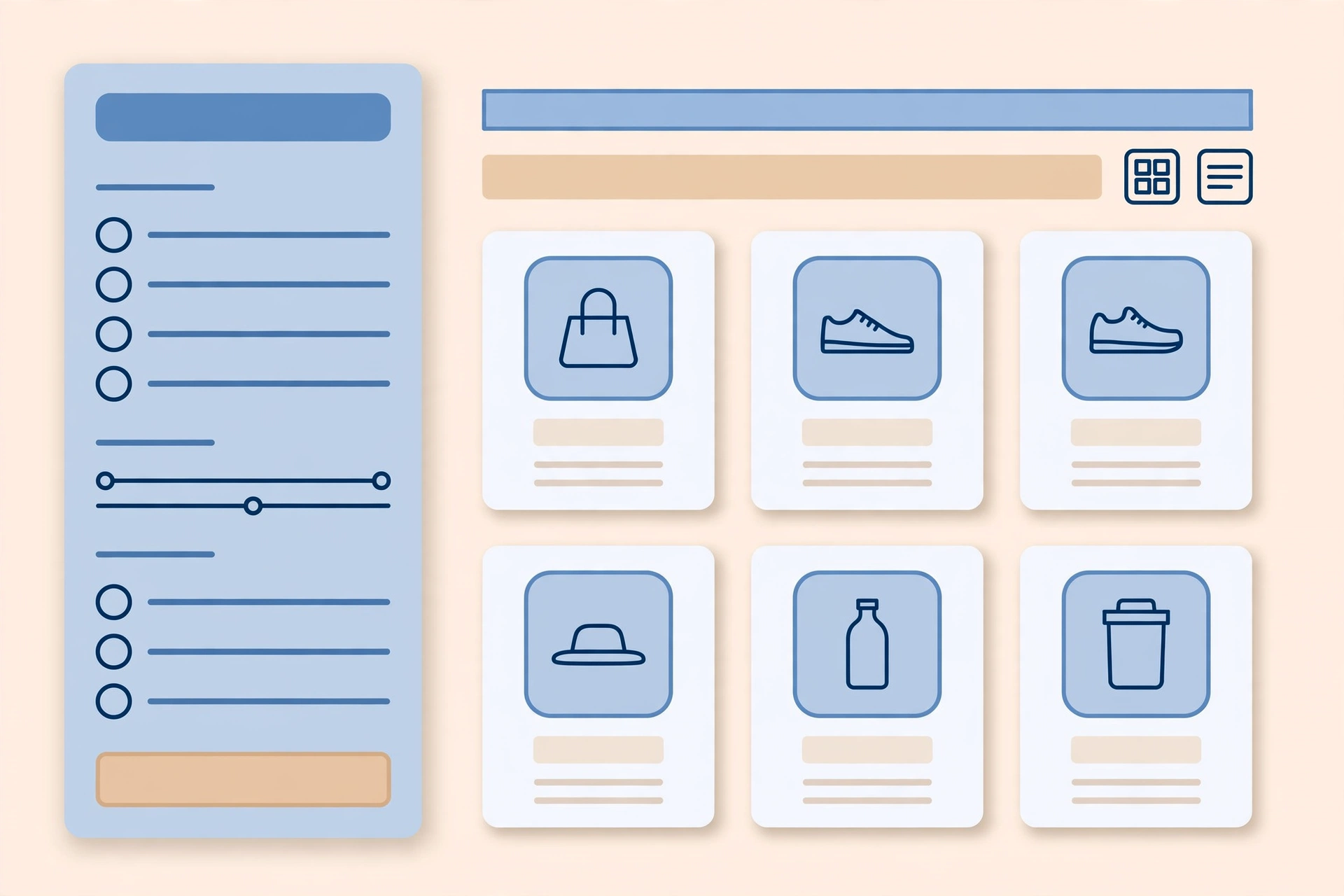
Why Category Pages Are SEO Powerhouses
Category page SEO starts from one fact: category pages sit at the sweet spot of search — high volume plus buying intent.
They target head terms with real volume
Individual product pages rank for specific long-tail queries — “Nike Air Zoom Pegasus 40 men’s size 10.” Category pages rank for the head terms with the real search volume: “running shoes,” “men’s running shoes,” “trail running shoes.” No single product page can credibly target “running shoes” — the intent is comparative and browse-oriented, which is exactly what a category page serves. If you want a share of the highest-volume commercial keywords in your niche, the category page is the vehicle. For a deeper dive into ecommerce keyword and category strategy, Ahrefs’ ecommerce SEO guide is a solid companion to this playbook.
They naturally attract links
Bloggers and resource-page curators link to category pages far more readily than to individual product pages. A “best running shoes” roundup links to a retailer’s running-shoes category, not to one SKU that may sell out next month. This makes categories your most linkable commercial pages. Our ecommerce link building guide treats category pages as primary link targets for exactly this reason.
They structure your whole site’s topical hierarchy
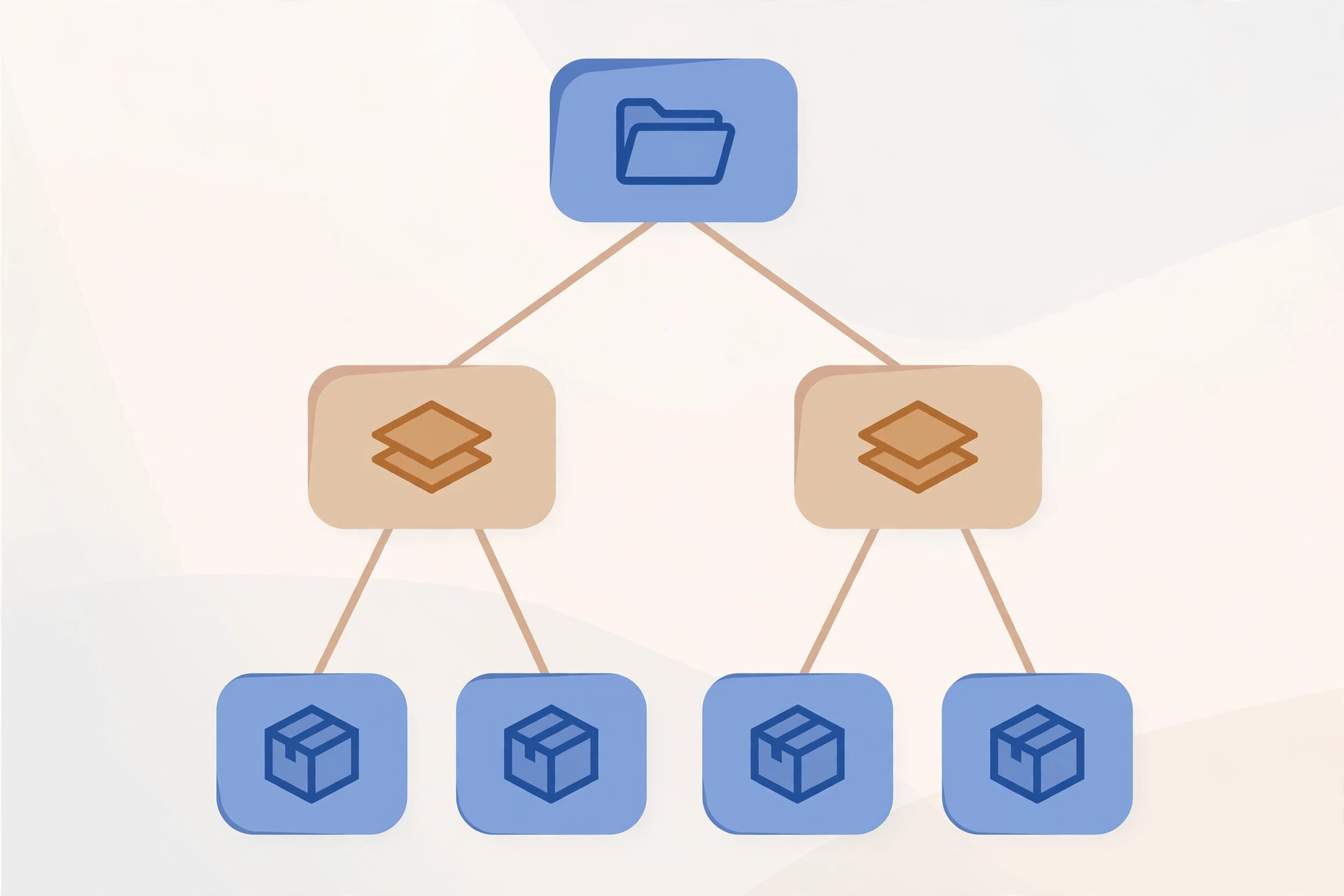
Categories are the skeleton of your site architecture. They define the parent-child relationship between your homepage and your products, channel internal link equity downward, and give search engines a clean map of what you sell. Weak categories mean a weak entire architecture: products buried four clicks deep, orphaned subcategories, and a topical hierarchy Google cannot parse. Get the category layer right and everything below it performs better.
Category URL Structure and Site Architecture
Architecture mistakes are the hardest to fix later, because changing URLs means redirects and ranking turbulence. In category page SEO, the URL layer is the one you get exactly one clean shot at: Get this right from the start.
Flat, keyword-rich URLs
Use short, descriptive URLs: /running-shoes/, not /cat?id=482 or /shop/category/running-shoes-page-1/. Include the primary keyword, keep it lowercase with hyphens, and avoid parameters in the canonical category URL. Clean URLs are easier for users to trust and share, and they keep your canonical signals unambiguous.
Logical hierarchy: max three clicks from homepage
Every product should be reachable within three clicks: Home → Category → Subcategory → Product. Deeper nesting dilutes the link equity flowing down and hides products from crawlers. For most stores, two category levels are plenty.
One category per keyword
Do not create overlapping categories competing for the same term — “running shoes,” “jogging shoes,” and “athletic footwear” as three categories is cannibalization at the architecture level. Map one primary keyword per category, merge overlaps, redirect the losers.
Reinforce the hierarchy with breadcrumbs on every category and product page — Home > Shoes > Running Shoes — marked up with BreadcrumbList structured data. Breadcrumbs aid navigation, distribute internal links, and can earn enhanced display in search results.
On-Page Optimization for Category Pages
This is where most stores lose the category page SEO game. The template generates the page, nobody writes the content, and the category quietly underperforms for years.
Title tag: primary keyword first
Format: Primary Keyword + differentiator + brand. “Men’s Running Shoes — Free Shipping | BrandName” beats “BrandName | Category.” Put the keyword at the front, add one genuine differentiator (free shipping, the size of your range, a price angle), and keep it under 60 characters. Every category needs a unique title — templated duplicates across fifty categories are a missed opportunity on every one of them.
H1 matching search intent
Exactly one H1 per category page, and it should mirror what the searcher typed: “Men’s Running Shoes,” not “Shop Our Amazing Footwear Collection.” Marketing-flavored H1s that dodge the keyword are one of the most common category-page failures — the H1 is a relevance signal, so let it do its job.
Write 150–300 Words of Unique Intro Copy
This is the highest-leverage on-page element on a category page. Write 150–300 words of genuinely useful, keyword-rich intro copy: what the category covers, the key buying considerations, the subcategories shoppers should know about. Place it above or below the product grid — below keeps products prominent for users while still giving crawlers the text. The copy must be unique per category: duplicated boilerplate across categories creates near-duplicate content at the exact layer you most need to differentiate. Intro copy is what separates ranking categories from invisible ones — in category page SEO, it is the single highest-ROI writing task on a store.
Optimized meta description for CTR
Category pages often rank on page one where CTR decides the winner. Write meta descriptions like ad copy: keyword near the front, one benefit, one reason to click. “Shop 200+ men’s running shoes from Nike, Adidas & Asics. Free shipping over $50, 60-day returns.” Track CTR per category in Search Console and rewrite the laggards.
Dynamic Content: Reviews, Related Articles, Freshness — and Regular Pruning
Static category pages go stale. Category page SEO in 2026 increasingly rewards pages that stay alive: pull in relevant customer reviews (marked up with review schema for extra SERP visibility), feed in related buying guides and articles to demonstrate expertise for the category topic — and run regular content pruning passes to remove thin categories that dilute the rest, and link out to related categories and subcategory searches. This dynamic layer does three jobs at once — it keeps the page fresh without rewrites, adds unique content competitors cannot copy, and gives shoppers the comparison information that converts. Avoid content for content’s sake: every dynamic block should help a purchase decision, not decorate the page.
Internal Linking Architecture
In category page SEO, categories should be among the most internally-linked pages on your site. Link equity flows down the hierarchy, so starving a category of internal links starves every product beneath it.
Link categories from navigation and footer
Your main navigation and footer are site-wide link sources — the strongest internal-link real estate you have. Every top-level category belongs in the primary nav; important subcategories belong in the footer or mega-menu panels. If a category is not important enough for the nav, question whether it deserves to exist.
Contextual links from blog content to categories
Most stores link blog posts to individual products and forget categories. Reverse that habit: buying guides, comparisons, and “best of” posts should link to the relevant category pages with descriptive anchor text, because categories target the head terms those posts support. One contextual link from a strong post can do more for a category than a dozen footer links. See our internal linking playbook for the full pattern.
Related-category cross-linking
Add “customers also browsed” blocks linking sideways between sibling categories — running shoes ↔ trail shoes ↔ track spikes. This keeps crawlers moving through the category layer, distributes equity, and mirrors how shoppers browse. Use descriptive anchor text, never “click here.”
Handling Pagination, Filters, and Facets
Category page SEO has a crawl-budget chapter, and this is it. This is where most stores bleed crawl budget: a category with color, size, brand, and price filters can generate thousands of near-duplicate URLs.
Pagination: keep it crawlable
Make every paginated page reachable through plain HTML links (numbered pages or “load more” that degrades gracefully), and give each paginated URL a self-referencing canonical. Note that Google retired its support for rel="next" and rel="prev" years ago — they are now ignored, so do not rely on them. The modern approach: clear pagination links, unique titles per page (“Men’s Running Shoes — Page 2”), and self-canonicals. For very large categories, a “view all” page with lazy loading can consolidate the series into one strong URL.
Faceted navigation: noindex the combinations
Filter combinations — /running-shoes/?color=red&size=10&brand=nike — should almost never be indexed. Apply noindex to filtered views, canonicalize them to the base category URL, or both. The base category is the page you want ranking; every indexed filter URL is a competitor to it. Audit with site: searches or a crawler for indexed filter URLs — each one you find is a fix to make.
Sort parameters: canonical them away
?sort=price-asc, ?sort=newest, and similar sort parameters create duplicate versions of the same category. Canonicalize all of them to the base category URL, or block them in robots.txt if your platform allows clean parameter handling. Either way, they must not accumulate as separate indexed URLs.
Product Listings on Category Pages
Show enough products, handle out-of-stock gracefully
Thin category pages with two or three products rarely rank — merge micro-categories into their parents instead of letting them sit thin. For out-of-stock products, keep the product page live with an “email me when available” option rather than silently removing it; disappearing products create a constantly churning category that confuses users and crawlers.
Product schema on listings
Where your platform supports it, add Product structured data to category listings — price, availability, and review ratings in the markup can earn rich-result treatment that lifts CTR from the category page itself. Google’s Product structured data documentation is the authoritative reference for the required and recommended properties.
Keep load speed fast
Category pages are image-heavy by nature. Paginate or lazy-load product images, compress aggressively, and never dump 200 products onto one page. A slow category page bleeds the mobile shoppers who make up the majority of ecommerce traffic — and page experience remains a ranking input. For the broader technical picture, Google’s SEO starter guide covers the fundamentals every store should have in place.
Category Page Audit Checklist
Run every important category through this category page SEO checklist quarterly:
- URL is flat, keyword-rich, and parameter-free
- Title tag: unique, keyword-first, under 60 characters
- Exactly one H1 matching search intent
- 150–300 words of unique intro copy present (not duplicated from another category)
- Meta description written for CTR, keyword near the front
- Category linked from primary nav or footer
- At least 2–3 contextual internal links from blog content
- No indexed filter, sort, or pagination-parameter URLs (
site:check clean) - BreadcrumbList structured data present
- Page loads fast on mobile; product images lazy-loaded
Measuring Category Page Performance
Track the right metrics
- Rankings for head terms — the category’s primary keyword and its close variants.
- Organic entrances — how many sessions start on the category page from search.
- Revenue per category — the business metric; tie organic entrances to conversion.
Use Search Console URL-pattern filtering
In Google Search Console’s performance report, filter by URL pattern (e.g. URLs containing /running-shoes/) to see clicks, impressions, and average position at the category level. Compare before and after adding intro copy — most stores see movement within 6–10 weeks.
To find the technical issues holding your categories back, run a free SEO audit and work the category URLs through the checklist above.
Frequently Asked Questions
How many words should a category page have?
Aim for 150–300 words of unique intro copy per category, plus the product listings themselves. The copy must be unique to that category — duplicated descriptions across categories create near-duplicate content problems.
Should category pages be indexed if they have filters?
The base category URL should always be indexed. Filtered, sorted, and faceted variations should be noindexed or canonicalized to the base URL so they do not compete with it or waste crawl budget.
Is it better to have many small categories or fewer large ones?
Fewer, substantial categories outperform many thin ones. A category with a handful of products rarely ranks — merge micro-categories into their parents until each has enough products and unique copy to justify its existence.
Do category pages or product pages rank better for head terms?
Category pages, almost always. Head terms carry browse-and-compare intent, which a category page satisfies and a single product page cannot. Reserve product pages for specific long-tail queries.
Category pages are the load-bearing walls of ecommerce SEO, and category page SEO is the discipline of treating them that way: they capture the head terms, attract the links, and structure the architecture everything else hangs on. Give them unique copy, clean URLs, strong internal links, and disciplined faceted-navigation hygiene — and measure the results at the category level, where the revenue actually shows up.
Done-for-you podcast backlinks
Get your brand on Apple Podcasts, Spotify, Amazon and 25 more trusted platforms — placed by hand, reported link by link.