
Learning how to get local backlinks is one of the highest-ROI skills in local SEO. National link building is a knife fight against every site on the internet. Local link building is a neighborhood game — your competitors are the three other plumbers, dentists, or boutiques in town, and most have never built a local link on purpose.
On this page
- Why Local Backlinks Matter More Than You Think
- Local Citations and Directories (Foundation)
- Chambers, Associations, and Sponsorships
- Local PR and News Coverage
- Community Involvement Links
- Partnerships and Supplier Links
- DIY vs. Done-For-You: Which Path Fits?
- Local Link Building Strategy: Putting It Together
- Local Backlinks: Quick Answers
This is a tactics playbook for how to get local backlinks, not a theory lesson. Every tactic below includes an effort, difficulty, and cost rating, plus the concrete first step to take this week. For broader backlink tactics beyond your city, see our guide on broader backlink strategies — this page stays 100% local.
Why Local Backlinks Matter More Than You Think
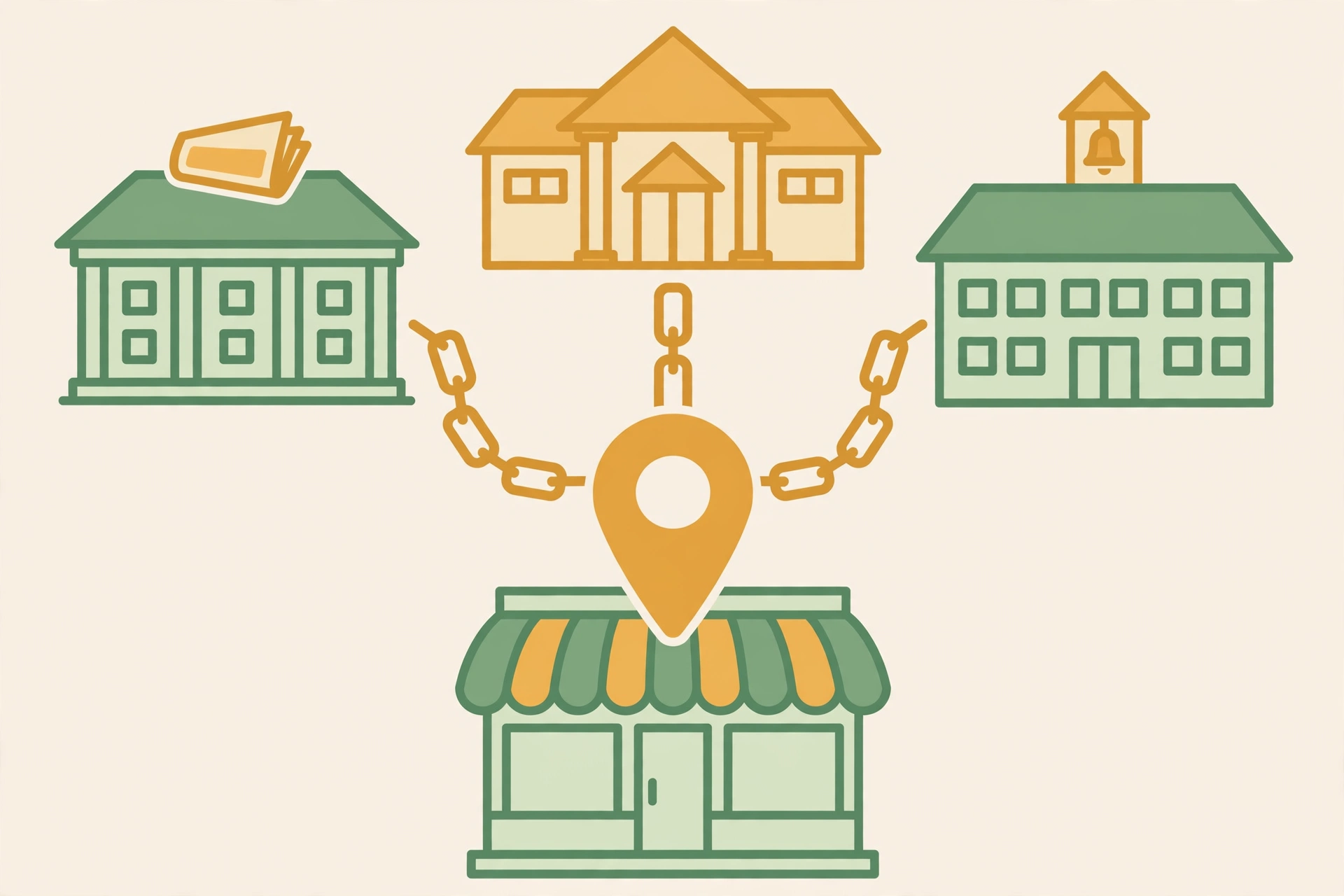
Google ranks local businesses on three pillars: relevance, distance, and prominence. Backlinks feed prominence directly — which is why learning how to get local backlinks is the highest-leverage local SEO skill. But local links do something national links cannot: they send a geographic relevance signal. A link from your town’s newspaper, chamber of commerce, or high school fundraiser page tells Google not just that your business is trusted — it tells Google where it is trusted. These are the local SEO links that separate the businesses in the map pack from the ones buried on page three.
There is a second advantage most guides to how to get local backlinks skip: local links are defensible. Anyone can replicate a guest post on a national blog. Nobody can replicate your sponsorship of the Riverside Little League, your quote in the town newspaper, or your chamber membership — unless they actually do the things you did. Local links are earned through real community presence, which makes them nearly impossible for a distant competitor to copy. That is exactly why they are so powerful.
Moz’s local SEO research consistently frames local links and citations as core prominence signals — worth reading alongside this playbook via Moz’s local SEO learning center for the full framework.
Local Citations and Directories (Foundation)
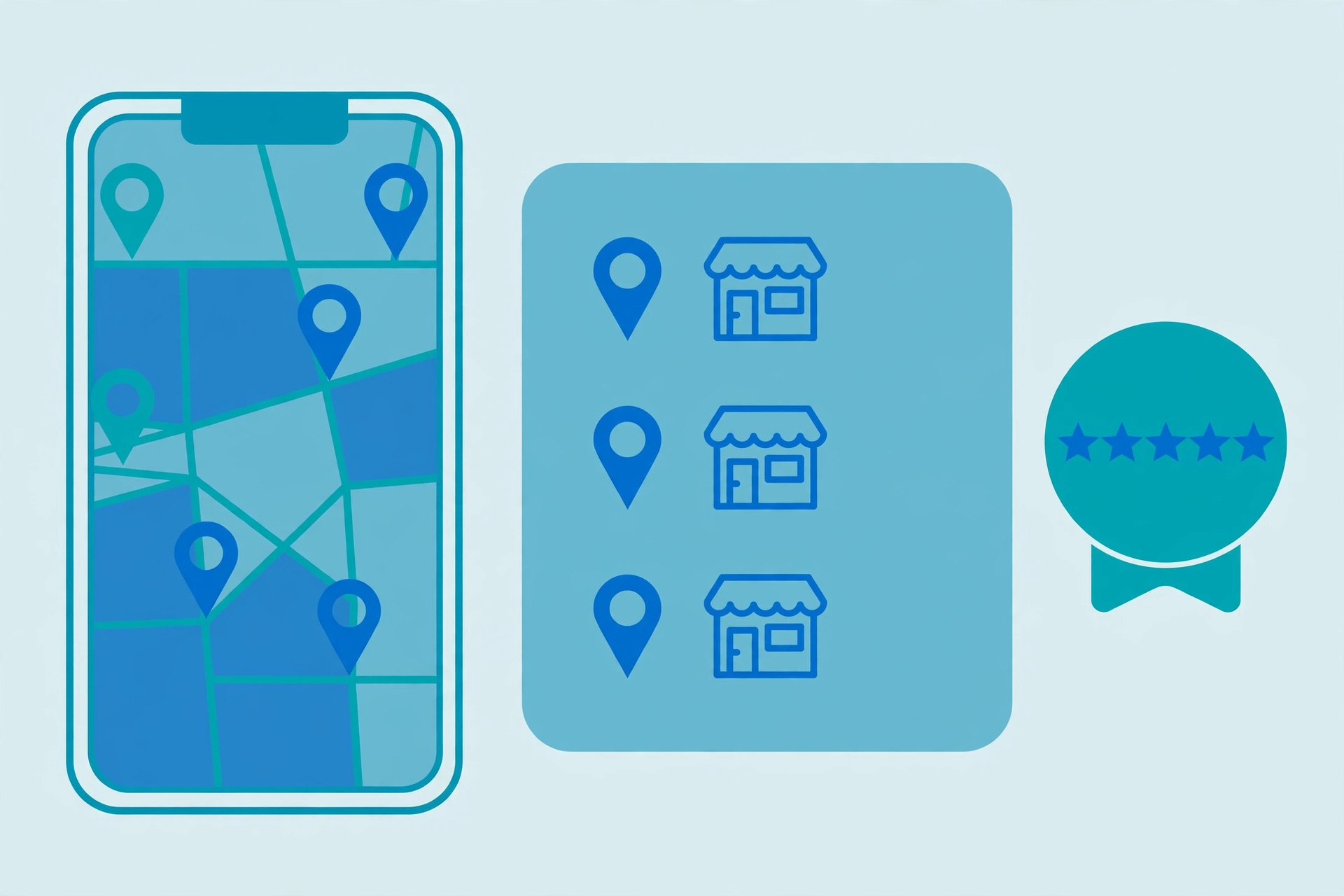
Citations are mentions of your business name, address, and phone number (NAP) across the web. They are the foundation every other local link builds on. Get these wrong — inconsistent addresses, duplicate listings — and everything else underperforms.
Tactic 1: Claim and fully optimize your Google Business Profile. This is the single most important “link” in local SEO, and it is free. Fill in every field: categories (primary plus relevant secondary), services, hours, photos, and a keyword-rich business description. Effort: low · Difficulty: easy · Cost: free. First step: claim your profile at Google Business Profile help and complete 100% of the fields this week.
Tactic 2: Build consistent citations on major directories. Beyond Google, your NAP must be identical — character for character — on Yelp, Bing Places, Apple Maps, Facebook, and the top directories in your industry (Avvo for lawyers, Healthgrades for clinics, Tripadvisor for hospitality). Inconsistencies confuse Google’s entity understanding. Effort: medium · Difficulty: easy but tedious · Cost: free. First step: search your business name plus your city and fix the first five inconsistent listings you find.
Local Citation Building Done Right
Tactic 3: Submit to data aggregators. Local citation building scales through the data aggregators — Neustar (Localeze), Data Axle, and Foursquare — which feed hundreds of smaller directories downstream. One correct submission here propagates everywhere. Also audit for duplicates: two listings for the same business split your prominence signal in half. Effort: low · Difficulty: easy · Cost: free to ~$30/month via aggregator tools. First step: run a free citation scan, then submit to the three aggregators above with identical NAP.
Chambers, Associations, and Sponsorships
Tactic 4: Join your local chamber of commerce. Chambers almost always publish a member directory with followed links, and chamber domains carry real authority in their metro. The link is the bonus; the networking that comes with membership often pays for itself. Effort: low · Difficulty: easy · Cost: typically $100–$500/year. First step: check whether your chamber lists members with links (most do), then join and confirm your listing goes live within 30 days.
Tactic 5: Sponsor a youth team, event, or charity. Local organizations publish sponsor pages with logos and links — and they rarely remove them. A $250 youth-soccer sponsorship can earn a permanent link from a trusted .org domain plus genuine community goodwill. Prioritize organizations that actually publish sponsor lists online before you write the check. Effort: low · Difficulty: easy · Cost: $100–$1,000 depending on the event. First step: email three local nonprofits this week asking about sponsorship tiers and whether sponsors are listed on their website.
Local PR and News Coverage
Tactic 6: Pitch newsworthy stories to local journalists. This is the highest-authority answer to how to get local backlinks: Local news sites are starved for content and carry strong domain authority. Newsworthy hooks that work: a grand opening, a milestone anniversary, original data about your town (“we surveyed 500 residents on…”), a charity drive, or an unusual offering. Pitch the story, not your business — journalists cover stories. One local news link routinely outperforms ten directory links. Effort: medium · Difficulty: medium-hard (rejection is normal) · Cost: free. First step: identify the two reporters covering business or community news at your local paper and send one short, story-first pitch each. For pitch structure that gets replies, see our outreach tactics that earn links templates.
Tactic 7: List events on community calendars. Newspapers, city websites, and community portals run event calendars that accept submissions — and most include a link back to the organizer. Hosting an open house, workshop, or charity event? Submit it to every calendar in your metro. Even a modest event can yield three to five quick links. Effort: low · Difficulty: easy · Cost: free. First step: find your city newspaper’s “submit an event” page and list your next event today.
Community Involvement Links
Tactic 8: Partner with schools and nonprofits. Schools, libraries, and nonprofits maintain resource and partner pages that link out generously — and .edu and .org domains carry outsized trust. Offer a free workshop at the library, donate services to a school fundraiser, or host a student internship. Ask for a partner-page listing as part of the arrangement; it is a normal request, not an imposition. Effort: medium · Difficulty: medium · Cost: your time. First step: email your local library offering a free 45-minute workshop related to your expertise.
Tactic 9: Fund a small local scholarship. A $500 annual scholarship for a local high school senior earns links from the school’s website, the district site, and scholarship aggregators — many of them .edu. The award is small; the link profile impact is disproportionate because .edu links are among the hardest to earn any other way. Effort: low-medium · Difficulty: medium (some admin work) · Cost: $500–$1,000/year. First step: call one local high school’s guidance office and ask about their process for listing private scholarships.
Partnerships and Supplier Links
Tactic 10: Get listed on supplier “where to buy” pages. Manufacturers and distributors maintain dealer-locator and “where to buy” pages that link to every retailer or installer. If you sell or install someone’s products, you are entitled to that listing — but many businesses never ask. Effort: low · Difficulty: easy · Cost: free. First step: list your top five suppliers, visit each one’s dealer page, and email any that are missing you.
Tactic 11: Cross-promote with complementary local businesses. The wedding photographer partners with the florist and the venue; the gym partners with the smoothie bar and the physiotherapist. Create a genuine “local partners” or resources page and ask partners to reciprocate with their own — one-to-one reciprocal links between real local partners are natural, not a scheme. Effort: medium · Difficulty: easy · Cost: free. First step: list five non-competing businesses serving the same customers and pitch two of them a cross-promotion page this week.
Tactic 12: Write testimonials for local B2B vendors — and pitch local bloggers. Vendors publish customer testimonials with links back to the customer’s site; offer one proactively to your web designer, accountant, or supplier. Separately, find the bloggers and micro-influencers covering your town or niche and offer them a genuine experience (a free class, a tasting, a behind-the-scenes tour) in exchange for an honest write-up. Effort: low-medium · Difficulty: easy-medium · Cost: free (testimonials) to the cost of the experience. First step: send one testimonial with your URL to a vendor whose work you genuinely like.
DIY vs. Done-For-You: Which Path Fits?
With a $4.52 average CPC on this topic, plenty of agencies will happily sell you “local link building.” Be honest about your situation. DIY works if you have 3–5 hours a month: tactics 1–3, 7, 10, and 12 are free and mostly one-time setups. Done-for-you makes sense when outreach volume matters — journalist pitching, sponsorship negotiation, and scholarship administration scale better with dedicated time. The red flag is any provider promising a fixed number of links per month; real local links are earned one relationship at a time, and anyone guaranteeing volume is buying them somewhere you do not want to be associated with.
Local Link Building Strategy: Putting It Together
Twelve tactics are useless without a sequence. This is where learning how to get local backlinks turns into a plan. Here is a 90-day plan that layers them by effort and payoff — this is where local link building (140 searches a month) turns from a to-do list into a system:
- Month 1 — Foundation: tactics 1–3 (Google Business Profile, directory citations, data aggregators) plus tactic 10 (supplier listings). All low-effort, mostly one-time. Goal: clean, consistent local footprint.
- Month 2 — Authority: tactic 4 (chamber), tactic 5 (sponsorships), tactic 8 (school/nonprofit partnerships). Goal: trusted .org and association links competitors cannot easily copy.
- Month 3 — Visibility: tactic 6 (local PR), tactic 7 (event calendars), tactics 11–12 (cross-promotions, testimonials, bloggers). Goal: editorial links and referral traffic.
Track everything in a simple sheet: prospect → tactic → contact → status → link live (with date). Review monthly; local links compound — a chamber link earned in month 2 keeps working in month 20.
For the strategic layer behind this how to get local backlinks playbook — how local links fit into your overall local SEO plan — read our companion guide on local SEO link building guide. The strategy guide answers why; this playbook answered how. Now go earn link number one.
Local Backlinks: Quick Answers
How many local backlinks do I need? There is no magic number — and no shortcut around learning how to get local backlinks consistently. — it depends on your competition. Check the backlink profiles of the three businesses currently in your map pack: matching or beating their count of quality local links is a realistic target. For most small markets, 20–40 solid local links put you in contention.
Do citations count as backlinks? Not always — a common confusion when learning how to get local backlinks. Many citations are unlinked NAP mentions, which still strengthen Google’s understanding of your business entity — but a citation that includes a link back to your site does double duty. When choosing directories, prefer ones that publish a clickable link.
How long until local backlinks improve rankings? Citation and directory links typically show impact within a few weeks once Google re-crawls them. Editorial links from local PR and sponsorships usually move the needle within one to three months. Local SEO compounds: links earned this quarter keep working next year. That compounding is the real payoff of learning how to get local backlinks.
Done-for-you podcast backlinks
Get your brand on Apple Podcasts, Spotify, Amazon and 25 more trusted platforms — placed by hand, reported link by link.