

The fastest way to understand anchor text is to see it. Below are 20+ real examples — exact-match, partial-match, branded, naked URL, generic, and image anchors — shown as HTML and as rendered links, with notes on the signal each sends Google. You will know exactly which to copy and which to avoid.
On this page
- What Is Anchor Text in SEO? (The 30-Second Version)
- Exact-Match Anchor Text Examples
- Partial-Match Anchor Text Examples
- Branded Anchor Text Examples
- Naked URL Anchor Text Examples
- Generic Anchor Text Examples
- Image Anchor Examples
- Long-Tail Anchor Text Examples
- Compound (Brand + Keyword) Anchor Text Examples
- Related-Topic Anchor Text Examples
- Good vs Bad Anchor Text Examples
- Anchor Text Examples in Internal Links
- Anchor Text Examples by Where the Link Lives
- Anchor Text Mistakes: Examples of What Not to Do
- Frequently Asked Questions
- Anchor Text Examples: Quick Cheat Sheet
- Final Thoughts
Quick definition first — if you are asking what is anchor text in SEO: it is the clickable words inside a hyperlink — the blue, underlined text you click to jump to another page. Search engines read those words as a label for the destination page. If anchors are new to you, what backlinks are and how they work is useful background; for ratios and link-building strategy, the complete anchor text strategy guide picks up where this examples page leaves off.
What Is Anchor Text in SEO? (The 30-Second Version)
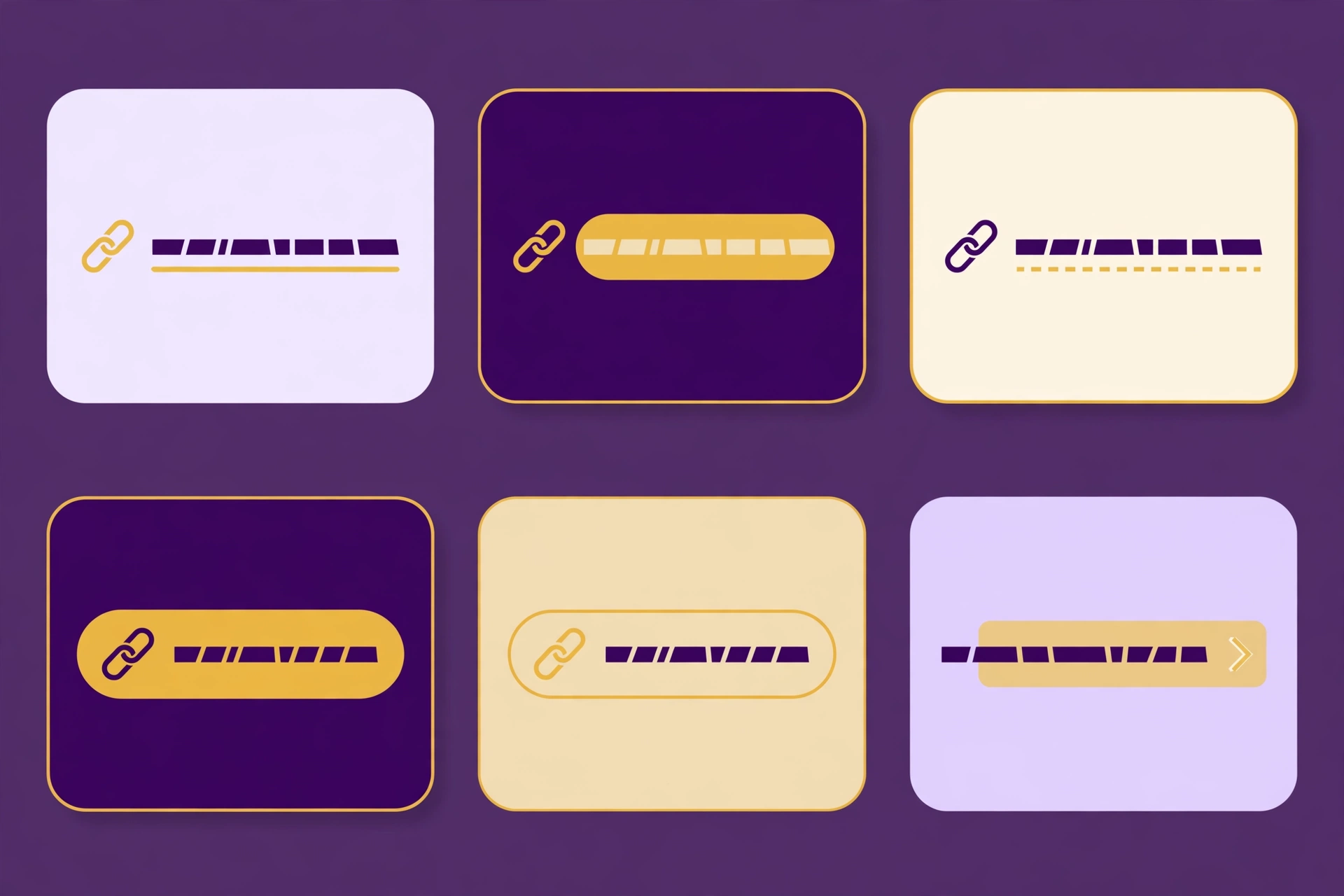
What is anchor text in SEO, precisely? It is the visible, clickable text of a hyperlink, and it tells search engines what the linked page is about. Google treats anchor text as a relevance vote: descriptive anchors (“trail running shoe sizing guide”) pass clear topical signal, while vague anchors (“click here”) pass almost none. That single mechanism — words as labels for destinations — is why anchor text has its own ranking folklore, from exact-match penalties to Penguin-era over-optimization filters.
The rest of this guide is examples, because examples are how you internalize what is anchor text in SEO faster than any definition. Each type below shows the HTML, the rendered result, and the signal it sends.
Exact-Match Anchor Text Examples
Exact-match means the anchor is the target keyword. Example linking to a protein powder roundup:
<a href="https://example.com/protein-powder">best protein powder</a>Rendered, the reader sees only best protein powder as the clickable link. More examples of exact-match anchors:
email marketing software→ a page reviewing email marketing softwarecheap flights to Dubai→ a flight deals page for Dubaifreelance SEO expert→ a freelancer’s services pageproject management software→ a SaaS comparison pagebuy organic coffee beans→ an ecommerce product page
Signal: strong topical relevance, but risky in quantity. A backlink profile full of identical exact-match anchors looks engineered — Google’s Penguin update specifically targeted that pattern. Use sparingly, mostly on internal links you control.
Partial-Match Anchor Text Examples
Partial-match contains the keyword inside natural phrasing:
<a href="https://example.com/protein-powder">our guide to the best protein powders for 2026</a>More examples:
affordable protein powders for beginnerssee how protein powder compares across brandstop-rated email tools for small teams→ an email software roundupwhere to buy protein powder online in 2026an honest review of the most popular CRM platforms
Signal: topical relevance in natural language. This is the workhorse of healthy link profiles — descriptive enough to pass relevance, varied enough to look earned.
Branded Anchor Text Examples
The anchor is simply a brand or product name:
<a href="https://example.com">Optimum Nutrition</a>More examples:
Nike→ Nike’s homepageread it on Moz→ a Moz article (brand + generic mix)Canva's design school→ Canva’s tutorials sectionShopify→ Shopify’s homepage from a partner articleaccording to Backlinko's study→ a Backlinko research post (brand + context)
Signal: brand association; the safest anchor type. Real editorial links use branded anchors constantly, so a profile heavy on branded anchors looks natural. Moz’s anchor text guide treats branded anchors as the backbone of a natural external profile.
Naked URL Anchor Text Examples
The raw address is the anchor:
<a href="https://example.com/protein">https://example.com/protein</a>More examples:
www.example.com/pricingin a forum replyhttps://example.com/blog/seo-guidein a citationexample.com/pricingtyped bare in a forum signature
Signal: neutral. Extremely common in citations, forums, and directories — they add the variety that makes a link profile look earned rather than built.
Generic Anchor Text Examples
Non-descriptive filler words:
<a href="https://example.com/guide">click here</a>More examples: read more, this article, learn more, website, check this out.
Signal: almost no topical value. Fine in moderation — they contribute natural variety — but wasted on important pages. Your money pages deserve descriptive anchors; save “click here” for places where the surrounding sentence already explains the destination.
Image Anchor Examples
When the link is an image, the alt text becomes the anchor:
<a href="https://example.com/trail-shoes"><img src="shoes.jpg" alt="men's waterproof trail running shoes"></a>In this example, “men’s waterproof trail running shoes” is the effective anchor text — Google reads the alt attribute as the link’s words. An image linked with empty alt text (alt="") passes no descriptive signal at all, which is why descriptive alt text doubles as SEO copy.

Long-Tail Anchor Text Examples
Long-tail anchors are longer, natural phrases — often the article title or a descriptive clause. They read like normal writing, which is exactly why they are safe:
<a href="https://example.com/guide">our complete guide to choosing trail shoes for wide feet</a>This is the anchor type most editorial links carry naturally. When someone asks what is anchor text in SEO in the context of outreach, long-tail anchors are the answer you want most earned links to carry: descriptive, varied, and impossible to confuse with manipulation.
Compound (Brand + Keyword) Anchor Text Examples
Compound anchors combine a brand with a keyword — the best of both worlds for diluting exact-match risk while keeping a topical signal:
<a href="https://example.com">Optimum Nutrition protein powder review</a>Use compound anchors when linking to commercial pages where pure exact-match would look engineered but you still want the keyword association.
Related-Topic Anchor Text Examples
Related-topic anchors use semantically connected phrases rather than the keyword itself — “cushioned road trainers” pointing at a page about running shoes:
<a href="https://example.com/trail-shoes">cushioned road trainers for marathon prep</a>These reinforce topical breadth. A natural link profile is full of them, because real writers describe things in their own words instead of repeating the target keyword.
Good vs Bad Anchor Text Examples
Side-by-side, the difference is obvious — and this is where the theory of what is anchor text in SEO meets practice:
| Good example | Bad example | Why |
|---|---|---|
beginner's guide to SEO | click here | Descriptive beats generic — the reader and Google both know the destination |
Optimum Nutrition | best protein powder best protein powder | Branded is safe; repeated keyword anchors look manipulated |
see our 2026 protein powder comparison | https://example.com/p=12345 | Natural phrasing beats a raw URL for editorial links (naked URLs still fine in citations) |
email tools for small teams | cheap cheap email software buy now | Partial-match reads naturally; stuffed commercial anchors invite penalties |
Backlinko's ranking factors study | best SEO best SEO best SEO | Brand + topic is credible; tripled keywords are a manipulation tell |
download the free template | http://example.com/a/very/long/ugly/url?id=99 | Action-oriented phrasing converts; raw parameter URLs look untrustworthy |
The pattern: good anchors describe the destination honestly in varied language. Bad anchors are either empty (“click here” everywhere) or manipulative (identical keyword anchors at scale). Ahrefs’ glossary entry makes the same point — search engines expect variety, and unnatural uniformity is a spam signal.
Anchor Text Examples in Internal Links
You control internal anchors completely, so these examples are directly actionable — internal linking is also where most sites first apply what is anchor text in SEO without realizing it:
- Good: linking your “email marketing” article to your automation guide with
marketing automation workflows - Bad: linking every page to your homepage with the identical anchor
best SEO companyin the footer — templated, not editorial - Good: a breadcrumb trail
Home > Guides > Link Building— descriptive anchors that also map your site for crawlers
One more internal-linking example: an ecommerce site linking its category page from a buying guide. Weak version: click here to see all models. Strong version: browse all espresso machines under $500 — descriptive, keyword-relevant, and honest about the destination. Multiply that discipline across hundreds of internal links and crawlers get a precise map of what each page covers.
Pair descriptive internal anchors with what you know about dofollow and nofollow links and you control the two dials that matter: words describe the destination, attributes qualify the endorsement.
Anchor Text Examples by Where the Link Lives
The same link can wear different anchors depending on context. Here is how anchor text examples change across common placements — a practical companion to the what is anchor text in SEO definition above:
Guest post byline. Most editors allow one link back to your site. Example of a safe byline anchor: Jane Doe writes about SEO at ExampleBlog (branded + context). Example of a risky one: best link building service repeated across twenty guest posts — the exact footprint spam filters flag.
Blog comment. Comments usually give you a name field and a URL field, not an anchor choice. Example: name field Jane from ExampleBlog linking to your homepage. Keyword-stuffing the name field (Cheap SEO Services NYC) is a classic spam tell.
Directory listing. Example: a business directory shows Example Plumbers — exampleplumbers.com (brand + naked URL). Directories rarely let you choose anchors, which is why their links carry mostly citation value, not keyword signal.
Press mention. A journalist writes: according to data from Example Research linking to your study. These earned branded anchors are the gold standard — descriptive, editorial, and impossible to fake at scale.
Forum answer. Example of a helpful forum anchor: this troubleshooting guide walks through the fix step by step linking to your tutorial. Example of a spammy one: BUY CHEAP SHOES HERE — which is why forums nofollow most links anyway.
Anchor Text Mistakes: Examples of What Not to Do
Most people who ask what is anchor text in SEO are really asking how to avoid penalties, so study these patterns. Example mistake 1 — the copy-paste profile: every guest post you write links back with freelance SEO expert. Fifty identical anchors from thin sites is the exact footprint Penguin hunts. Fix: vary with branded (your name) and partial-match (SEO consulting for startups).
Example mistake 2 — generic anchors on money pages: your pricing page’s only inbound internal link says here. Fix: see plans and pricing.
Example mistake 3 — empty image anchors: your infographic gets shared widely, but every embed uses alt="". Thousands of links, zero descriptive signal. Fix: ship embeds with descriptive alt text baked in.
Example mistake 4 — never auditing: anchors pointing at your site drift over time. Checking which anchors other sites actually use a few times a year shows whether your profile looks natural or is sliding toward a risky pattern. Google’s link spam policies spell out which practices cross the line.
Frequently Asked Questions
What is an example of anchor text in HTML?
<a href="https://example.com">free keyword research tool</a>In that HTML, the anchor text is “free keyword research tool” — the clickable words the reader sees, with the URL hidden behind them.
What are the main types of anchor text, with examples?
Exact-match (best protein powder), partial-match (guide to the best protein powders), branded (Optimum Nutrition), naked URL (https://example.com/protein), generic (click here), and image anchors (alt text like men's trail running shoes).
Which anchor text examples are safest for SEO?
Branded anchors and natural partial-match phrases are the safest workhorses. Exact-match anchors are powerful but should stay a small minority of your profile.
What does a natural anchor text profile look like, with examples?
Something like this across 100 links: 40 branded (ExampleBlog), 25 naked URLs (exampleblog.com/post), 20 partial-match (SEO tips for small blogs), 10 generic (read more), and 5 exact-match (small business SEO guide). Branded and naked anchors dominate, exact-match stays a small minority — that is the shape of earned links.
Should I use the same anchor text for internal links?
No — vary them. Example of a bad habit: linking to your contact page from ten blog posts, every time with contact us. Better: rotate get in touch, talk to our team, contact page. Same destination, natural variety, and each version still describes where the click goes.
Can anchor text examples show what gets penalized?
Yes — the classic penalty footprint is dozens of identical keyword-rich anchors (e.g., fifty links all saying cheap laptops) appearing quickly from low-quality sources. That uniformity is what Google’s spam systems flag.
Anchor Text Examples: Quick Cheat Sheet
- Exact-match:
best protein powder— strong signal, use sparingly - Partial-match:
guide to the best protein powders for 2026— the everyday workhorse - Branded:
Optimum Nutrition— safest anchor there is - Naked URL:
https://example.com/protein— natural in citations and forums - Generic:
click here— fine occasionally, wasted on money pages - Image: alt text like
men's waterproof trail running shoesbecomes the anchor - Rule of thumb: describe honestly, vary constantly, never manufacture identical keyword anchors at scale — the entire what is anchor text in SEO playbook in one line
Final Thoughts
Anyone asking what is anchor text in SEO should start here: anchor text is simple on the surface — clickable words — and the dozens of examples above show how much ranking signal those few words carry when chosen deliberately. The rule of thumb: describe the destination honestly, vary your phrasing like a normal writer, and never manufacture identical keyword anchors at scale. Master the examples on this page and your anchors will look like what they should be — a natural byproduct of content worth linking to, not a manufactured pattern. That is what is anchor text in SEO, in practice: small words, honestly chosen, carrying real ranking weight.
Done-for-you podcast backlinks
Get your brand on Apple Podcasts, Spotify, Amazon and 25 more trusted platforms — placed by hand, reported link by link.