
On this page
- What “Automated” Really Means in Link Building
- Automate Prospecting: Tools That Build Your Hit List
- Automate Outreach Sequences and Follow-Ups
- Automate Contact Finding, Verification, and AI Personalization
- Automate Link Monitoring and Alerts
- What to Automate vs What Still Needs a Human
- The $0 Automation Stack
- Automated Link Building Tools: Frequently Asked Questions
- The Bottom Line
Most link builders burn their week on work a machine could do: copying prospects into spreadsheets, sending the same follow-up for the tenth time, manually checking whether a link went live. Automation exists for exactly this drudgery — but it has a boundary, and crossing it gets you penalized instead of promoted.
This guide covers the 12 best automated link building tools for 2026, organized by the job they actually automate: prospecting, outreach sequences, contact discovery, and link monitoring. You will also get the honest framework for what to automate and what still needs a human hand — starting with competitor backlink gaps, the highest-converting prospect source any automation pipeline can feed on.
What “Automated” Really Means in Link Building
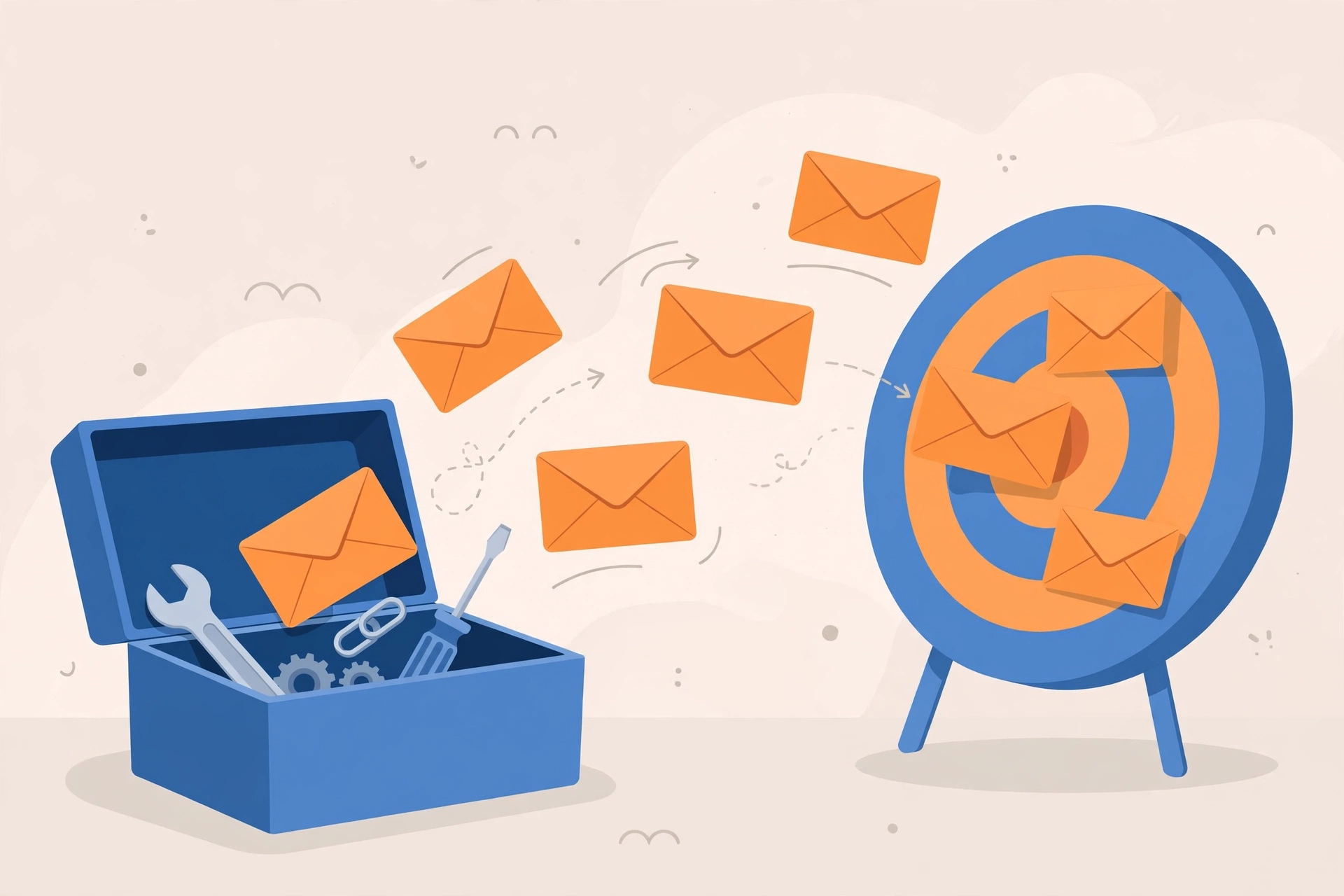
“Automated link building” gets used to describe three completely different things, and only two of them are legitimate. Research automation gathers data for you — prospect lists, contact details, broken-link scans. Execution automation handles repetitive sending and scheduling — sequences, follow-up reminders, drip campaigns. Monitoring automation watches for changes — new backlinks, lost links, journalist queries — and alerts you. All three are fair game.
What is not fair game is automating the relationship itself: blasting identical pitches to thousands of strangers, auto-generating “personalized” flattery from scraped bios, or buying links from networks that promise placement on autopilot. Google’s spam policies classify large-scale automated link schemes as violations, and the tools that sell “backlinks on autopilot” are selling you a penalty with extra steps. The rule for this entire guide: automate logistics, never judgment.
Automate Prospecting: Tools That Build Your Hit List
Prospecting is the most automatable part of link building because it is fundamentally a data problem: find sites in your niche, that link out, with real authority, and have not linked to you yet. Doing that by hand takes days. These tools turn it into a repeatable pipeline you run weekly.
Semrush Link Building Tool
Semrush’s dedicated Link Building Tool auto-generates prospect lists from your competitors’ backlink profiles and your target keywords, scores each prospect, then lets you run outreach from the same dashboard. The automation win is the handoff: prospects flow from discovery to scored list to email draft without CSV exports or copy-paste. Best for: teams that want prospecting and outreach in one automated loop. Verdict: the closest thing to a prospecting assembly line — most valuable if you already pay for Semrush.
NinjaOutreach
NinjaOutreach combines a large influencer and blogger database with automated prospecting filters — search by niche, authority, and social reach — plus built-in outreach and follow-up automation. Where it differs from the SEO suites is focus: it is built for finding people (bloggers, podcasters, newsletter writers) rather than domains, which suits digital PR and expert-roundup style campaigns. Best for: content-driven campaigns targeting creators. Verdict: a strong prospecting shortcut for outreach-first teams; the SEO data depth is thinner than the big suites.
Snov.io
Snov.io (snov.io) bundles AI-assisted prospect discovery, domain search, a LinkedIn extension that captures leads while you browse, and email drip campaigns in one platform. Best for: solo operators who want one tool covering prospect-to-sequence. Verdict: genuinely good value as an all-in-one; power users will eventually outgrow its data depth.

Automate Outreach Sequences and Follow-Ups
Follow-up is where most campaigns quietly die — studies of outreach consistently show replies clustering around the second and third touch, which is exactly the touch nobody sends manually. Automating the schedule of follow-ups (not the words in them) is the single highest-ROI automation in link building. The message side still matters enormously; our outreach playbook covers how to write pitches worth automating.
Pitchbox
Pitchbox is the automation-first outreach platform: workflow templates for common campaign types (guest posts, broken link building, resource page outreach), automated prospecting and contact discovery, sequenced follow-ups, and integrations with Ahrefs, Moz, and Majestic so prospect scoring uses real link data. The key design choice is manual checkpoints inside automated workflows — you approve the pitch angle before the sequence fires. Best for: agencies running high-volume campaign types on repeat. Verdict: the deepest automation in the category; overkill and overpriced for your first 50 pitches.
BuzzStream
BuzzStream (buzzstream.com) automates the unglamorous middle of relationship outreach: prospect research, contact discovery, sequenced follow-ups, and link monitoring, all tracked through relationship stages like a CRM. Its automation philosophy is quieter than Pitchbox’s — reminders and scheduling that keep humans consistent rather than replacing them. Best for: teams doing digital PR and relationship-driven outreach at steady volume. Verdict: the best automation for outreach you want to keep human; starting around $24/month makes it the cheapest serious option.
Mailshake
Mailshake (mailshake.com) keeps outreach automation deliberately simple: build a sequence, add prospects, and let it send, follow up, and A/B test while you watch the analytics. Its AI writing assistant drafts personalized openers, and built-in deliverability tools (warmup, list cleaning, spam-word checks) protect your sender reputation — the part of automation most beginners neglect until their emails land in spam. Best for: freelancers and small teams who want sequences running this week, not after a month of setup. Verdict: the fastest path from zero to automated follow-ups; pair it with a real prospecting source.
Automate Contact Finding, Verification, and AI Personalization
A sequence is only as good as its contact data. Bounces and catch-all addresses silently kill automated campaigns — verification automation is what keeps them alive. And AI personalization is the newest automation layer: genuinely useful as a first draft, dangerous as a final send.
Hunter
Hunter (hunter.io) automates the two most tedious pre-outreach steps: finding email addresses associated with any domain and verifying them before you send. Its newer Sequences feature closes the loop, letting small campaigns run finding, verification, and sending in one place. The free tier (25 searches a month) is deliberately small — enough to learn the workflow, not enough to run a real campaign. Best for: turning any prospect list into verified, sendable contacts. Verdict: the standard first automation purchase; pay only when the free tier runs out mid-campaign.
Respona
Respona is the AI-native entry: give it a topic and it builds prospect lists, finds contact details, and drafts personalized pitches — collapsing a day of campaign prep into an afternoon. The automation is real, but so is the caveat: unedited AI outreach is increasingly recognizable, and response rates show it. The winning setup is Respona as a drafting accelerator with a human editor rewriting every first line. Best for: frequent linkable-asset campaigns (data studies, free tools, original research) where volume matters. Verdict: the best AI personalization layer available; never let it send unsupervised.
Zapier and Make
The unglamorous automation most guides skip: connecting your stack. A simple Zapier or Make scenario can watch a prospect spreadsheet and auto-enrich new rows, push new backlinks from an RSS feed into Slack, or log every sent pitch into your CRM. No single “link building” feature here — just the glue that stops data from dying in CSVs. Best for: anyone running more than one tool who is tired of manual transfers. Verdict: free tiers cover most link building workflows; the ROI is measured in hours you stop spending on copy-paste.
Automate Link Monitoring and Alerts
Monitoring is pure automation territory — no human judgment needed to notice that a link disappeared. Set these once and they run forever.
Ahrefs Alerts
Ahrefs’ alert system watches for new and lost backlinks to any domain, new keyword mentions, and new pages on competitor sites. For link builders, the killer automation is the lost-link alert: when a hard-earned link drops off, you find out within days instead of discovering it in a quarterly audit — while the relationship is still warm enough to ask for it back. Best for: anyone with an Ahrefs subscription who is not using alerts yet (most people). Verdict: the highest-value automation per minute of setup; configure it before your next campaign.
Connectively
Connectively (the platform formerly known as HARO) automates the discovery half of journalist outreach: set keyword alerts and relevant reporter queries land in your inbox instead of you refreshing a feed all day. The responding half stays stubbornly human — speed and quotability win, and neither can be automated. Best for: experts who can answer journalist queries within hours. Verdict: free tier automation that surfaces some of the highest-authority link opportunities available; the cost is your response time, not money.
Google Alerts and Search Console
The free monitoring automation stack: Google Alerts for brand and topic mentions across the web (catch unlinked mentions you can convert into links), plus Search Console’s Links report as the ground-truth record of who links to you. Neither is fancy; together they cover the two monitoring jobs that matter — noticing opportunities and noticing losses — for $0. Best for: every site owner, before spending anything. Verdict: set both up today; they define what any paid monitoring tool must beat to justify itself.
What to Automate vs What Still Needs a Human
This is the section that separates automation that builds links from automation that builds penalties. After watching hundreds of campaigns, the line is consistent: automate the repeatable logistics; keep every decision that involves judgment.
Safe to automate: building prospect lists from defined criteria; finding and verifying email addresses; scheduling and sending follow-ups; monitoring for new, lost, or broken links; journalist-query alerts; campaign reporting and dashboards; scanning pages for broken links. These are deterministic tasks — the same input should always produce the same output, which is exactly what machines are for.
Keep human: deciding whether a prospect is actually relevant to your content (no filter catches nuance); writing the pitch angle and the first two lines of any email; replying to responses — a human answered you, a human should answer back; judging link quality beyond metrics (a DR 30 site in your exact niche beats a DR 70 directory, and no automation knows your niche); creating the linkable asset itself. Our guide to linkable assets — original data, free tools, definitive guides — covers the part no tool can do for you, because it is the part that makes someone want to link in the first place.
The practical test before automating anything: if I automated this badly, would a human notice within a week? Bad automated prospecting shows up as irrelevant pitches (recipients notice). Bad automated follow-up shows up as spam complaints (Gmail notices). Bad automated monitoring shows up as nothing at all — which is why it is the safest place to start. Automate in that order: monitoring first, prospecting second, sequencing third, and the pitch itself never.
The $0 Automation Stack
You can automate a real link building workflow without spending anything — this is the honest starting stack:
- Prospect automatically with Google search operators saved as reusable queries, plus a manual competitor gap analysis run once a month — $0.
- Monitor automatically with Google Alerts for brand mentions and Search Console’s Links report for your backlink record — $0.
- Find contacts with Hunter’s free tier (25 verified searches a month) — $0.
- Sequence follow-ups with Gmail’s built-in scheduling plus Streak’s free CRM for pipeline reminders — $0.
- Catch journalist queries with Connectively’s free alert tier — $0.
- Glue it together with Zapier or Make’s free tier — new prospects auto-added to your tracking sheet — $0.
The limits are real: Hunter’s free searches run out fast, manual prospecting still eats hours, and free monitoring has no competitor data. But this stack teaches you which automation you actually need — upgrade the bottleneck that hurts, not the feature list that impresses. For the strategy behind the workflow, our guide to earning your first backlinks pairs naturally with this one.
Automated Link Building Tools: Frequently Asked Questions
Can automated link building tools get me backlinks on autopilot?
No. Legitimate tools automate research, scheduling, and monitoring — the relationship-building stays human. Anything promising backlinks on full autopilot is selling link schemes that violate Google’s spam policies. Treat “100% automated link building” as a penalty warning, not a feature.
What part of link building is safest to automate first?
Monitoring. Set up backlink alerts and mention alerts before anything else — there is no judgment involved, no spam risk, and the payoff (catching lost links early) is immediate. Prospecting automation comes second; outreach sequencing third.
Will automated outreach hurt my domain’s email reputation?
It can, if you automate recklessly: high volumes from a fresh domain, no warmup, and spam-trigger words will land you in spam folders regardless of tool. Automate gradually — warm up new sending domains, keep volumes modest, verify every address, and watch bounce rates. The tools with built-in deliverability features exist because this failure mode is so common.
Which automated link building tool is best for beginners?
Start free: Google Alerts plus Hunter’s free tier teaches you the automation mindset for $0. Buy your first paid tool only when a specific bottleneck appears — usually email finding (Hunter) or follow-up volume (Mailshake or BuzzStream). Suites like Pitchbox are built for agencies; they are expensive shelfware for a first campaign.
How do I automate outreach without sounding like a robot?
Automate the schedule, not the sentences. Use templates for structure but write the first two lines fresh for every prospect — reference something specific about their site. AI personalization tools can draft these openers, but always edit them; unedited AI flattery (“I loved your amazing article!”) is the fastest way to get deleted.
Do I still need Ahrefs or Semrush if I automate everything else?
Automation needs data to work on, and that data still comes from somewhere. Prospecting automation without a backlink index is just guessing faster. One all-round SEO subscription feeding your automation stack beats three automation tools starved of data.
The Bottom Line
The 12 best automated link building tools in 2026 do not change what link building is — they change how much of your week it consumes. Semrush, NinjaOutreach, and Snov.io automate prospecting; Pitchbox, BuzzStream, and Mailshake automate sequences and follow-ups; Hunter and Respona automate contact discovery and personalization drafts; Ahrefs Alerts, Connectively, and Google Alerts automate monitoring; Zapier and Make hold the whole thing together.
The order that wastes the least money: automate monitoring first (it is free and riskless), then prospecting, then follow-up sequences — and never automate the pitch itself. Software finds the opportunity and handles the logistics, but genuinely useful content and genuinely human outreach are still what turn opportunities into links. The tool is the assistant; you are still the link builder.
Done-for-you podcast backlinks
Get your brand on Apple Podcasts, Spotify, Amazon and 25 more trusted platforms — placed by hand, reported link by link.