

Learning how to get dofollow backlinks comes down to earning editorial links from real websites: publish content worth linking to, then promote it through guest posting, broken link building, resource page outreach, digital PR, and journalist requests. These white-hat methods take weeks to months but produce links that actually move rankings — unlike paid shortcuts that risk Google penalties.
On this page
- A Quick Refresher on What Counts as a Dofollow Link
- The Quality Rule Most Link Builders Ignore
- Guest Posting on Real Blogs
- Broken Link Building
- Resource Page Outreach
- Digital PR and Original Data
- Journalist Requests and Expert Quotes
- How to Get Dofollow Backlinks: Which Method Should You Start With?
- Tactics to Avoid When Chasing Dofollow Links
- Frequently Asked Questions
This guide walks through seven proven methods for earning dofollow links, each with a realistic timeline and a concrete example you can copy. You’ll also learn which tactics to avoid entirely — in 2026 Google’s spam policies are clearer than ever about which link schemes trigger penalties.
A Quick Refresher on What Counts as a Dofollow Link
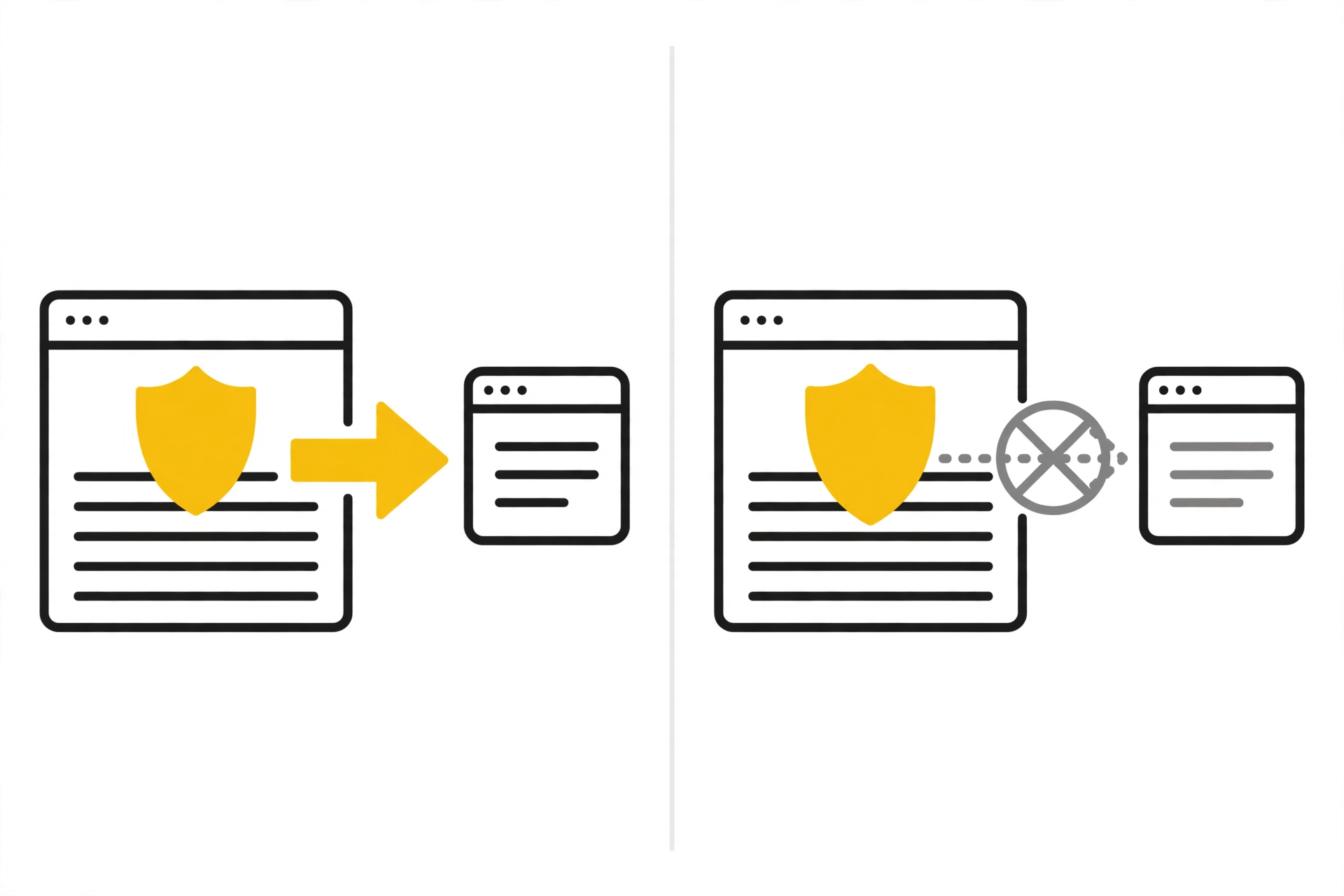
A dofollow link is simply a normal hyperlink — one with no rel="nofollow", rel="sponsored", or rel="ugc" attribute attached. Search engines follow it, crawl the target page, and pass ranking credit (link equity) through it. If you want the full technical breakdown, our guide on how dofollow links pass ranking credit covers the mechanics in detail.
Here’s the part most beginners miss: you don’t get to choose the attribute. The site linking to you decides whether the link is dofollow or nofollow. You earn the link through your content or outreach; the linking site’s CMS, editorial policy, or the individual author determines the rel attribute. Wikipedia, blog comments, and most forum links are nofollow by default — you can’t change that, and trying to game it is wasted effort.
The good news is that most editorial links — the kind where a writer genuinely references your content inside an article — are dofollow by default. WordPress, the CMS powering a large share of the web according to W3Techs, outputs plain links with no rel attribute unless the author adds one. So the strategy is straightforward: earn more genuine editorial mentions, and most of them will be dofollow automatically. That’s what every method in this guide is designed to produce.
The Quality Rule Most Link Builders Ignore
Before the methods, a reality check: not all dofollow links help you. A dofollow link from a spammy directory, a link farm, or an irrelevant foreign-language blog can hurt your rankings or — at best — be ignored by Google. Meanwhile, a nofollow link from a major news publication can drive thousands of visitors and trigger secondary editorial links that are dofollow.
Google’s spam policies are explicit: they target “link spam” — links intended to manipulate rankings — regardless of whether the attribute says dofollow or nofollow. A paid dofollow link from a link farm is exactly what those policies describe. The attribute doesn’t protect you; the intent and pattern is what Google evaluates.
So the real target isn’t “more dofollow links.” It’s editorial dofollow links from relevant, real websites — sites with actual audiences, real content, and traffic of their own. One such link consistently outperforms fifty from low-quality sources. Moz’s backlink guide makes the same point: link quality is determined by the linking site’s authority and relevance, not raw count. Link equity flows in proportion to the linking page’s own authority and relevance, not in proportion to how many links you stack up.
A practical filter for every opportunity in this guide: would you still want that link if Google didn’t exist? Real audience, real content, real reputation — yes. A site that exists only to sell links — walk away, no matter what the metrics say.
Guest Posting on Real Blogs
Guest posting remains one of the most reliable ways to earn dofollow links, with one condition: the blog has to be real. A genuine guest post on an active blog in your niche — with an engaged audience and editorial standards — produces a natural, contextual dofollow link inside quality content. That’s exactly the kind of link Google wants to reward. Backlinko’s link building guide ranks guest posting among the most effective white-hat strategies for this reason.
The process works in four steps. Second, pitch a specific topic, not a generic “I’d like to write for you.” Reference two of their recent articles and explain the gap your piece fills. Third, write the best version of that topic you can — the link in your author bio or content body should feel like a natural citation, not the reason the article exists. Fourth, promote the published post; a guest post that gets traffic is more likely to earn the blog owner’s future invitations.
Concrete example: a freelance SEO consultant pitched 15 mid-size marketing blogs with specific headline ideas, landing 4 placements over two months. Each article included one contextual dofollow link to her guide — and two of those guest posts later earned their own backlinks, compounding the value.
What to avoid: guest post farms that publish anything for a fee, “write for us” pages on sites with no real audience, and exact-match anchor text stuffed into author bios. Those patterns are exactly what Google’s spam policies describe as link schemes. One genuine guest post beats ten farm placements.
Verdict: Best for: building your first 10–20 quality links. Skip if: you can’t write genuinely useful content yet — fix that first, because weak guest posts get rejected by real blogs anyway.

Broken Link Building
Broken-link prospecting works because you’re solving someone else’s problem. Websites accumulate dead outbound links over time — they hurt user experience and make the site look neglected. When you find a broken link and offer your content as a replacement, you’re doing the site owner a favor. The resulting link is almost always editorial and dofollow.
The workflow is straightforward. First, find resource pages, listicles, or in-depth guides in your niche — these link-heavy pages develop broken links fastest. Use a browser extension like Check My Links to scan a page in seconds, or use Ahrefs’ broken backlinks report on competitor domains. Second, confirm the dead link’s original topic (the Wayback Machine shows what the page used to contain). Third, make sure you have — or quickly create — content that genuinely replaces it. Fourth, email the site owner: point out the specific broken link, its location on their page, and your suggested replacement.
Concrete example: a SaaS company found a freelancer resource page linking to a discontinued tool’s pricing page (dead for eight months). Their own pricing comparison guide was a natural replacement. One personalized email Tuesday got a reply Thursday and a live dofollow link Friday — under two hours of total effort.
The key detail most guides skip: your replacement content must be as good as or better than what the dead link pointed to. Site owners check. A thin replacement gets ignored; a genuinely useful one gets linked.
Verdict: Best for: sites with solid existing content that can serve as replacements. Skip if: you have almost nothing worth linking to — create the content first.
Resource Page Outreach
Resource pages — curated lists of helpful links on a topic — exist specifically to link out. A “Small Business Marketing Resources” page or a university library’s “SEO Learning Resources” list is actively looking for quality additions. Getting listed earns you a contextual dofollow link from a page whose entire purpose is recommending good content.
Find them with search operators: keyword + intitle:resources, keyword + "useful links", or keyword + "helpful resources". Vet each page the same way you’d vet a guest post target — real site, maintained list, relevant topic. Then pitch briefly: who you are, what your resource covers, and why it fits their list. Keep it under 100 words. Resource page owners get pitched constantly; brevity is a competitive advantage.
Concrete example: a researcher published a free content-audit spreadsheet template, pitched 30 “content marketing resources” pages, and got listed on 7 — all dofollow. The template later earned additional organic links from people who discovered it through those listings.
Verdict: Best for: anyone with a genuinely useful free resource (tool, template, in-depth guide, original data). Skip if: your content is generic — resource pages only list things that stand out.
Digital PR and Original Data
Digital PR earns dofollow links at a different scale: instead of asking for links one by one, you create something newsworthy and let journalists and bloggers come to you. Original data is the most reliable fuel — a survey, an analysis of public data, or an industry study gives writers something they can’t get anywhere else, and they link to the source.
You don’t need a big budget. Small-scale data studies work: analyze 100 top-ranking pages in your niche and publish the patterns, survey your email list or social followers with 5 questions, or compile public statistics into a single definitive resource. Package findings with a clear headline stat and at least one simple chart. Journalists need the story angle handed to them — “Most small business sites have never audited their backlinks” is a story (hypothetical example); “we analyzed backlink data” is not.
Concrete example: a two-person SEO tool company analyzed robots.txt files of 500 e-commerce sites, published the findings with three charts, and pitched 40 journalists. Result: 12 pieces of coverage in three weeks, 9 with dofollow links. Total cost: about a week of one person’s time.
Verdict: Best for: sites that can invest a week into one asset for potentially dozens of links. Skip if: you need links this month — this is a 1–3 month play.
Journalist Requests and Expert Quotes
Platforms like HARO (now Connectively), Qwoted, and Featured connect journalists with expert sources. A journalist writing about SEO asks for expert quotes; you reply with a genuinely useful answer; if they use it, you typically get a dofollow link from a publication you’d never reach through cold outreach. Outreach for link building doesn’t get more leveraged than this.
Success comes down to speed and specificity. Journalists work on deadlines — respond within hours, not days. Answer the exact question asked (not a pitch for your company), keep it quotable (2–4 tight sentences), and include your credentials in one line. Generic responses get deleted; specific, opinionated ones get quoted.
Concrete example: a link builder answered 25 relevant journalist queries over two months (15 minutes each). Five were used — earning dofollow links from two national business publications and three industry blogs. Total time: roughly 6 hours for 5 high-authority links.
Verdict: Best for: anyone who can speak credibly on their topic. Skip if: you’re in an ultra-niche with no journalist coverage — check the platforms for your topic first.
How to Get Dofollow Backlinks: Which Method Should You Start With?
The right method depends on what you have today: existing content, writing ability, data skills, or subject expertise. The table below compares all seven methods so you can pick your starting point.
| Method | First Dofollow Link Timeline | Effort Level | Typical Link Quality |
|---|---|---|---|
| Guest posting | 3–6 weeks | High | Medium–High |
| Broken link building | 1–3 weeks | Medium | High |
| Resource page outreach | 2–4 weeks | Low–Medium | Medium–High |
| Digital PR / data studies | 1–3 months | Very high | Very high |
| Journalist requests | 1–4 weeks | Low | Very high |
| Link reclamation | 2–5 days | Low | High |
| Original tools / templates | 1–2 months | High | High |
Verdict: New site with no content yet? Start with journalist requests and resource page outreach — they need the least upfront investment. Established site with good content? Broken link building and digital PR compound fastest. Whatever you pick, commit to one method for 60 days before judging it.
Tactics to Avoid When Chasing Dofollow Links
Some shortcuts promise dofollow links fast — and deliver penalties faster. Google’s spam policies name these explicitly, so there’s no ambiguity about the risk.
Buying links. Paying for dofollow links — whether through “sponsored post” marketplaces, link vendors, or direct payments to site owners — violates Google’s spam policies. Google’s systems and manual reviewers both look for the patterns paid links create: irrelevant placements, exact-match anchors at scale, links from sites that sell to anyone. Penalties range from the links being neutralized (you paid for nothing) to manual actions that suppress your entire site. The risk-reward math doesn’t work.
Link farms, PBNs, and excessive exchanges. Networks built solely to sell links are a known entity to Google — when identified, every site they link to can be affected. Systematic “you link me, I link you” programs are listed in Google’s spam policies as link schemes. Automated spam (comment blasting, forum profiles, directory submissions) produces links that are overwhelmingly nofollow anyway.
The honest summary: every shortcut that “guarantees” dofollow links is selling you the appearance of link building without the substance. Real editorial links take work. That’s precisely why they still move rankings.
Frequently Asked Questions
Are dofollow links better than nofollow links for SEO?
For direct ranking impact, yes — dofollow links pass link equity while nofollow links don’t (officially). But the gap is narrower than most people think. Nofollow links drive referral traffic, build brand visibility, and often lead to secondary dofollow links when other writers discover your content through them. A smart strategy earns both.
How can I check if a backlink is dofollow?
Right-click the linking page, choose “Inspect,” and find your link in the HTML. If the anchor tag has no rel attribute — or a rel value that isn’t nofollow, sponsored, or ugc — it’s dofollow. Browser extensions like “Nofollow Simple” highlight nofollow links automatically, and backlink tools show the link type in their reports.
How many dofollow backlinks do I need to rank?
There’s no fixed number — it depends on your competition. A low-competition long-tail keyword might rank with a handful of decent links; a competitive commercial keyword can need hundreds. Study the top-ranking pages for your specific keyword with a backlink tool, and aim to match or exceed their referring-domain profile in quality, not just count.
Is it safe to buy dofollow backlinks?
No. Buying links intended to manipulate rankings violates Google’s spam policies, regardless of whether the seller calls them “safe” or “white-hat.” Google neutralizes many paid links algorithmically, and manual actions can suppress your whole site’s rankings. The safe path is earning editorial links through the methods in this guide.
Do social media links count as dofollow backlinks?
Almost all social media links are nofollow — and most use redirects on top of that, so they pass no link equity. They’re still useful for visibility and traffic, and viral social content often earns genuine editorial links from bloggers and journalists. Treat social as distribution, not link building.
How long does it take to get dofollow backlinks?
Link reclamation can produce links within days; journalist requests and broken link building typically land within 1–4 weeks; guest posts take 3–6 weeks from pitch to publication; digital PR campaigns need 1–3 months. Ranking impact follows later — most SEOs see movement 2–6 months after links go live, depending on competition and crawl frequency.
Done-for-you podcast backlinks
Get your brand on Apple Podcasts, Spotify, Amazon and 25 more trusted platforms — placed by hand, reported link by link.