
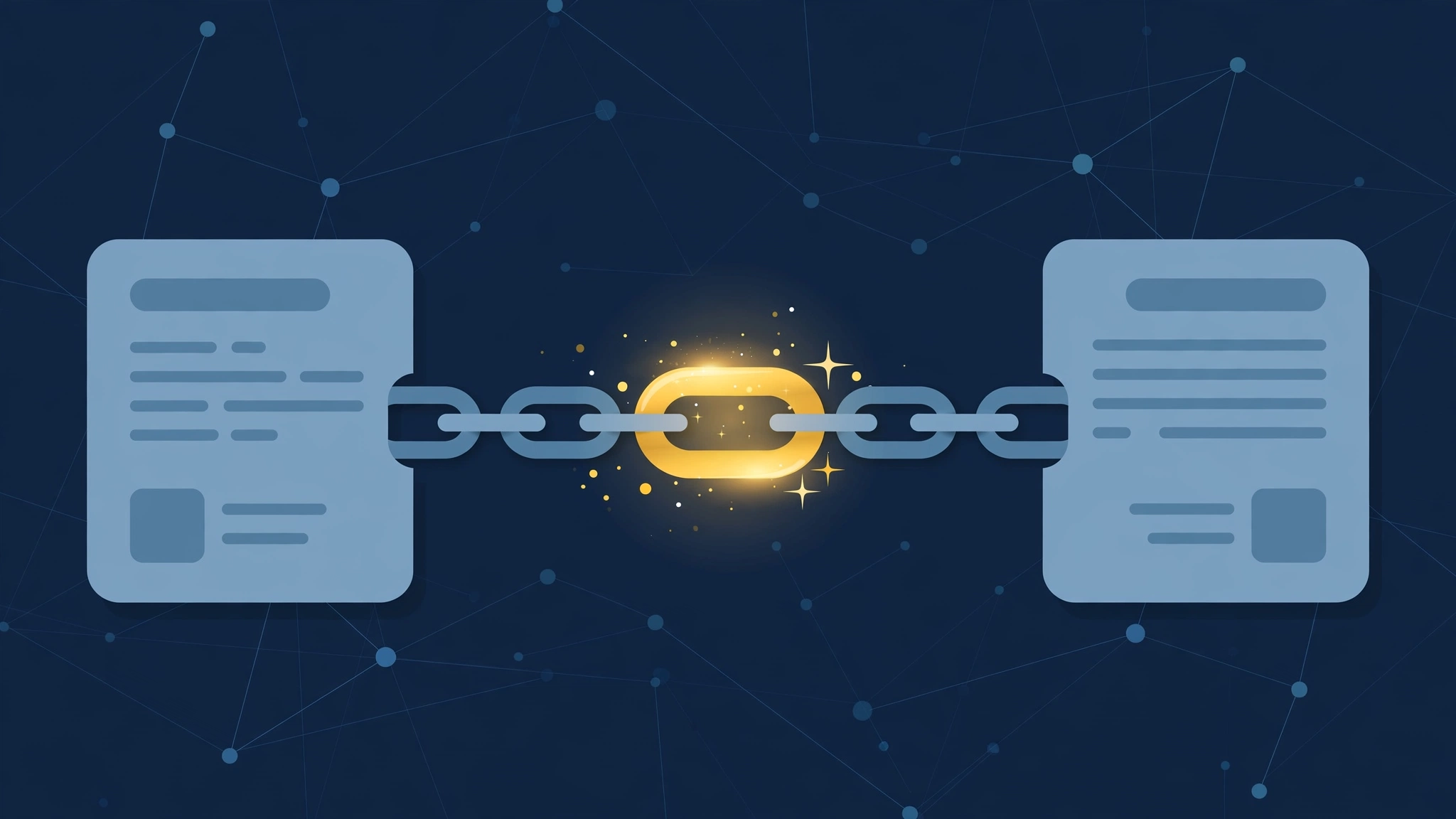
Link reclamation is the process of recovering backlinks you already earned but lost — links that now point to 404 pages, deleted URLs, or content that changed, plus brand mentions of your site that never included a link in the first place. Instead of chasing new links from strangers, you repair the equity you already had.
On this page
- What Link Reclamation Is and Why It Beats Cold Outreach
- The Four Types of Links Worth Reclaiming
- How to Find Lost and Broken Backlinks
- The Reclamation Decision: Redirect, Restore, or Reach Out
- Reclaiming Unlinked Brand Mentions
- Outreach That Actually Gets Replies
- Your Quarterly Link Reclamation Routine
- Frequently Asked Questions
It is one of the highest-ROI activities in link building. The site linking to you already knows your brand, already trusted your content enough to cite it, and in most cases the fix is a small one: a redirect, a restored page, or a short polite email. That is why practitioners consistently report reclamation converting far better than cold outreach — these are warm opportunities, not cold ones.
What Link Reclamation Is and Why It Beats Cold Outreach
Every backlink profile decays. Pages get redesigned, URLs change during migrations, old articles get deleted, and publishers update content and drop citations. Each loss quietly drains the authority signals you worked to build.
Link reclamation reverses that. The work happens in three moves:
- Find — identify links that broke, went missing, or were never linked at all.
- Fix — repair what you control on your own site with redirects or restored content.
- Ask — request what only the linking site can change, with a short helpful email.
The advantage over cold outreach is structural, not marginal. Cold outreach asks a stranger to give you something. Reclamation asks someone who already linked to you to restore something they once wanted to reference. To give a sense of the gap: Ahrefs references one case study in which 31 backlinks were reclaimed from just 166 outreach emails — a reply-to-win pattern cold campaigns rarely approach, as summarized in this link reclamation SEO guide. GetMeLinks, reporting on its own 200+ campaign dataset, cites 15–25% conversion for reclamation outreach on content refreshes and 10–20% for broken pages, against 2–5% for cold outreach. Treat those as their reported numbers, not universal promises — but the direction is consistent everywhere.
The Four Types of Links Worth Reclaiming
Not every lost link is worth chasing. Start by sorting opportunities into four buckets — the fix differs for each:
- Broken backlinks pointing to dead pages on your site. Someone linked to a page you later deleted or renamed. The link still exists; your page does not. This is the highest-priority bucket because you can fix most of it yourself in minutes.
- Pages that moved during a redesign or migration. The content still exists, but the URL changed. Redirects should catch these — when they don’t (redirect chains, missed mappings, 302s used by mistake), link equity leaks.
- Unlinked mentions of your brand. A publisher wrote your brand name, quoted you, or described your product — but never added a hyperlink. Nothing is broken; you just never got the link you were due.
- Links removed during the linking site’s own updates. The publisher refreshed an article and dropped your citation, or redesigned and lost a resource-page section. These need outreach, and they are worth prioritizing when the linking page is strong.
One thing this is not: finding broken links on other people’s sites and offering your content as a replacement. That tactic is broken link outreach, and it deserves its own process — Ahrefs’ broken link building guide and Moz’s walkthrough both cover the full method. Reclamation is about recovering links that were already yours.
How to Find Lost and Broken Backlinks
Start with the free sources before touching paid tools. You will be surprised how much Google gives you:
Google Search Console — the free foundation. Open the Links report to see your top-linked pages, then check the Pages indexing report for 404 errors on URLs that used to carry links. Cross-referencing the two tells you which dead URLs still have backlinks pointing at them — those are your instant wins.
Ahrefs or Semrush — the lost-link reports. Ahrefs’ Site Explorer has a Lost backlinks filter; Semrush runs a Lost & Found report that tracks newly acquired, lost, and broken referring domains over time. Filter to recent losses (last 30–90 days) and sort by the linking domain’s strength. Set up Ahrefs Alerts if you have a subscription — being told about a lost link the week it happens makes recovery far easier than discovering it six months later.
Screaming Frog — for your own internal mess. Crawl your site for 404s and redirect chains. Broken internal links to pages that once had external backlinks are worth fixing first, because they are entirely in your control.
Google Alerts — for unlinked mentions. Set alerts on your brand name, product names, and founder names. Every mention without a link is a reclamation candidate. Paid mention trackers exist, but Alerts is free and catches most editorial mentions.
Practical tip from practitioners: aim for 20–50 actionable links per audit cycle rather than exporting thousands of rows you will never process. Reclamation is a high-attention task — a short, well-worked list beats a long one you abandon.

The Reclamation Decision: Redirect, Restore, or Reach Out
Once you have the list, decide the fix for each case before doing anything. The wrong fix wastes more value than it saves — Google’s own documentation warns against “fixing” every 404 by redirecting it somewhere irrelevant. Only redirect when the destination is a genuine semantic match.
| Situation | Right fix | Why |
|---|---|---|
| Deleted page, no replacement exists | 301 redirect to the closest relevant live page | Recovers link equity instantly; no outreach needed |
| Page moved, redirect missing or wrong | Add or correct the 301 (avoid chains) | Stops equity leaking through broken hops |
| Valuable page deleted by mistake | Restore the page or publish an updated version | The topic still earns links — bring it back |
| Linking page still links, but to a dead URL | Outreach: ask them to update the URL | Only the publisher can edit their page |
| Link removed during publisher’s redesign | Outreach: offer the updated resource | They cut it for a reason — give them a better reason to restore it |
| Low-value directory or dead domain | Leave it alone | Recovery effort exceeds the link’s worth |
Redirects come first because they need no one’s permission. Map every dead URL with backlinks to the best live equivalent, keep the mapping one hop (no chains), and verify each one returns 301, not 302. Only after your own house is clean should you start asking other people for favors.
Reclaiming Unlinked Brand Mentions
Unlinked mentions are the quietest reclamation opportunity — a journalist cites your study or a blogger names your tool, but no hyperlink appears. The publisher already decided you were worth mentioning; the link is a five-second addition for them.
Find them by searching your brand name in quotes (excluding your domain), then send a short polite email asking for the link. We cover the full process — search operators, monitoring alerts, and outreach templates — in our dedicated unlinked mentions guide.
Outreach That Actually Gets Replies
Reclamation outreach converts better than cold outreach, but “better” still means most people won’t reply. Your job is to make saying yes effortless. Here is a template that follows the pattern successful reclaimers use:
Subject: quick fix — your link to [Your Brand] on [Article Title]
Hi [Name],
I noticed the link to our [resource name] in your [article title] now leads to a page that no longer exists. The updated version lives here: [new URL].
Would you mind updating the link so your readers don’t hit a dead page? Happy to return the favor any way I can.
Thanks for keeping the resource live.
[Your Name]
What makes this work:
- It leads with their problem — a broken link hurting their readers — not your request.
- It does the work for them. Correct URL included, nothing to look up.
- It is short. Under 100 words. Editors delete long pitches unread.
For links removed during a publisher’s content refresh, the angle shifts slightly: acknowledge the refresh, note your resource was cut, and mention specifically what changed since they linked to it — new data, an expanded section, a 2026 update. Give them an editorial reason to re-add you, not just a nostalgic one. And never offer money, reciprocal links, or freebies for link restoration — that crosses from white-hat recovery into territory that can get links flagged.
If you want to check your backlinks before you start — establishing your baseline of lost vs. live links — do that first. You can’t measure recovery without a starting number.
Your Quarterly Link Reclamation Routine
Link reclamation is not a project; it is maintenance. Links decay continuously, so the work needs a cadence. A practical routine for a small-to-medium site:
- Monthly (about an hour): pull the lost-backlinks report for the last 30 days, fix anything redirectable on your side, scan Google Alerts for new unlinked mentions, and send that month’s outreach batch.
- Quarterly (half a day): run a full 404 crawl, review all dead URLs with backlinks, clear redirect chains, reassess old outreach that never got answered, and log your recovery numbers.
Track two numbers in a simple spreadsheet: recovery rate (what share of targeted lost links came back — practitioners report a healthy range around 20–35%, as outlined in InfinityRank’s link reclamation walkthrough) and net referring-domain change (new links plus reclaimed links minus lost links). When that equation stays positive, your link profile grows instead of silently shrinking. Most of the SEO world focuses on earning new links; the sites that compound their advantage are the ones that also stop leaking the links they already had.
Frequently Asked Questions
What is link reclamation in SEO?
Link reclamation is the practice of recovering backlinks you lost — fixing broken links that point to dead pages on your site, redirecting moved pages, asking publishers to restore removed links, and converting unlinked brand mentions into linked ones.
Should I do link reclamation before building new links?
Yes — it is the logical first step. Reclaiming a lost link is faster, cheaper, and usually more successful than earning a brand-new one, because the linking site already knows and trusts your content. Run reclamation alongside new link building, not instead of it.
How long does link reclamation take to work?
Technical fixes like redirects work as soon as search engines recrawl the pages — often within days. Outreach-based recoveries depend on the publisher’s response time, so allow a few weeks. Full ranking impact typically shows over one to two months, since search engines need to recrawl both the linking page and your target page.
What’s the difference between link reclamation and broken link building?
Link reclamation recovers links that were already yours — pointing to your own pages. Broken link building finds broken links on other sites and offers your content as a replacement. Both fix broken links; reclamation is defensive (protect what you have), broken link building is offensive (win something new).
Can I automate link reclamation?
Partially. You can automate discovery — lost-link reports, 404 monitoring, and mention alerts all run on autopilot. But the outreach itself should stay personal and manual; template-blasting hundreds of sites reads as spam and burns the goodwill that makes reclamation work in the first place.
Done-for-you podcast backlinks
Get your brand on Apple Podcasts, Spotify, Amazon and 25 more trusted platforms — placed by hand, reported link by link.