

A good backlink comes from an authoritative, topically relevant website, uses descriptive anchor text, sits naturally within the main content, and passes link equity through a dofollow link. One link from a trusted site in your niche typically outweighs dozens of links from low-quality directories or spammy blogs.
On this page
- What Makes a Good Backlink: The Seven Quality Signals
- The Linking Site’s Authority Carries the Most Weight
- Relevance Is the Signal Most Builders Underestimate
- Anchor Text Should Describe, Not Manipulate
- Where the Link Sits on the Page Changes Its Value
- Dofollow Links Pass Value, but Nofollow Still Counts
- Real Traffic Beats Raw Link Counts
- How to Audit Your Own Backlink Quality in Practice
- Frequently Asked Questions
Not every backlink helps your rankings. Some actively hurt. Understanding what makes a good backlink means knowing the seven quality signals that separate links worth earning from links that waste your time or put your site at risk — because Google’s algorithms have spent two decades learning to tell genuine editorial citations apart from manufactured links.
What Makes a Good Backlink: The Seven Quality Signals
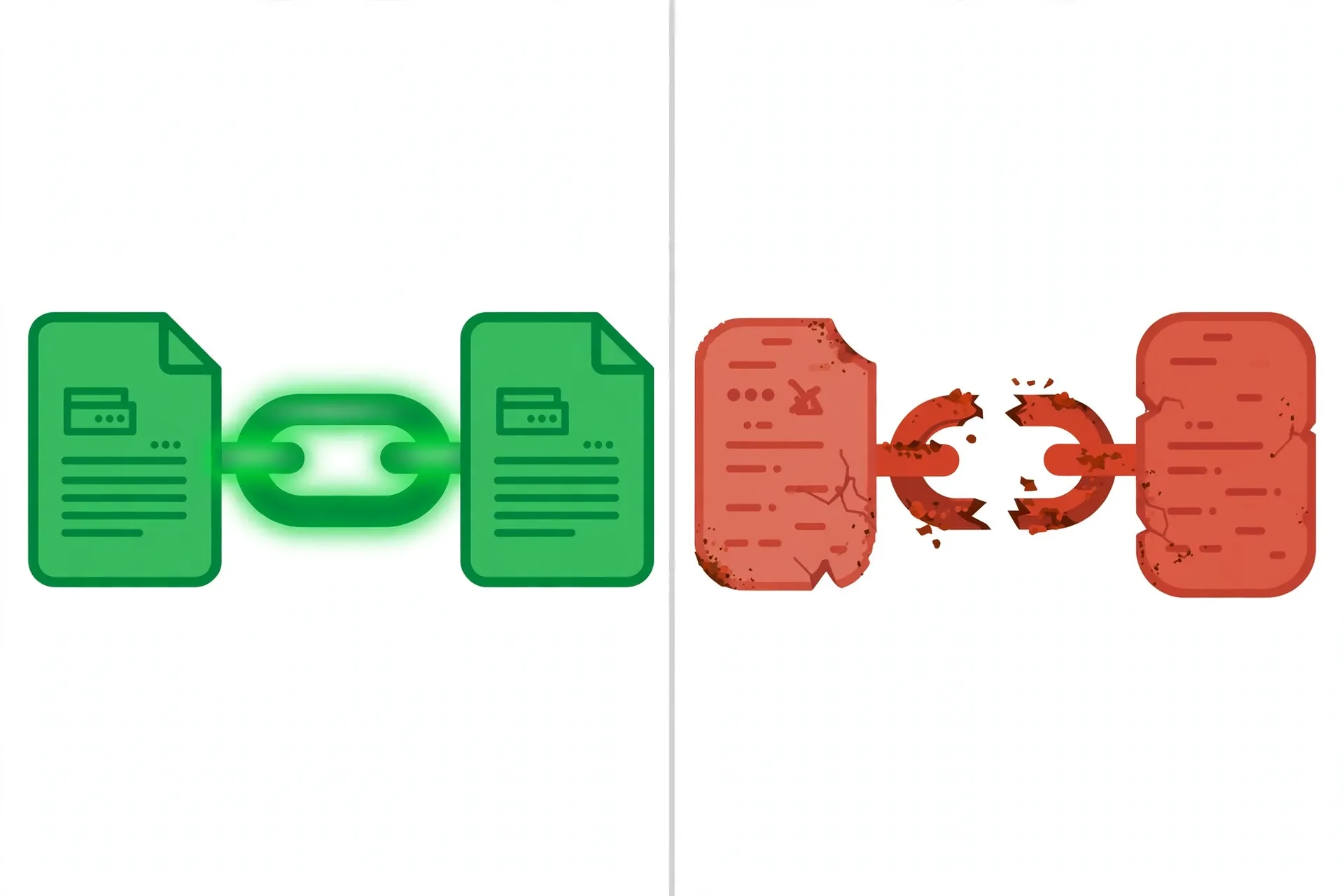
Before diving into each signal, here is the quick comparison most SEOs wish they had seen years earlier. A good backlink checks most of the boxes on the left. A bad one checks most on the right.
| Signal | Good backlink | Bad backlink |
|---|---|---|
| Linking site authority | Established site with real traffic and a clean link profile | New, thin, or penalized site with no real audience |
| Topical relevance | Same or closely related niche as your page | Completely unrelated topic (e.g., casino link on a recipe blog) |
| Anchor text | Descriptive and natural, matches the linked content | Exact-match keyword stuffed on every link, or generic “click here” |
| Link placement | Inside the main body content, surrounded by relevant text | Footer, sidebar, or hidden in a widget with 200 other links |
| Link attribute | Dofollow (passes equity) | Nofollow on a page that should editorially endorse you |
| Editorial nature | Given freely because the content earned it | Bought, exchanged, or auto-generated at scale |
| Traffic potential | Page gets real visitors who might click through | Zero-traffic page that exists only to host links |
Verdict: Judge every link opportunity against all seven signals, not just one. A high-authority link from an irrelevant site is weaker than a mid-authority link from a perfectly relevant one.
The Linking Site’s Authority Carries the Most Weight
Authority is the single strongest predictor of a backlink’s value. When a well-established website links to you, it transfers a portion of its own trust to your page — this is the link equity mechanism that has powered Google’s ranking systems since PageRank.
How do you measure a site’s authority? Third-party metrics are the practical answer. Moz’s Domain Authority and Ahrefs’ Domain Rating both score sites on a 100-point logarithmic scale based largely on the quality and quantity of their own backlink profiles. A link from a DR 70 site will, all else being equal, move the needle far more than a link from a DR 15 site.
But raw scores mislead when used alone. A DR 60 site that sells links to anyone, publishes spun content, or sits in a link network can pass less value — or negative value — than a DR 35 site with a clean editorial record. Before pursuing any link, check the linking site’s own backlink profile. If its inbound links come from comment spam, foreign-language directories, and obvious PBNs, its outbound links are worth little regardless of the headline metric. Moz’s own guidance on spam score exists precisely because authority metrics need a trust filter alongside them.
Concrete check: open the linking domain in Ahrefs’ Site Explorer (or Moz’s Link Explorer), look at its referring domains, and scan for patterns. Ten referring domains from real blogs beats a thousand from auto-generated profiles. If the site’s traffic graph shows a sudden cliff — a classic sign of a Google penalty — walk away no matter how tempting the placement looks.
Verdict: Prioritize authority, but verify it. A metric is a starting point, not a verdict.
Relevance Is the Signal Most Builders Underestimate
A link from a closely related site consistently outperforms a link from a stronger but unrelated one. Google’s systems model the web as a graph of topics, not just a graph of pages. A backlink from within your topical neighborhood tells Google that real participants in your niche consider your content worth citing.
Think about it from a reader’s perspective. If you run a sourdough baking blog and a respected artisan bakery site links to your fermentation guide, that citation makes sense to everyone — readers, and algorithms. If a payday loan site links to the same guide, the citation makes sense to no one, and Google’s relevance models notice the mismatch.
Relevance works at two levels. Domain-level relevance asks whether the linking site operates in your world. Page-level relevance asks whether the specific linking page discusses something connected to your content. Page-level relevance is the stronger of the two. A single relevant article on a general news site can outweigh a link from a niche site’s unrelated page. When prospecting, read the actual page, not just the domain.
Relevant backlinks also drive the clicks that matter. A visitor arriving from a related article is already interested in your topic, which means lower bounce rates and higher engagement — behavioral signals that compound the link’s direct ranking value.
Verdict: Relevance is a multiplier on authority. Chase links from sites your actual audience already reads.
Anchor Text Should Describe, Not Manipulate
Anchor text — the clickable words of a link — tells Google what the linked page is about. Descriptive, natural anchor text strengthens a backlink. Manipulative, over-optimized anchor text weakens it and can trigger penalties.
A natural anchor profile is varied. Most of your backlinks should use branded anchors (your site or company name), naked URLs, or generic-but-honest phrases like “this guide” or “their research.” A smaller share should use partial-match anchors that describe the topic in the linking author’s own words. Exact-match anchors — the precise keyword you want to rank for — should be rare, because real editors almost never write them.
Google’s Penguin algorithm specifically targets manipulative anchor patterns. A backlink profile where a large share of anchors repeat the exact commercial keyword is a footprint, not a strategy. I’ve seen sites with strong link counts stall in rankings purely because their anchor distribution looked engineered. For a deeper breakdown of anchor types and safe ratios, see our complete guide to anchor text in SEO.
Concrete example: linking to a page about sourdough starter with the anchor “sourdough starter maintenance schedule” inside a sentence about feeding routines is natural and descriptive. Getting fifty links all anchored “best sourdough starter” from directory bios is manipulation, and Google treats it accordingly.
Verdict: You usually can’t control anchor text on earned links — which is fine. Worry about anchors mainly on links you place yourself (guest posts, profiles), and keep them natural there.
Where the Link Sits on the Page Changes Its Value
Not all placements are equal. Google’s Reasonable Surfer model — described in its patent — assigns different weights to links based on how likely a real visitor is to click them. A link embedded in the main body of an article, surrounded by relevant discussion, carries far more weight than the same link buried in a footer.
The hierarchy, from strongest to weakest placement:
- Main content, early in the article — highest click probability, most editorial context.
- Main content, later in the article — still strong, slightly less visibility.
- Author bio — legitimate but clearly secondary; expected on guest posts.
- Sidebar or blogroll — sitewide links that Google largely discounts.
- Footer — minimal value; footers are template real estate, not editorial choices.
Context around the link matters as much as position. A link surrounded by two paragraphs discussing your exact topic passes stronger topical signals than a link dropped into an unrelated list. When doing outreach, suggest a specific placement inside the article body rather than accepting a bio-only link — the difference in value is substantial.
Verdict: Always negotiate for in-content placement. A bio link is better than nothing, but an in-content link is the real prize.

Dofollow Links Pass Value, but Nofollow Still Counts
A dofollow link is the default: it passes link equity and directly influences rankings. A nofollow link carries a rel="nofollow" attribute telling search engines not to pass equity. For pure ranking power, dofollow wins.
But dismissing nofollow links is a mistake beginners make and experienced SEOs avoid. Google has treated nofollow as a hint rather than a directive since 2019, meaning it may choose to count some nofollow links. More importantly, nofollow links from high-traffic pages — Wikipedia, major news sites, popular forums — send real visitors, build brand visibility, and frequently lead to secondary dofollow links when other writers discover you through them.
A natural backlink profile contains both. If every link pointing to your site is dofollow, that uniformity itself looks engineered, because real editorial linking produces a mix. Wikipedia links, press mentions, and social profiles are almost always nofollow, and legitimate sites accumulate them constantly. For the full technical breakdown, read our guide on what dofollow backlinks are and why they matter.
Verdict: Pursue dofollow for ranking power, welcome nofollow for traffic and naturalness. Never reject a good nofollow link.
Real Traffic Beats Raw Link Counts
Here is a quality test that cuts through every metric: does the linking page get real visitors? A backlink from a page that nobody reads is a citation nobody sees. A backlink from a page with steady organic traffic is an endorsement with an audience.
This is why link builders increasingly check a prospect’s traffic before its authority score. A DR 50 page ranking for real keywords and receiving a few hundred monthly visits will outperform a DR 65 page with zero traffic every time. Traffic proves the page earned its place in search results — which means Google already trusts it.
Traffic also creates the compounding effect that separates good link building from stamp collecting. One link from a popular resource page can send referral visitors for years, and some of those visitors run their own sites and link to you in turn. This second-order link earning is how a single great placement snowballs. You cannot get it from a zero-traffic link farm page, no matter what its metrics claim.
Concrete check: before investing outreach effort in a target, look up the specific page (not just the domain) in your SEO tool’s traffic view. If the page gets no organic traffic and has no social shares, deprioritize it — even if the domain looks impressive.
Verdict: Traffic is the reality check on every other metric. No visitors, no real value.
How to Audit Your Own Backlink Quality in Practice
Theory is useful; a repeatable process is better. Here is a practical audit you can run on any site in under an hour using free or freemium tools.
Step one: export your backlinks. Use Google Search Console’s Links report (free, under Links → Top linking sites) or a free Ahrefs/Moz trial to export your full backlink list with referring domains, anchor text, and dofollow/nofollow status.
Step two: score each referring domain against the seven signals. You don’t need a spreadsheet formula — a simple pass/fail per signal works. Flag any domain that fails three or more: irrelevant niche, no real traffic, spammy outbound patterns, or exact-match anchor stuffing.
Step three: check for toxic patterns in aggregate. Sort anchors and look at the distribution. If exact-match commercial anchors exceed roughly a tenth of your profile, that’s a risk flag worth addressing through diversification, not panic. Look at link velocity too — hundreds of new links appearing overnight from unrelated sites is the classic footprint of a negative SEO attack or a past owner’s shortcuts.
Step four: act on what you find. For low-quality links you control (old directory submissions, forum profiles), remove or update them. For spammy links you don’t control, Google’s spam policies make clear its systems are good at ignoring manipulative links, and the disavow tool is for manual actions or clear attack patterns — not routine cleanup. Document everything you change so you can measure the effect.
Step five: set a monitoring cadence. Backlink quality isn’t a one-time audit. Check new links monthly — a sudden influx of irrelevant or spammy links is often the first sign of a negative SEO attack, and catching it early makes response far easier.
Verdict: Audit quarterly, monitor monthly. Quality compounds when you keep the profile clean.
Frequently Asked Questions
How many good backlinks do I need to rank?
There is no fixed number — it depends on your niche’s competition. A local service page might rank with a handful of quality relevant links, while a competitive SaaS keyword can require hundreds. Study the referring domains of the top three ranking pages for your target keyword; matching their quality (not just count) is the realistic benchmark.
Can one good backlink really beat a hundred bad ones?
Yes. A single editorial link from a trusted, relevant publication can move rankings more than hundreds of directory or comment links, which Google’s systems largely ignore. Worse, large volumes of manipulative links can trigger algorithmic filtering. Quality has beaten quantity in link building for over a decade.
Do backlinks from social media count as good backlinks?
Social links are almost always nofollow and don’t pass ranking equity directly. They still have value: they drive traffic, increase brand visibility, and help content get discovered by people who may link to it editorially. Treat social as amplification for link earning, not link building itself.
How long does it take for a good backlink to affect rankings?
Typically a few weeks to a few months. Google must discover the linking page, recrawl it, and factor the new link into its ranking calculations. Links from frequently-crawled news sites can register faster; links from rarely-updated pages take longer. One link rarely causes a dramatic jump — ranking movement comes from sustained quality acquisition.
Should I disavow bad backlinks pointing to my site?
Usually no. Google has stated its systems are effective at ignoring spammy links, and unnecessary disavows can do more harm than good. Reserve the disavow tool for two situations: you’ve received a manual action for unnatural links, or you’re under a clear negative SEO attack with a flood of toxic links. For ordinary low-quality links, focus on earning better ones instead.
Done-for-you podcast backlinks
Get your brand on Apple Podcasts, Spotify, Amazon and 25 more trusted platforms — placed by hand, reported link by link.