
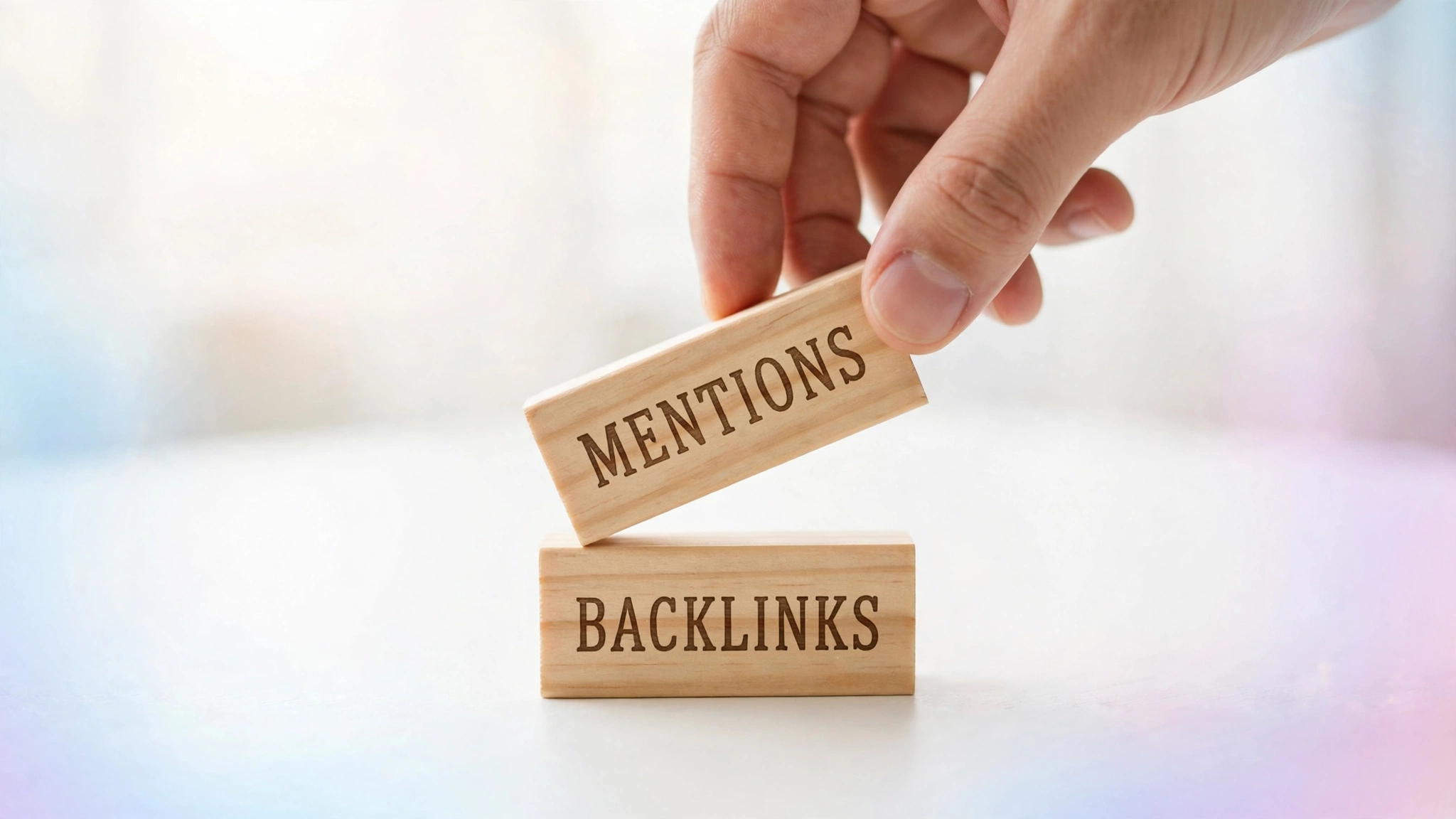
If you built your SEO strategy around backlinks, here is an uncomfortable number: 0.218.
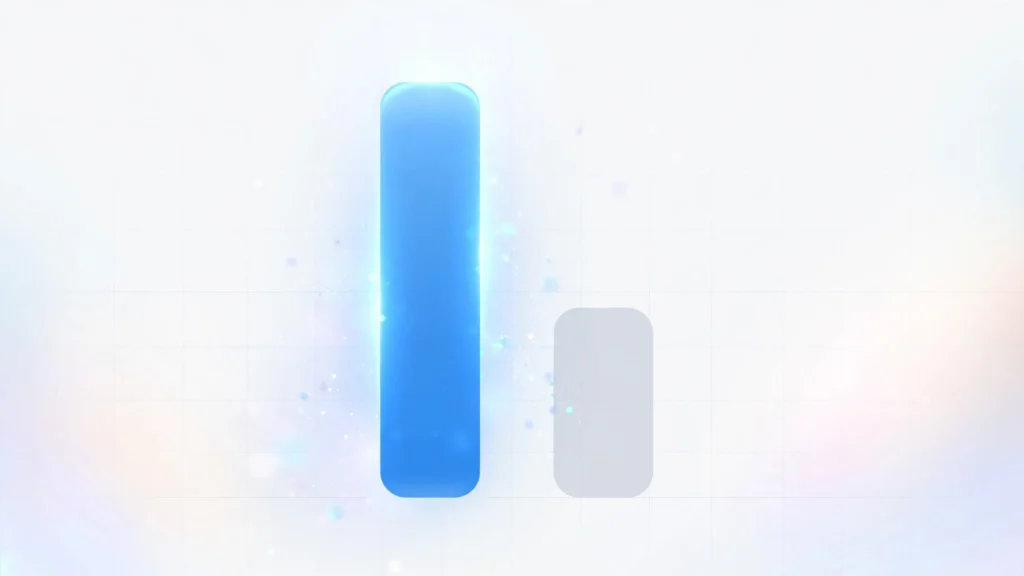
That is how strongly raw backlink counts correlate with showing up in Google’s AI Overviews, according to Ahrefs’ analysis of 75,000 brands. The number for plain branded web mentions — your company name appearing in text somewhere on the web, link or no link — is 0.664. Roughly three times stronger.
Read that again. In the age of AI search, being talked about beats being linked to — at least when it comes to getting cited by ChatGPT, Perplexity, and Google’s AI Overviews.
This does not mean backlinks are dead. It means the game has split in two, and most SEOs are still playing only one half of it. In this guide, you will learn what the data actually says, why AI engines behave this way, what counts as a “mention,” where backlinks still matter, and what to do differently in 2026.
You can check any site’s authority for free with our website authority checker.
Quick answer: Do backlinks still matter for AI search? Less than you think. Ahrefs’ 75,000-brand study found branded web mentions correlate with AI Overview visibility at 0.664, compared to just 0.218 for backlink counts. AI engines cite brands that get talked about across the web — not just linked to. Backlinks still drive classic Google rankings, but if you want to appear inside AI answers, you need mentions.
Key takeaways
- Across 75,000 brands, branded web mentions (0.664) predict AI Overview visibility roughly 3x better than backlinks (0.218), per Ahrefs’ correlation study.
- The top three predictors are all off-site factors: brand mentions, branded anchor text, and brand search volume.
- Only about 38% of pages cited in AI Overviews also rank in Google’s top 10 — AI citations and classic rankings are increasingly different games.
- 26% of brands have zero presence in AI Overviews. Being moderately mentioned is closer to being invisible than you think.
- Backlinks still matter for traditional rankings, referral traffic, and branded anchors (0.527 — the second-strongest signal). Don’t abandon them; rebalance.
On this page
What the data actually says
In 2026, Ahrefs published a study analyzing 75,000 brands to find which search factors correspond with higher brand visibility in Google’s AI Overviews. They used the Spearman correlation coefficient — larger positive values mean stronger positive relationships.
Here are the headline numbers:
| Factor | Correlation with AI Overview visibility |
|---|---|
| Brand web mentions | 0.664 |
| Brand anchors (branded anchor text) | 0.527 |
| Brand search volume | 0.392 |
| Domain Rating | 0.326 |
| Referring domains | 0.295 |
| Backlinks (raw count) | 0.218 |
Three things stand out.
First, the top three signals are all off-site. Nothing you do on your own pages — not your content quality, not your schema markup, not your site speed — appears at the top of this list. AI visibility is decided mostly by what the rest of the web says about you.
Second, the gap is enormous. Brands in the top quartile for web mentions earned up to 10x more mentions in AI Overviews than the next quartile down. And 26% of the brands studied appeared in AI Overviews zero times. There is no comfortable middle ground here — you are either being talked about enough to matter, or you are effectively invisible to AI search.
Third — and this is the honest caveat Ahrefs itself stresses — correlation is not causation. A famous brand naturally attracts more articles, reviews, links, searches, and videos. The mentions may partly result from existing popularity rather than cause AI visibility. All the correlations in the study range from moderate to weak on the Spearman scale. So don’t read this as “mentions magically cause citations.” Read it as a strong hint about where AI systems find their evidence.
The finding isn’t isolated, either. Cyber Kendra’s October 2026 roundup, “Best backlink services for tech brands, ranked for AI search,” graded backlink agencies on a new criterion: whether their placements actually get cited by ChatGPT, Perplexity, and Google AI Overviews — not just on domain rating. Different methodology, same conclusion: the placements that win in AI search are the ones that generate real brand discussion, not just link equity.
And here’s the number that should change how you think about content: Ahrefs’ later analysis found that only about 38% of pages cited in AI Overviews also ranked in Google’s top 10. AI systems issue their own related searches and pull supporting pages while generating an answer. A page can be relevant to an AI answer without ever cracking the classic top ten.
Why AI search cites mentions instead of links

To understand the data, you have to think like a language model for a minute. Classic Google ranks pages largely using the link graph — who links to whom, and with what anchor text. Links are votes, and Google has twenty-five years of practice counting them.
Large language models don’t work that way. They were trained on text — trillions of words of it. When ChatGPT or an AI Overview answers a question, it reaches for the brands and sources that appear most confidently and consistently across its training data and retrieved results. A brand name repeated naturally across hundreds of pages looks like established, trustworthy knowledge. A backlink, to a language model, is just HTML plumbing it mostly ignores.
This also explains why mentions are harder to fake than links. Anyone with a budget can buy links — that’s exactly why Google has spent years fighting link spam, including the September 2026 spam update that finished rolling out in early October. But manufacturing hundreds of natural-sounding textual mentions of your brand across independent sites, forums, and publications is far more difficult and expensive to fake. AI systems, intentionally or not, ended up rewarding the signal that’s hardest to game.
One more honest note: popularity confounds everything. Big brands get mentioned more because they’re big, and AI systems cite them more for the same reason. The practical takeaway isn’t “mentions cause citations” — it’s that obscurity is now punished twice: once in classic rankings, and again in AI answers.
What counts as a “branded mention”
Ahrefs defined branded web mentions simply: your brand name appearing anywhere across the web, whether linked or unlinked. That “whether linked or unlinked” part is the whole point. Here is what that looks like in practice:
- Directory and platform listings. A business profile that shows your name, description, and what you do — even without a followed link — is a mention. Podcast directory listings are a clean example: your show or brand name appears in context on dozens of independent platforms. (Are podcast backlinks worth it? breaks down why these listings pull double duty.)
- News and blog coverage. A journalist quoting you, a blogger naming your tool in a roundup, a local paper covering your launch. These carry weight because they come with editorial context.
- Forum and community discussions. Reddit threads, Quora answers, niche forums, Facebook groups. Real people mentioning your brand in real conversations is exactly the kind of text AI models train on. (One caution: this is high-variance territory — communities punish anything that smells like marketing, so participate genuinely or not at all.)
- Reviews and testimonials. G2, Capterra, Trustpilot, Google reviews — anywhere customers write your name in their own words.
- Video and audio mentions. Independent breakdowns of the Ahrefs data note YouTube mentions correlating as high as 0.737 — even stronger than web mentions. A spoken brand name in a video transcript counts.
Notice the pattern: unlinked mentions are the majority of what exists on the web, and AI systems treat them as first-class evidence. For years, SEOs chased links and treated plain mentions as a consolation prize. The data suggests that order has flipped — at least for AI visibility.
Where classic backlinks still matter
Before you cancel your link-building budget, slow down. The study doesn’t say backlinks are worthless. It says they’re weak predictors of AI Overview visibility specifically. Here’s where they still earn their keep:
Classic Google rankings still run on links. The blue links aren’t going anywhere — AI Overviews sit on top of them, and most search traffic still flows through traditional results. Referring domains (0.295) and Domain Rating (0.326) both showed positive correlations in the same study. Links remain the backbone of how Google decides which pages deserve to rank.
Branded anchors are the bridge. Branded anchor text — links where the clickable text is your brand name — scored 0.527, the second-strongest signal in the study. That’s a mention and a link in one package. When you do build links, natural branded anchors give you both worlds.
Links drive humans, not just algorithms. A good placement sends referral traffic, builds actual brand awareness (which becomes search volume — the 0.392 signal), and puts your name in front of journalists who might mention you later. The flywheel is real.
The economics still work. Quality backlinks remain one of the most cost-efficient ranking levers for competitive keywords — our 2026 backlink pricing guide breaks down what links actually cost and which ones are worth paying for.
The right move isn’t to choose mentions or links. It’s to stop treating them as the same job. Links are for rankings. Mentions are for AI citations. Budget for both.
Your 2026 playbook: 6 steps

Here’s what to actually do — the practical side of generative engine optimization — in order of impact:
Audit your mention footprint
Google your brand name in quotes. Then google it without quotes. Then check it in ChatGPT, Perplexity, and Google’s AI Mode directly — ask the kind of question a customer would ask and see whether you appear. This is your baseline. Most small brands discover they’re mentioned on fewer than a dozen independent sites. That’s your gap.
Get listed where your brand name appears in context
Directories, industry listings, review platforms, podcast directories — anywhere your name shows up alongside a description of what you do. Each one is a mention, and many also pass a link. This is the highest-volume, lowest-effort mention source available. Start with the platforms relevant to your niche — anywhere your brand name appears next to a proper description of what you do tends to get picked up fast. (More on the AI-search angle here.)
Earn coverage with quotable takes
Journalists and bloggers don’t quote generic companies — they quote opinions. Publish one genuinely contrarian or data-backed take in your niche per quarter, then pitch it. A single quoted sentence in an industry publication is worth more for AI visibility than a dozen directory links.
Show up in communities — genuinely
Answer questions on Reddit, Quora, and niche forums where your expertise is relevant. Don’t pitch; help. Over months, your brand name accumulates in exactly the conversational text AI models love. One warning: communities have excellent spam radar. A single promotional blitz can burn a username permanently.
Keep building quality backlinks for classic rankings
Don’t abandon link building — rebalance it. Prioritize placements on real sites with real traffic, use natural branded anchors where appropriate, and avoid anything that looks like a link scheme. Remember: Google’s September 2026 spam update specifically improved its spam-detection systems, and recovery from a spam hit takes months, not days.
Track AI visibility monthly
Once a month, ask ChatGPT, Perplexity, and Google AI Mode the 5–10 questions your customers actually ask. Note which brands get cited and whether you’re among them. Also note Google’s new AI Mode monitoring feature — rolled out globally in late September 2026 — which lets users ask Search to watch topics and send alerts when something changes. AI search is becoming a continuous monitoring surface, not just a query box. Brands that stay freshly mentioned stay visible.
Mistakes to avoid
- Buying “AI visibility” packages that are just link spam with a new label. If a vendor promises ChatGPT citations but delivers PBN links, you’re buying the weakest signal in the study at premium prices.
- Keyword-stuffing your brand name. Mentions work because they look natural. Fifty identical “Acme Corp is great” comments look like exactly what they are.
- Treating llms.txt as a magic lever. It’s a nice-to-have for crawler guidance, but large-scale testing (SE Ranking across ~300,000 domains) found no meaningful correlation with AI visibility, and Google has said plainly it doesn’t treat the file as a ranking or citation signal. Don’t skip it, but don’t expect miracles.
- Making panicked changes during update rollouts. Google’s September 2026 spam update took up to two weeks to roll out. Traffic dips during a rollout are provisional — wait for the Search Status Dashboard to confirm completion before diagnosing anything.
- Expecting overnight results. Mentions compound over months. The brands dominating AI answers today started building their footprint long before AI search existed.
Frequently Asked Questions
Do backlinks help with ChatGPT visibility?
Indirectly. Backlinks themselves correlate weakly (0.218) with AI Overview visibility, but branded anchor text correlates much more strongly (0.527) — and the sites linking to you often mention you in surrounding text too. Think of links as the foundation and mentions as the signal AI systems actually read.
What exactly is a “branded web mention”?
Any appearance of your brand name in text anywhere on the web — articles, directories, forums, reviews, video transcripts — whether or not it includes a hyperlink. That’s the definition Ahrefs used in its 75,000-brand study.
Is this correlation or causation?
Correlation. Ahrefs is explicit about this: famous brands get more mentions and more AI citations, and popularity likely drives both. The data is still useful directionally — it tells you where AI systems find their evidence — but nobody should claim mentions mechanically “cause” citations.
Should I stop building backlinks?
No. Backlinks still drive classic Google rankings, referral traffic, and Domain Rating — and branded anchors are the second-strongest AI-visibility signal in the data. The smart move is a split budget: links for rankings, mentions for AI citations.
How long until mentions turn into AI citations?
Honestly, there is no fixed timeline, and anyone giving you one is guessing. Training data updates on the model maker’s schedule, while retrieval-based systems like AI Overviews can pick up new mentions within weeks. Think in months, not days.
Can a small brand compete with big ones here?
Yes — this is actually good news for small brands. You can’t out-link Amazon, but you can become the most-mentioned brand in a narrow niche. AI answers are often specific (“best CRM for dental clinics”), and in narrow queries, a few dozen quality mentions can be enough to get cited.
Final word
Search has split into two games. Classic rankings still reward the link graph — the system Google spent two decades building. AI answers reward something older and simpler: being talked about.
The 75,000-brand data doesn’t tell you to abandon backlinks. It tells you that the brands winning in AI search are the ones the web already discusses, and that no amount of link equity fully substitutes for that. In 2026, the most future-proof SEO strategy is also the most old-fashioned one: become genuinely worth mentioning, then make sure the mentions exist where AI systems can find them.
If you’d like help with the mention-building side — getting your brand listed and described across established podcast platforms, where each listing works as both a branded mention and a backlink — that’s exactly what my done-for-you podcast backlink service does. Built by hand, no bots, no PBNs. But whether you do it yourself or get help, start building your mention footprint now. The brands cited in 2027’s AI answers are earning their mentions today.
Sources: Ahrefs — An Analysis of AI Overview Brand Visibility Factors (75K Brands Studied); Cyber Kendra — “Best backlink services for tech brands, ranked for AI search” (October 2026); Search Engine Journal — Google Rolls Out AI Mode Info Monitoring To All Users Globally (September 2026); Google Search Status Dashboard — September 2026 spam update.
Done-for-you podcast backlinks
Get your brand on Apple Podcasts, Spotify, Amazon and 25 more trusted platforms — placed by hand, reported link by link.